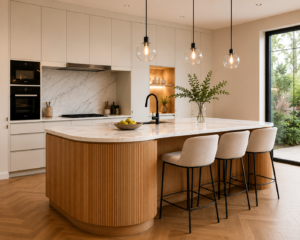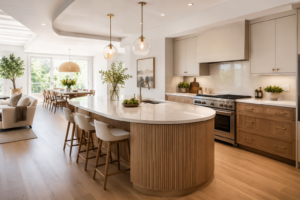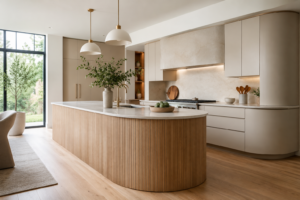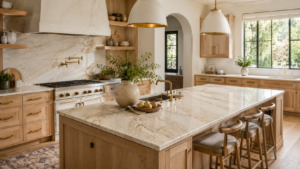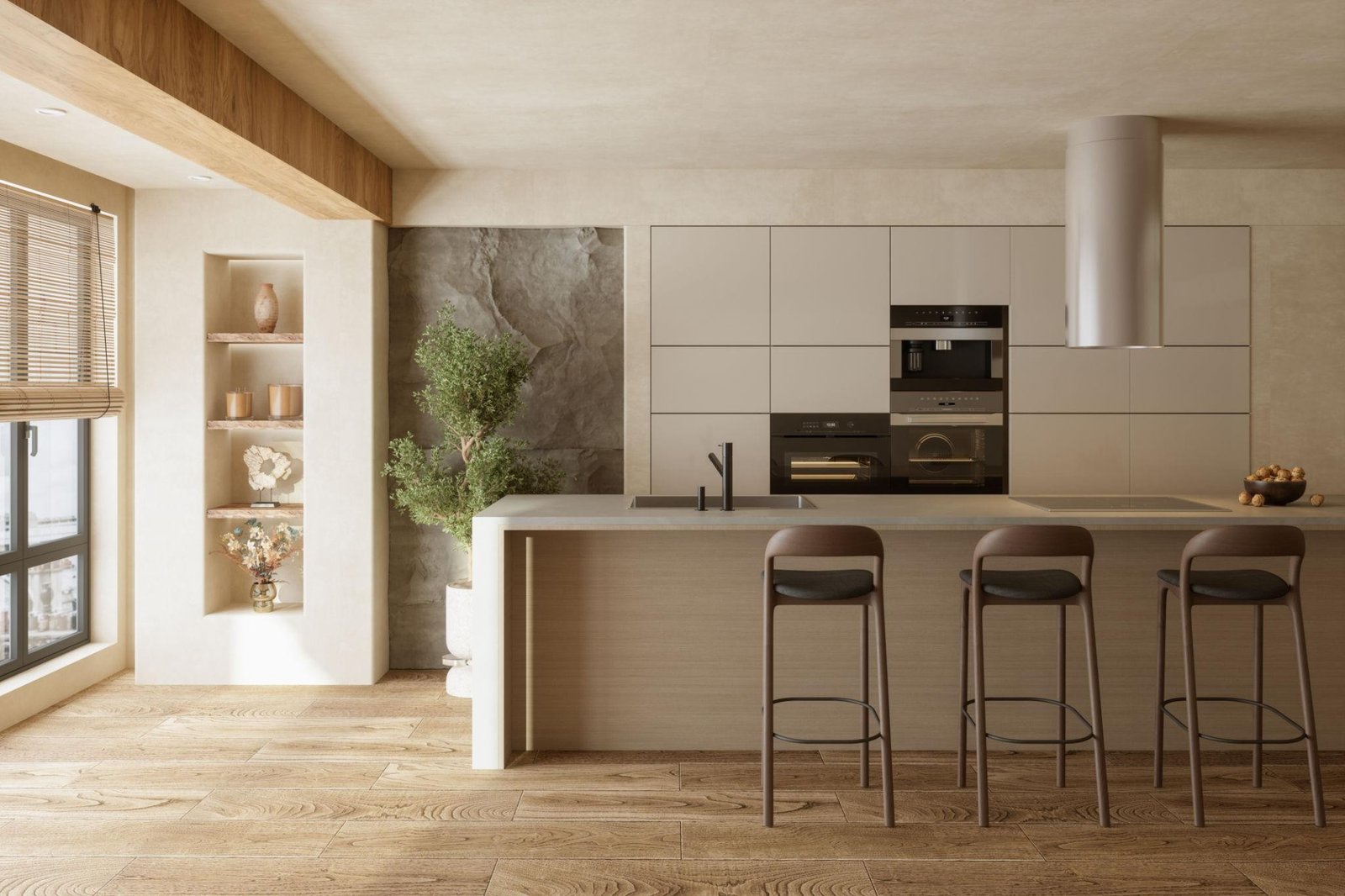
At Livranger, we often meet homeowners who want a calmer kitchen but do not want the space to feel empty, cold, or overly rustic. Wabi sabi kitchen cabinets are a good fit for that kind of project, but only when the details are handled carefully.
Natural wood, matte finishes, simple cabinet fronts, and quiet colors can make a kitchen feel warm and lived in. But the same style can go wrong quickly. Too much rough wood may make the room look unfinished. A glossy finish can flatten the texture. Too many open shelves can turn a calm kitchen into a cluttered one.
As kitchen designers, we look at wabi sabi cabinets less as a trend and more as a set of practical choices: What wood will age well? Which finish can handle daily use? How much storage should stay hidden? And how can the layout feel simple without becoming inconvenient?
This guide walks through those decisions, so you can plan a wabi sabi kitchen that feels natural, balanced, and easy to live with.
Quick Answer
For most homes, the safest wabi sabi kitchen cabinet choice is flat-panel or slim Shaker cabinets in matte white oak, ash, walnut, or reclaimed wood, paired with simple hardware and natural materials like stone, plaster, limewash, or handmade tile.
Choose white oak if you want a calm and balanced look. Choose walnut if the kitchen has enough light and you want a darker, warmer mood. Choose reclaimed pine only if you like visible knots, marks, and age. For the finish, stay with matte lacquer, oil, or hardwax oil. Avoid high-gloss finishes because they hide the texture that makes wabi sabi cabinets feel natural.
What Makes a Cabinet Feel Wabi Sabi?
A wabi sabi cabinet does not need to look decorative. In fact, it usually works better when the shape is simple and the material does most of the talking.
The main idea is this: the cabinet should show something real. That might be wood grain, small knots, a hand-brushed texture, a soft matte finish, or a slight color variation from one panel to another.
This is where wabi sabi differs from basic minimalism. A minimalist kitchen can look clean but cold. Wabi sabi still keeps the lines simple, but it brings in warmth through texture, natural materials, and signs of use.
A good wabi sabi cabinet usually has:
- simple door profiles
- visible wood grain
- matte or low-sheen finish
- quiet hardware
- natural color variation
- a design that can age without looking worn out too quickly
The goal is not perfection. The goal is a kitchen that can handle daily life and still look calm.
Which Cabinet Door Style Works Best?
The cabinet door sets the tone of the whole kitchen. If the door style is too ornate, the space starts moving away from wabi sabi and closer to traditional or farmhouse. If it is too sleek and glossy, it can feel more like a modern showroom.
Flat-panel doors
Flat-panel, or slab, cabinet doors are usually the easiest choice. They give the wood grain a clean surface to show through. This works especially well with white oak, ash, walnut, or lightly brushed wood.
Use flat-panel doors if you want the kitchen to feel modern, calm, and uncluttered.
Slim Shaker doors
A slim Shaker door can also work, but the frame should stay light. Thick rails and heavy detailing can make the cabinets feel too traditional.
Use slim Shaker doors if you want a softer look than flat panels but still want the kitchen to feel simple.
Grid-style doors
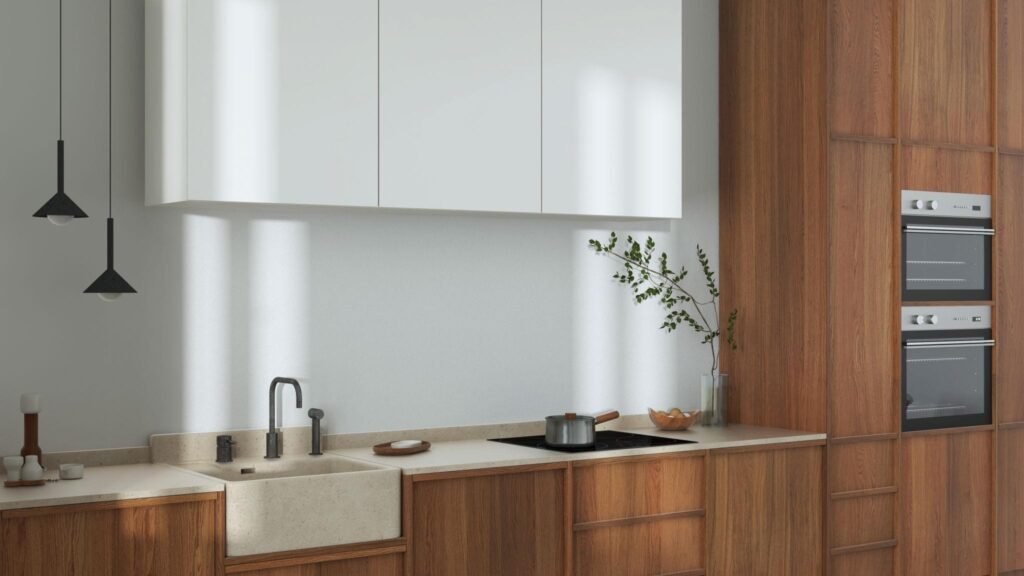
Some wabi sabi kitchens use subtle grid details inspired by Japanese interiors. This can look beautiful, especially on tall cabinets or pantry doors, but it should be used carefully. Too much grid detail can make the room feel themed rather than natural.
Use grid-style doors as an accent, not necessarily across every cabinet.
Which Wood Should You Choose?
Wood is the biggest decision in a wabi sabi kitchen. It controls the color, texture, mood, and how the cabinets will age over time.
The best woods for this style usually have visible grain and some natural movement. You do not need perfect, uniform boards. Small differences are part of the look.
White oak: the safest choice
White oak is probably the most flexible option for wabi sabi kitchen cabinets. It has a clear grain, good strength, and a warm tone that does not feel too yellow when finished well.
Choose white oak if you want a kitchen that feels calm, clean, and easy to pair with stone, plaster, or handmade tile.
It works especially well in small to medium kitchens because it adds warmth without making the room feel dark.
Walnut: warmer and heavier
Walnut gives the kitchen a deeper mood. It feels richer and more grounded than oak, but it also absorbs more light.
Choose walnut if your kitchen has good natural light or if you want a darker, more intimate space. In a small or low-light kitchen, walnut can look beautiful, but it may make the room feel heavier.
Ash: light, simple, and understated
Ash has a visible grain, similar in some ways to oak, but it often feels lighter and a little cleaner. It is a good choice when you want natural texture without too much visual weight.
Choose ash if you like the warmth of wood but want the kitchen to stay pale and open.
Reclaimed pine: full of character, but not for every space
Reclaimed pine can be very wabi sabi because it already carries marks of age. Knots, nail holes, dents, and uneven color can all add character.
But this is also where the risk comes in. Too much reclaimed pine can quickly make a kitchen feel rustic, farmhouse, or unfinished.
Choose reclaimed pine if you genuinely like visible age. Keep the surrounding materials simple so the room does not become too busy.
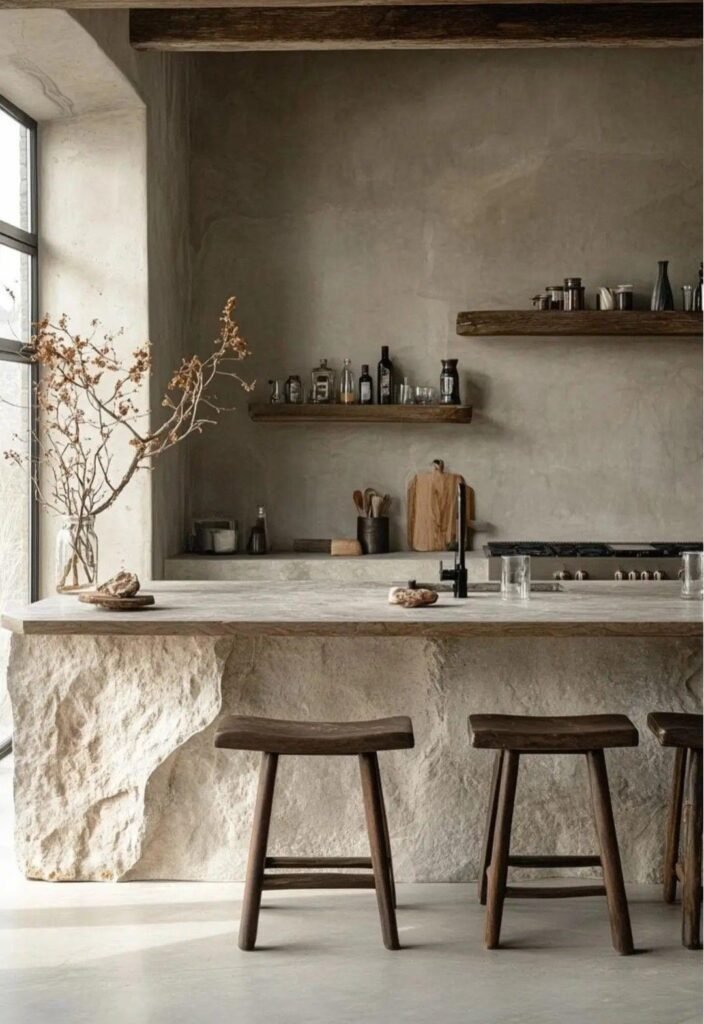
Maple: clean, but less expressive
Maple has a tighter, quieter grain. It can work in a very simple Japanese-inspired kitchen, but it does not show as much texture as oak, ash, or walnut.
Choose maple if you want a very clean and restrained look. Avoid making it too polished, or it may lose the natural feeling that wabi sabi depends on.
What Finish Keeps the Cabinets Natural?
The finish can make or break wabi sabi kitchen cabinets. A good finish protects the wood without making it look artificial.
Matte lacquer
A matte or low-sheen lacquer is a practical choice for busy kitchens. It gives the cabinets protection while keeping the surface quiet.
The key is to avoid shine. A glossy finish reflects light off the surface, which pulls attention away from the wood grain. A matte finish lets the material feel softer and more natural.
Oil finish
Oil finishes soak into the wood rather than sitting heavily on top of it. This can make the grain look deeper and more tactile.
Oil is a good choice if you want the cabinets to feel close to raw wood. Just remember that oil-finished cabinets may need more care over time, especially around sinks, dishwashers, and heavy-use areas.
Hardwax oil
Hardwax oil is often a good middle ground. It keeps the natural feel of an oil finish but gives a bit more surface protection.
Choose hardwax oil if you want a touchable, natural-looking cabinet finish and you are comfortable with occasional maintenance.
What to avoid
Avoid high-gloss polyurethane or thick, plastic-looking finishes. They may be durable, but they usually fight against the wabi sabi look.
Also be careful with heavy paint. Painted cabinets can be beautiful, but once the grain is fully covered, the kitchen depends more on color than material. That is a different look.
What Hardware Looks Right?
Hardware should stay quiet in a wabi sabi kitchen. It does not need to disappear completely, but it should not be the first thing people notice.
Good choices include:
- handleless cabinet fronts
- integrated pulls
- small wood knobs
- matte black pulls
- aged brass
- patinated bronze
The safest rule is simple: choose hardware that feels useful, modest, and slightly softened. Avoid shiny chrome, oversized pulls, or anything too decorative.
If the wood already has strong grain, keep the hardware even simpler.
Should You Use Open Shelving?
Open shelving can look beautiful in a wabi sabi kitchen, but only in small doses.
A few shelves can make the space feel lighter and more personal. They work well for handmade ceramics, simple glassware, everyday bowls, or cups you actually use.
The problem is that open shelves also show real kitchen life. Food packaging, small appliances, plastic containers, dust, and grease can quickly make the space feel busy instead of calm. This is why many homeowners worry about whether open shelving still feels practical after months of daily use.
A safer balance is to keep closed cabinets for anything messy or functional, and use open shelves only for a few pieces you are happy to see every day.
In a wabi sabi kitchen, open shelving should feel quiet and intentional, not like extra storage.
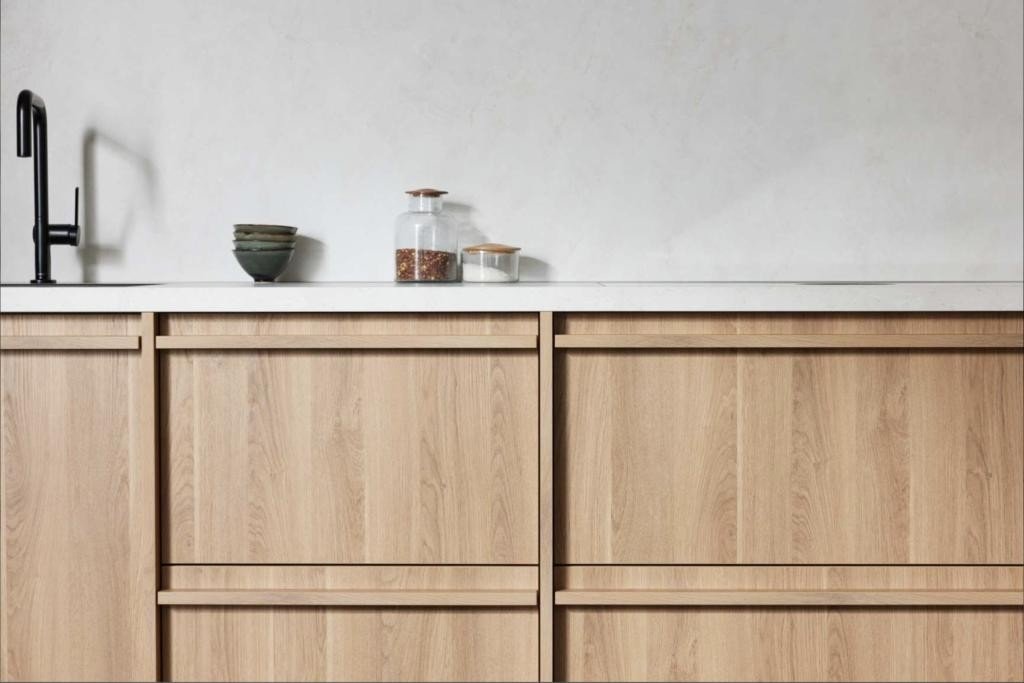
What Layout Makes the Kitchen Feel Calm?
A wabi sabi kitchen layout should feel easy to move through. It should not be packed with cabinets just because there is wall space available.
Instead of filling every corner, think about what needs to be stored, what should stay hidden, and where the eye needs a pause.
A calmer layout usually includes:
- enough closed storage to reduce clutter
- a few open areas so the room can breathe
- clear paths between sink, stove, and prep area
- appliances that do not visually dominate the space
- natural materials repeated in a simple way
Panel-ready appliances work especially well because they let the refrigerator or dishwasher blend into the cabinet wall. This keeps the focus on the wood and the overall mood of the room.
The point is not to make the kitchen empty. The point is to remove the parts that make the room feel busy for no reason.
For a remodel or new kitchen, it helps to review the layout before finalizing every finish. Livranger’s kitchen design service starts with a $300 deposit, helping homeowners review the cabinet layout, material direction, and key details early, before small planning mistakes turn into costly problems.
What Colors Work With Wabi Sabi Cabinets?
The color palette should support the cabinets, not compete with them.
The best colors usually come from nature:
- warm white
- soft beige
- taupe
- clay
- muted gray
- sage green
- moss green
- charcoal as an accent
These colors work because they let texture carry the room. The wood grain, stone surface, plaster wall, or handmade tile becomes the detail.
Be careful with too many similar beige tones. A warm minimalist kitchen still needs contrast. If the cabinets are pale oak, you might add a darker stone countertop, a slightly textured backsplash, or blackened hardware. If the cabinets are walnut, you may need lighter walls and counters to keep the space from feeling too heavy.
What Countertop and Backsplash Materials Fit This Style?
The materials around the cabinets matter almost as much as the cabinets themselves. Wabi sabi works best when the surrounding surfaces have some softness, variation, or natural texture.
Countertops
Good countertop options include:
- honed stone
- soapstone
- limestone
- concrete
- low-sheen quartz with subtle movement
A polished, mirror-like countertop can feel too sharp next to matte wood. Honed or leathered finishes usually work better because they feel softer and less reflective.
Soapstone is a strong choice if you like visible aging. It can develop marks and patina over time, which fits the wabi sabi idea well.
Backsplash
For the backsplash, avoid patterns that feel too busy or perfect.
Good options include:
- handmade Zellige tile
- limewash
- plaster
- soft matte ceramic tile
- the same stone continued from the countertop
Zellige works especially well because each tile has slight color and surface variation. The result feels handmade without needing extra decoration.
Plaster or limewash is quieter. It gives the wall texture without making the kitchen feel crowded.
Common Mistakes to Avoid
Mistake 1: Making the kitchen look too rustic
Wabi sabi is not the same as farmhouse. Rough wood, heavy knots, black metal everywhere, and distressed finishes can push the kitchen in a different direction.
Use texture, but keep the shapes clean.
Mistake 2: Choosing wood with no visible character
If the cabinet surface looks too flat or too uniform, the kitchen may feel plain rather than calm. The wood should have some grain, movement, or touchable quality.
Mistake 3: Using a glossy finish
High gloss makes the cabinets feel polished and sealed. That works in some modern kitchens, but it usually weakens the natural feeling of wabi sabi cabinets.
Mistake 4: Adding too much open shelving
Open shelves look good in photos, but real kitchens need hidden storage. Keep open shelving limited and intentional.
Mistake 5: Making everything beige
A soft palette is good. A flat palette is not. Add contrast through stone, hardware, wall texture, or a slightly deeper wood tone.
How to Choose the Right Wabi Sabi Cabinet Style
Choose white oak flat-panel cabinets if you want the most balanced and easy-to-live-with option.
Choose walnut cabinets if you want a deeper, moodier kitchen and have enough natural light.
Choose ash cabinets if you want a pale, quiet kitchen with visible grain.
Choose reclaimed pine if you want age, marks, and a less polished look.
Choose slim Shaker doors if flat panels feel too modern for your home.
Choose matte lacquer if you want lower maintenance.
Choose oil or hardwax oil if texture and natural touch matter more to you than maximum convenience.
A convincing wabi sabi kitchen does not come from one dramatic feature. It comes from several quiet choices working together: simple cabinet fronts, honest wood, a matte finish, natural stone or plaster, and enough closed storage to keep daily life from taking over the room.