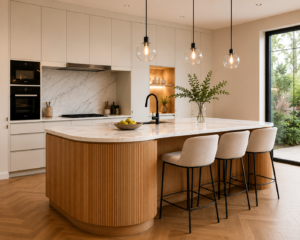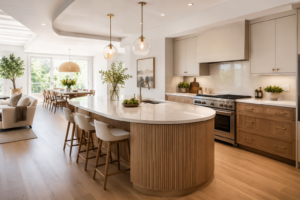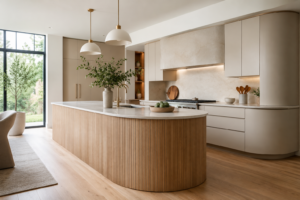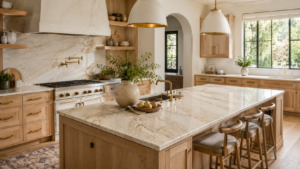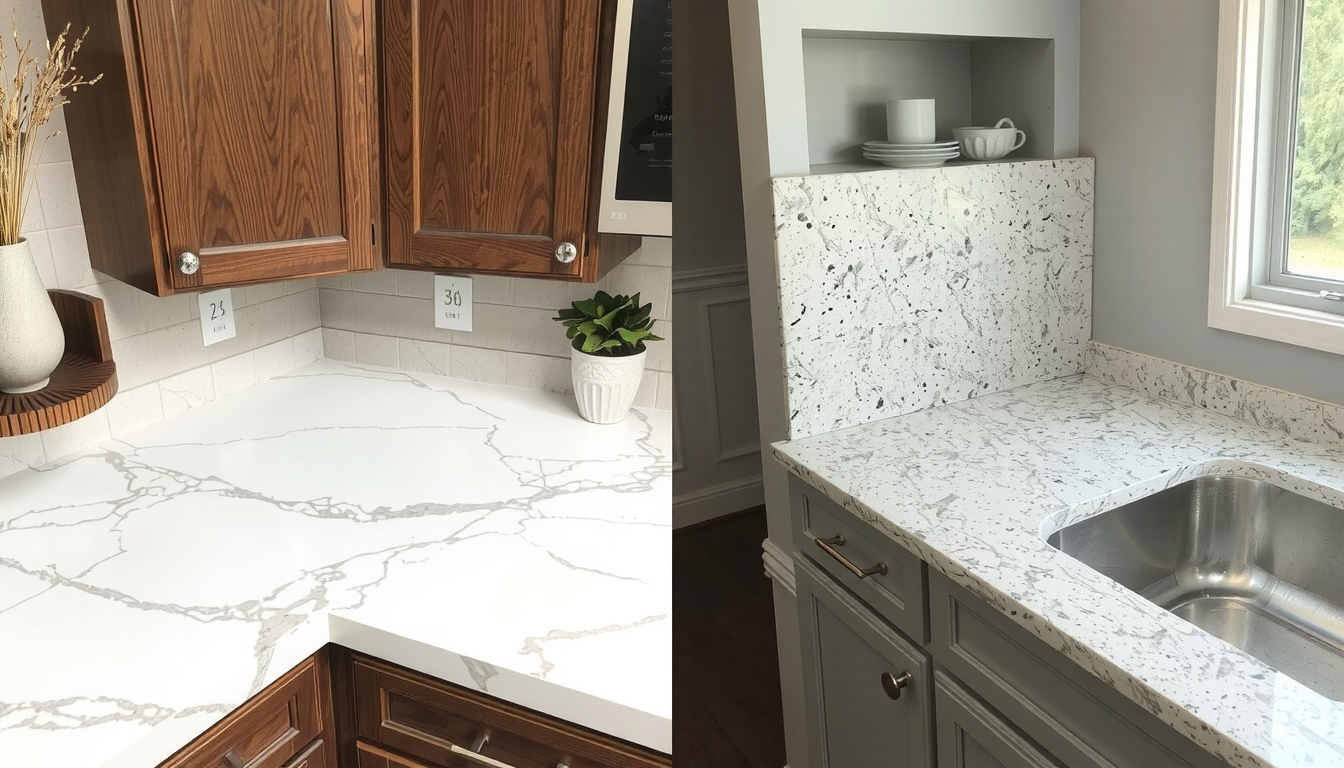
If you’re remodeling a kitchen, the countertop is usually one of the biggest decisions you’ll make. It shapes how the space looks, but just as importantly, it needs to handle daily cooking, spills, heat, and constant use.
In 2026, two of the most requested natural stone options are Taj Mahal Quartzite and Granite. Both are strong countertop materials, but they appeal to different homeowners for different reasons.
One common point of confusion is whether the Taj Mahal is granite. It isn’t. Taj Mahal is a true quartzite. The mix-up usually comes from its impressive durability, which often rivals—and in some cases exceeds—many granite slabs.
In this guide, we’ll break down durability, appearance, pricing, maintenance, and which material tends to work better with different cabinet styles.
Key Findings
- Material: Taj Mahal is a true quartzite, not granite, though it offers similar or better durability.
- Performance: Quartzite is typically harder than granite, with strong scratch and heat resistance.
- Appearance: Taj Mahal features soft cream and beige tones with elegant veining, while granite offers more colors and bolder patterns.
- Cost: Taj Mahal Quartzite usually costs more than standard granite due to higher demand and fabrication complexity.
- Cabinet Pairings: Taj Mahal works well with white, wood-tone, navy, or dark cabinets. Granite can suit both classic and bold kitchen styles.
Overview: Taj Mahal Quartzite vs. Granite
Here’s a quick side-by-side look at two of the most popular kitchen countertop options. The table below highlights the key differences before we get into the details.
Feature | Taj Mahal Quartzite | Popular Light-Colored Granite |
Material Type | Metamorphic Rock (from Sandstone) | Igneous Rock (from Magma) |
Aesthetics | Soft, creamy, marble-like veining | Granular, speckled, or flowing patterns |
Hardness (Mohs) | ~7 | 6 to 6.5 |
Heat Resistance | Excellent | Excellent |
Scratch Resistance | Excellent; harder than granite | Very Good; can be scratched by quartzite |
Etch Resistance | Excellent (if true quartzite) | Good; less susceptible than marble |
Maintenance | Requires sealing (porosity varies) | Requires sealing (porosity varies) |
Cost | Premium; generally higher | Mid-to-high range; often more affordable |
In-Depth Analysis: Strength, Cost, and Appearance
When comparing Taj Mahal Quartzite vs Granite, most homeowners focus on durability, appearance, and long-term value. Both are strong countertop materials, but they perform differently in key areas.
Quartzite vs. Granite Strength
Quartzite is one of the hardest natural stones commonly used in kitchens. On the Mohs scale, it ranks around 7, while granite is usually 6 to 6.5. In practical terms, that usually means better scratch resistance in day-to-day use.
Both materials handle normal kitchen heat well, which is why they remain popular in busy homes. You can place hot cookware on either surface briefly, though trivets are still recommended for long-term protection.
Like most natural stone, both quartzite and granite should be sealed to help prevent stains from oil, coffee, or wine.
Quartzite may also resist etching better than softer stones like marble when exposed to acidic foods such as lemon juice or vinegar. Granite performs well too, but quartzite is often chosen for its extra durability and low-maintenance appeal.
Luxurious Look
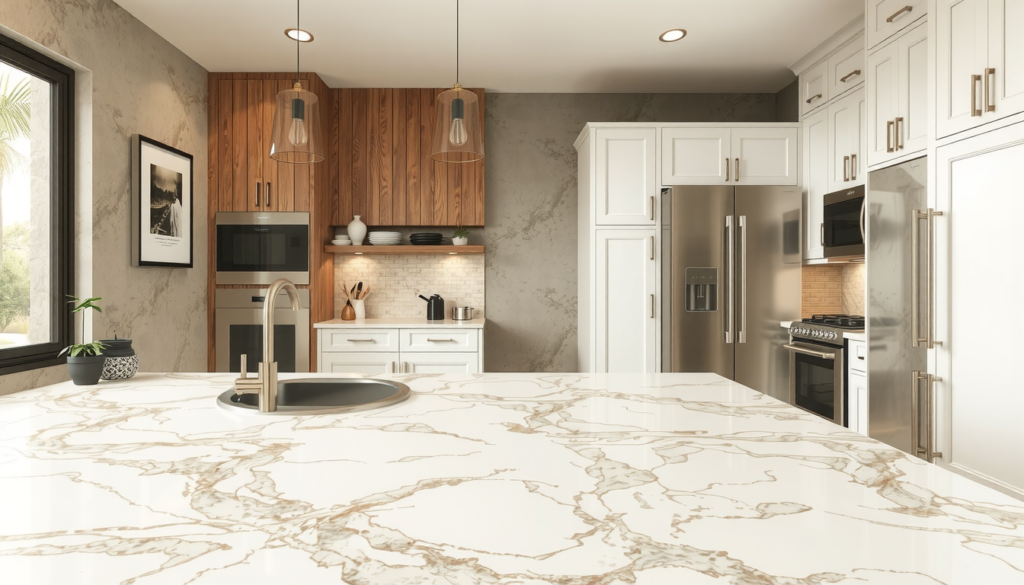
Taj Mahal Quartzite is popular for its refined, marble-like look without the maintenance concerns many people associate with marble. It typically features warm cream, beige, or taupe tones with soft flowing veining, making it a popular choice for elegant kitchen designs.
Granite gives you more variety overall, especially if you want darker colors, bolder movement, or more dramatic patterning. Most slabs have a speckled or mineral-rich look, while some exotic options feature bold movement and dramatic contrast.
Price Differences
When comparing Taj Mahal Quartzite vs Granite cost, Taj Mahal Quartzite is usually the higher-priced option due to limited supply and more complex fabrication.
Installation can also cost more because quartzite is dense and harder to cut. Granite is often the more budget-friendly choice, especially in common colors and patterns.
Designer’s Choice: Best Cabinet Combinations
One of the biggest tests for any countertop is how well it works with your cabinets. When cabinets and countertops complement each other, the whole kitchen feels more cohesive. After seeing countless kitchen combinations over the years, some pairings consistently stand out.
With White and Cream Cabinets
White or cream cabinets are one of the best matches for Taj Mahal Quartzite. The warm tones of the stone soften bright cabinetry and create a clean, timeless look. It’s a combination that rarely feels dated.
Light-colored granite could also be a great combo. Granites with darker specks, such as River White, can also work well, though they usually create a busier visual look against bright white cabinets. It really comes down to whether you want something subtle or more eye-catching.
For Natural Wood Cabinets
Taj Mahal Quartzite pairs naturally with wood cabinetry such as oak, walnut, or maple. This combination often gives the kitchen a warm, balanced, and welcoming feel. The soft veining of the stone doesn’t compete with the natural wood grain, so the kitchen feels warm and balanced rather than visually busy.
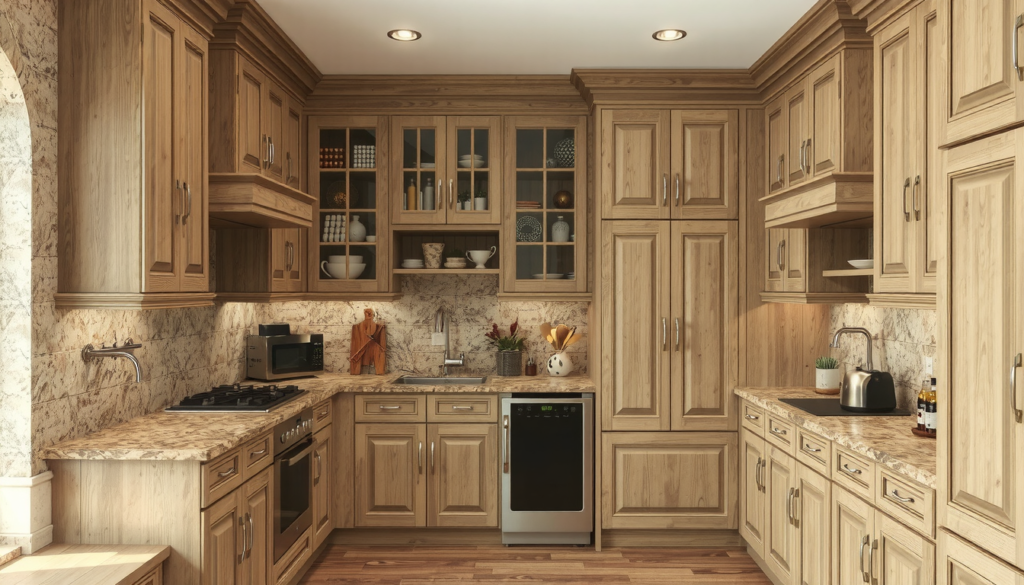
Earth-toned granites with brown, gold, or black accents are another strong option for wood kitchens. These combinations usually create a more traditional or rustic look. The final look depends heavily on the granite pattern you choose.
For Dark or Colored Cabinets
Taj Mahal also pairs surprisingly well with navy, green, or black cabinets, creating a clean contrast that still feels warm. The lighter countertop helps brighten the room and keeps dark cabinets from feeling too heavy. It brightens the space and helps deeper cabinet colors stand out.
For a bolder look, dark granites such as Absolute Black can create a sleek, modern style with dark cabinetry. On the other hand, a lighter granite with dramatic veins will also create a strong focal point against a dark background.
Which is the Best Choice for Your Kitchen?
Choosing between Taj Mahal Quartzite vs Granite ultimately depends on your budget, lifestyle, and design goals. Both are excellent countertop materials, but each suits different types of kitchens.
Best for a Busy Family
For busy family kitchens, a dependable mid-range granite is often the smartest value choice.
Why: Granite is typically more affordable, highly durable, and easy to maintain. Its natural patterning can also help disguise crumbs, water spots, and everyday mess.
Best for the Passionate Home Chef
For homeowners who cook frequently, Taj Mahal Quartzite often has the edge.
Why: It offers excellent heat resistance, strong scratch resistance, and better performance against acidic spills than softer stones like marble. That makes it a smart option for kitchens where cooking happens every day.
Best for a Luxury Remodel
For high-end, design-focused kitchens, Taj Mahal Quartzite is a standout choice.
Why: Its soft marble-like movement, warm neutral tones, and premium appearance create a refined custom look. Many homeowners choose it when they want a higher-end look that still feels timeless.
Final Decision: What to Consider Before You Choose
When comparing Taj Mahal Quartzite vs Granite, the best choice comes down to budget, style, and how your kitchen is used day to day.
Granite is often the practical value option, offering strong durability and a wide range of colors at a lower price point. Taj Mahal Quartzite typically costs more, but many homeowners choose it for its premium look, soft natural movement, and long-term performance.
If possible, visit a local stone yard and view full slabs in person before making a final decision. Natural stone can vary significantly from slab to slab, and small samples rarely capture the full color, movement, or character of the material.