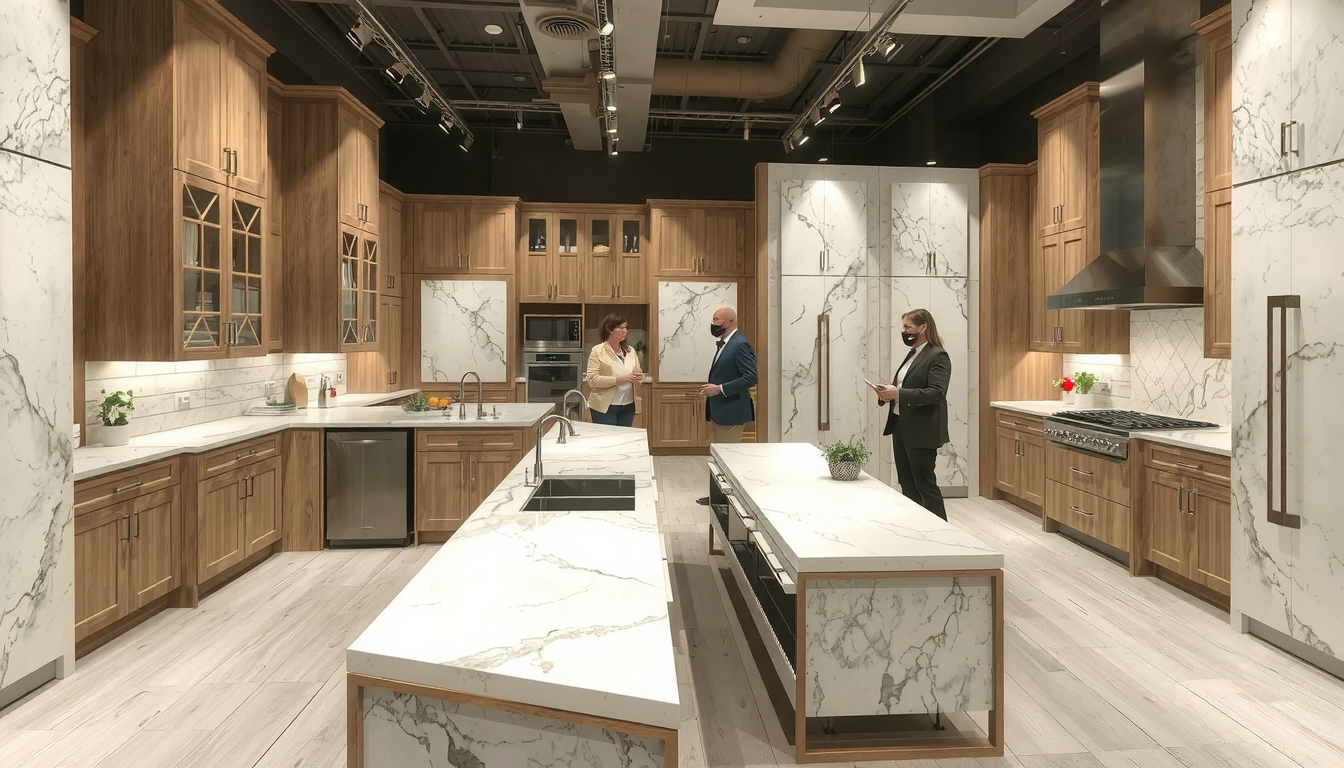
Planning a kitchen remodel usually comes down to two major decisions early on: the countertops and the cabinets. If Taj Mahal quartzite is already on your shortlist, the next step is figuring out where to actually find quality slabs nearby — and how to pair them with cabinets that fit the overall look of the space.
For homeowners working on full kitchen renovations, many are also looking beyond local showrooms and exploring direct sourcing options from overseas manufacturers. Companies like Livranger Kitchen have become increasingly popular for custom kitchen cabinetry because they combine design customization, factory production, and project coordination in one place.
Instead of choosing from limited in-stock cabinet options, homeowners can work with a design team to customize layouts, finishes, storage details, and sizing based on the actual kitchen plan. This tends to work particularly well for larger remodels, investment properties, or projects where matching cabinetry with premium stone surfaces like Taj Mahal quartzite is part of the overall design goal.
Key Things to Know Before You Start s
- Grasp the Supply Chain: You get your stone from a slab yard. Yet, you need a fabricator whom you hire and pay to buy, cut and install the stone.
- Always Check Slabs in Person: Taj Mahal quartzite is a kind of natural stone. Hence, every slab has its own color and veining. You should look at it before buying.
- Understand Your Cabinet Choices: You can select between stock, semi-custom, and custom cabinets. Determine your selection based on your budget, time frame, and design requirements.
- Abide by the Golden Rule: Always install your base cabinets before your countertop is measured. This is a necessary step for a perfect fit.
- Coordinate Your Selections: Bring cabinet door samples to the slab yard. Bring stone samples to the cabinet showroom. It’s the easiest way to see whether the cabinet finish and stone actually work together outside a showroom setting.
Step 1: Finding Taj Mahal Quartzite Near You
Countertops usually become one of the biggest visual decisions in a kitchen remodel. Taj Mahal quartzite has become especially popular because it gives kitchens a softer, high-end look without some of the maintenance concerns that come with marble.
To Begin with, What is Taj Mahal Quartzite?
Despite the name, Taj Mahal quartzite isn’t engineered quartz. IIt’s a natural stone known for its warm beige background and soft flowing veining that can shift slightly depending on the slab and lighting conditions. It possesses flowing veins in gold, tan, or grey, which are the contributing factors to its marble-like elegance.
On the other hand, it is as hard as granite. It’s also harder and more scratch-resistant than marble, which is one reason many homeowners prefer it for busy kitchens. Thus, it is highly scratch-resistant and chip-resistant. When the surface of the material is sealed properly, it is going to be stain-proof as well as resistant to etching from kitchen acid, like lemon juice. This feature of being long-lasting makes it a wise and practical decision to use it in busy kitchens.
The 3 Key Players
Once you start looking for Taj Mahal quartzite suppliers nearby, you will usually work with three different types of professionals. It helps to understand who handles each part of the process before you start requesting quotes.
- Slab Yard / Stone Supplier: This refers to a large warehouse or “gallery” for stone. It is best to visit this place if you want to see the various slabs and choose one that interests you the most. Typically, they do not sell directly to homeowners.
- Fabricator: This is the company you will hire. This is usually the company responsible for templating, cutting, and preparing the slab for installation. They create a template of your cabinets, cut the stone, and finish the edges before installation.
- Installer: This is the crew that will deliver the finished countertop to your house and will set it in place. Usually, the installer is a member of the fabricator’s team.
In most kitchen remodels, the process usually goes like this: You will employ a fabricator. The fabricator will help you choose the slab from a nearby supplier and then, the fabricator will deal with everything else.
How to Find and Vet a Local Supplier
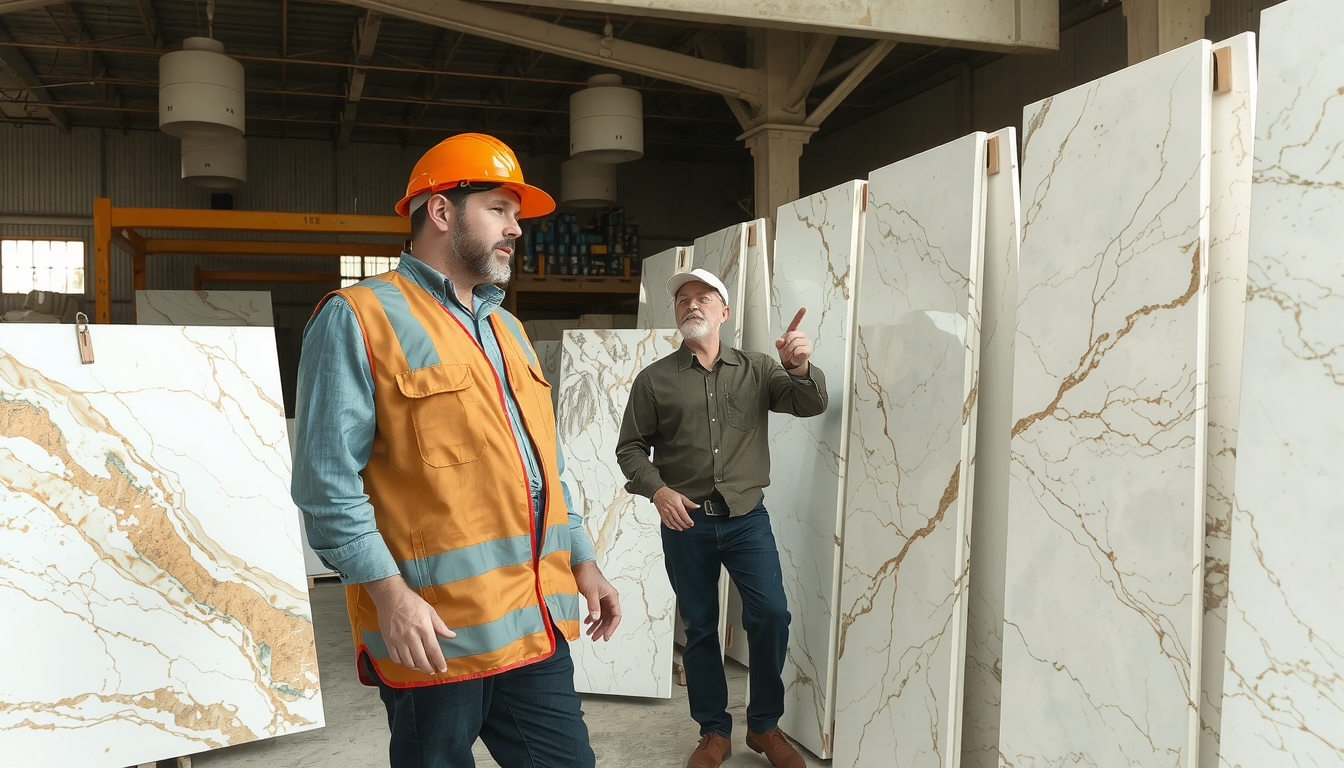
A good slab can still look disappointing if the fabrication or installation work is rushed. Use the following steps to secure a quality local supplier and fabricator.
- Initiate Your Search with Online Browsing. Use exact phrases like “quartzite fabricator in [Your City],” “stone slab yard near me,” or “where to buy Taj Mahal quartzite near me.” That usually gives you a solid starting list of local fabricators and slab yards to compare.
- Visit multiple slab yards if you can. Taj Mahal can vary a lot from slab to slab — some pull warmer and creamier, while others lean more gray or gold in natural light. Seeing slabs in person makes it much easier to compare color variation, veining, and overall tone before making a final decision. Snap pics of the ones you prefer and make a quick note of their lot numbers.
- Collect Price Lists from Fabricators. Get in touch with at least three different fabricators. Share your kitchen measurements along with the specifications of the slab you were fond of. Most fabricators will give you a detailed quote covering fabrication, installation, transportation, and templating costs. You can even find countertop samples at some retailers to get a feel for the material, like the Taj Mahal – Quartzite Countertops – The Home Depot options.
- Ask Thoughtful Questions. When conversing with a fabricator, you should make sure to ask the following vital questions:
- May I have a look at pictures of the other Taj Mahal projects you’ve accomplished?
- What is your approach for templating? Digital laser templates are typically more accurate.
- What is your standard lead time from templating to installation?
- Is sealing the stone included in your price? How frequently should it be resealed?
Buying Taj Mahal Quartzite from China
While many homeowners buy Taj Mahal quartzite through local slab yards, some contractors and large renovation projects also source stone materials directly from China.
China has become one of the largest processing and export centers for natural stone used in residential and commercial projects worldwide. Depending on the supplier and order size, buying through Chinese stone exporters can sometimes reduce material costs or provide access to a wider range of slab selections.
That said, direct sourcing requires more coordination. Before placing an overseas order, it’s worth double-checking details like slab finish, packaging, and shipping timelines. Small mistakes at this stage can become expensive later. Most overseas purchases also involve container shipping and customs clearance, so the process generally makes more sense for full-home renovations, developers, or projects ordering multiple slabs at once.
One thing experienced buyers often recommend is requesting detailed slab photos and videos under natural lighting conditions before shipment. Taj Mahal quartzite can look very different depending on lighting, polishing, and batch variation.
Grasping Cost and Fluctuations
The price of Taj Mahal quartzite can vary. In 2026, you can expect the installed cost to be in the range of $90 to $200+ per square foot.
A number of aspects contribute to the final cost. The thickness of the slab is a decisive factor. 3cm is the common dimension used in kitchens. The complexity of your countertop edges is another thing to consider. Of course, the actual slab has an impact on cost too. Slabs that are more translucent in color and have a desirable type of veining are generally more costly. As this comprehensive guide to Taj Mahal quartzite demonstrates, the market can fluctuate due to the slab’s condition and your locality.
Step 2: Choosing Your Ideal Partner in Custom & Local Kitchen Cabinets
With your countertop in mind, now you need to find the suitable cabinets. Searching for “kitchen cabinets near me” can give you many options. This section will provide you information about the alternatives to choose from and to find a reliable supplier.
Custom vs. Semi-Custom vs. Stock
Kitchen cabinets can primarily be sorted into three groups. Learning the differences will help you select the best match for your house and budget.
Type | Description | Best For | Typical Cost |
Custom | Built from scratch to your exact sizes and style. Offers unlimited options for materials, finishes, and features. | Unique kitchen layouts, specific design needs, and the highest level of quality and craftsmanship. | $$$$ |
Semi-Custom | Made in standard sizes but with options to change things like door styles, finishes, and cabinet depth. | A good balance of personalization and cost. Works for most standard kitchen layouts. | $$-$$$ |
Stock | Pre-made and sold in fixed sizes. Often available for quick delivery or pickup. Ready-to-assemble (RTA) is a common type. | Tight budgets, standard layouts, and projects with a fast timeline. | $ |
Where to Find a Reputable Cabinet Supplier
No matter if you are in pursuit of a full custom kitchen cabinet manufacturer or a showroom with semi-custom lines, a good search strategy helps.
- Use targeted online searches. Look for “custom kitchen cabinet manufacturer near me,” “local cabinet showroom,” or “cabinet installation services near me.”
- Inquire about referrals. Your countertop fabricator can be of great help. They often deal with quality cabinet makers and can provide you with good recommendations.
- Seek advice from professionals. Nearby interior designers and general contractors maintain connections with recognized craftsmen.
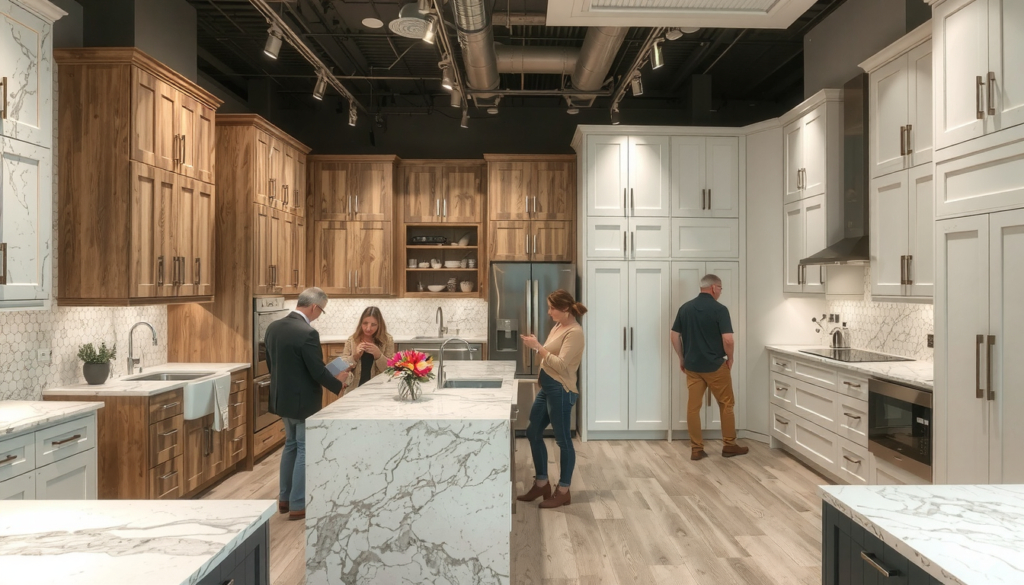
- Explore local cabinets showrooms. Visit actual stores to view and inspect the products. This is the most definitive method to assess the quality of the cabinet boxes, doors, and finishes.
Vetting a Local Cabinet Maker
Once you have a shortlist of local cabinets suppliers, it is time to vet them. Use this checklist to make sure you hire only a trained professional.
- Review Their Portfolio. Check their previous projects. Does their aesthetic align with what you seek?
- Inspect Construction Quality. Request to view a sample cabinet. Is the cabinet constructed of plywood or cheaper particleboard? How are the drawers put together? We often check the drawer construction first when examining custom cabinets. One quick thing to check is the drawer construction. If the dovetail joints already look rushed or flimsy, there’s a good chance the rest of the cabinet quality follows the same pattern.
- Inquire About Hardware and Finishes. What are the brands of the drawer slides and the hinges that they employ? Durable hardware from trusted hardware brands like Blum or Grass ensures your cabinets function smoothly for years.
- Obtain a Thorough Quote. The quotation must detail all costs, including materials, labor, installation, and any taxes.
- Check References. Request contact information for recent clients and call them. Ask about their experience with the process and the final product.
Considering Custom Kitchen Cabinets from China
In recent years, more homeowners and contractors have started sourcing custom kitchen cabinets directly from Chinese manufacturers instead of relying entirely on local cabinet stores.
One reason is flexibility. Many Chinese cabinet factories offer fully customized sizing, finishes, internal storage accessories, and material combinations that are difficult to find in standard stock cabinet programs. This can be particularly helpful for modern kitchens with integrated appliances, oversized islands, or non-standard layouts.
Cost matters too.
For larger kitchens, direct factory purchasing can still make financial sense even after shipping is added in.
The biggest adjustment with overseas sourcing is that planning needs to happen much earlier in the process. Final measurements, appliance specifications, electrical layouts, and installation details usually need to be confirmed before production begins. A good manufacturer will typically provide shop drawings, renderings, and detailed production confirmations before the order moves into fabrication.
Step 3: Coordinating Your Countertop and Cabinet Selections
Choosing materials is usually the fun part of a kitchen remodel. Making sure that they function correctly together needs a bit of project management. This is where several homeowners make expensive mistakes.
The Golden Rule: Cabinets First
For a kitchen remodel to be successful, there’s a specific installation sequence that helps avoid measurement and fitting problems later on.
- Finalize Cabinet Design and Order. Your base cabinet layout must be 100% final before moving on to the countertops. This layout will determine the exact shape and size of your stone.
- Install the Base Cabinets. The cabinets should be delivered and entirely installed. They must be secured and leveled properly in the places they are to stay.
- Create the Countertop Template. Once the cabinets are set, the stone fabricator will visit your residence. They will produce an exact digital or physical template on top of your new cabinets. This is the final measurement.
- Fabricate and Install the Countertop. Using the template, the fabricator will cut your Taj Mahal slab. The finished countertop is then delivered and installed, usually a few weeks after templating.
Getting the Cabinets and Stone to Work Together
Ensuring your cabinets and countertops look beautiful together is key. Follow these simple tips.
- Carry Samples with You. When you are going to a local cabinets showroom, it’s better to take a small sample of your preferred Taj Mahal slab, if possible. While going to the slab yard, it is a good idea to take along a sample of your cabinet door finish.
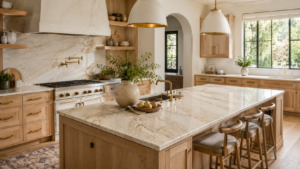
- Pay Attention to Undertones. Taj Mahal quartzite has warm undertones. It complements beautifully with cabinet colors that are equally warm. Think of warm whites, greige, or natural wood stains.
- Check a Variety of Examples. Looking at examples from leading manufacturers like MS International shows how Taj Mahal’s appearance can shift based on the surrounding cabinet colors and lighting.
- Use Your Home’s Lighting. Showroom lights are different from your home’s light. It’s wise to bring your samples home first and look at them together in your kitchen space at different times of the day.
Once the cabinets and slab selections are locked in, the rest of the project tends to move much more smoothly. The biggest thing is getting the installation order right and seeing materials in person before making final decisions.
By this stage, you should have a much clearer idea of how to coordinate your countertop and cabinet selections — whether you’re buying locally or sourcing materials internationally.
FAQ: Buying Taj Mahal Quartzite and Local Cabinets
How much does Taj Mahal quartzite cost?
In 2026, the installed price for Taj Mahal quartzite mostly ranges between $90 and over $200 per square foot. The total amount is determined by the specific slab quality, your location, the job complexity, and the fabricator you have selected.
Is Taj Mahal quartzite durable for a kitchen?
Yes. Taj Mahal quartzite is generally considered one of the more durable natural stones used in kitchens today. Compared with marble, Taj Mahal quartzite tends to hold up better in busy kitchens, especially when it comes to scratches and everyday spills. Nevertheless, just like other natural stones, it requires appropriate sealing to avoid staining.
What’s the difference between a quartzite supplier and a fabricator?
A supplier or slab yard is where massive slabs of stone are displayed for you to select from. A fabricator is the company you hire to purchase that slab, cut it to your kitchen’s exact measurements, finish the edges, and install it. You select at the supplier, but you pay the fabricator.
Can I buy Taj Mahal quartzite or custom kitchen cabinets directly from China?
Yes, many contractors, designers, and homeowners source both quartzite slabs and custom kitchen cabinets from China, especially for larger renovation projects. Chinese suppliers often provide broader customization options and competitive factory pricing.
However, overseas sourcing usually involves additional planning around shipping, measurements, customs clearance, and installation coordination. For smaller remodels, local purchasing may still be simpler, while larger projects can benefit more from direct factory sourcing.
Should I choose my cabinets or my countertops first?
Always finalize your cabinet layout and order your cabinets first. The countertops cannot be accurately measured and templated until the base cabinets are fully installed in your kitchen. However, you should select your cabinet finish and countertop slab around the same time to ensure they coordinate visually.
How do I find a reputable custom kitchen cabinet manufacturer near me?
Start by asking for recommendations from local countertop fabricators, interior designers, or contractors. You can also search online for “custom cabinet makers [your city]” and then visit their showrooms to inspect their work quality, materials, and hardware firsthand. Always check references and look at a portfolio of their completed projects.