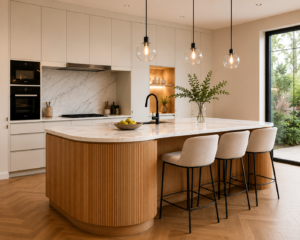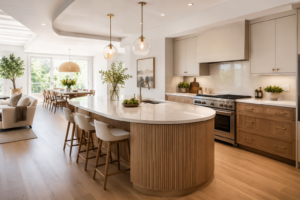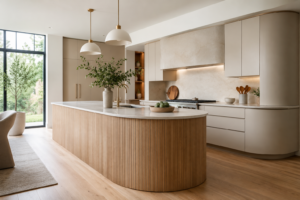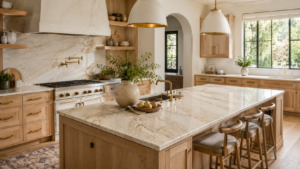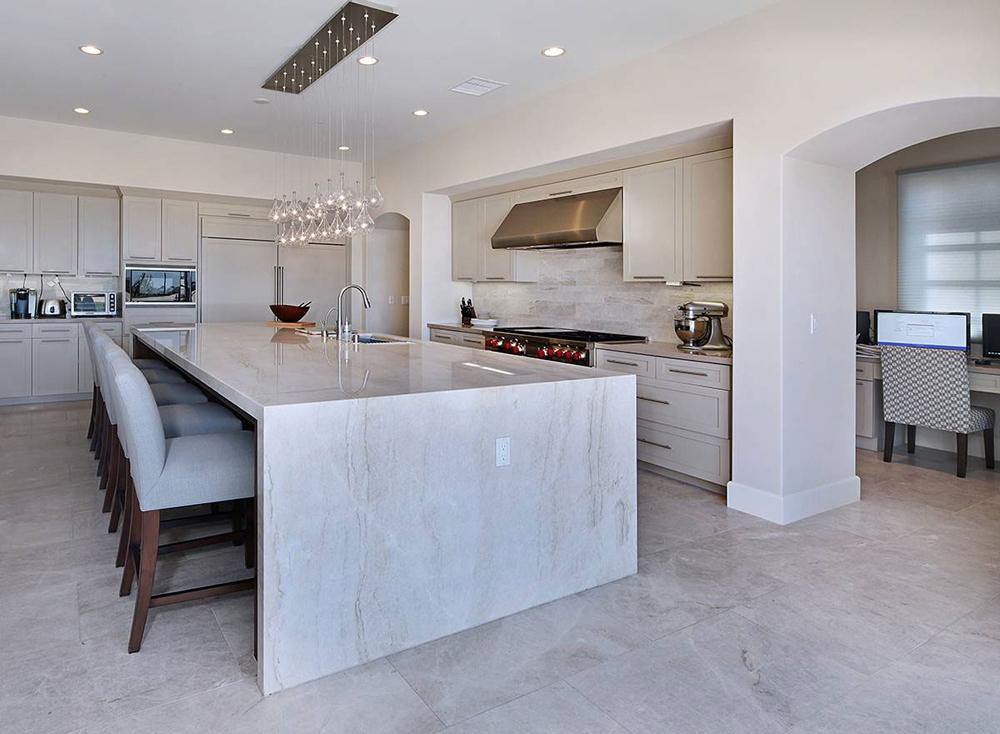
If you’re researching countertop materials, you’ve probably come across Taj Mahal quartzite.
Many homeowners first notice it because it looks surprisingly similar to marble. The difference becomes clear once you start comparing durability, maintenance, and everyday use.
That balance of appearance and practicality is one reason Taj Mahal quartzite has become one of the most popular natural stones for kitchens and bathrooms.
Quick Answer
- Taj Mahal quartzite is a natural stone quarried in Brazil.
- It offers a marble-like appearance with durability comparable to granite.
- Most slabs feature warm beige, ivory, cream, and soft gold tones.
- It resists scratches and heat better than marble.
- Like all natural stone, it should be sealed periodically to help prevent staining.
- Its neutral color palette works with a wide range of kitchen styles and cabinet colors.
What Is Taj Mahal Quartzite and Why Is It So Popular?
Taj Mahal quartzite has become popular for a simple reason: it gives homeowners a marble-like look without feeling as delicate as marble.
The stone is quarried mainly in Brazil and belongs to the quartzite family, which means it is much harder than marble. That matters in a kitchen. A countertop may look beautiful in a showroom, but daily use is different—coffee cups, hot pans, meal prep, kids doing homework at the island.
Marble still has its place, especially if you like natural patina and don’t mind extra care. Taj Mahal is for homeowners who want that soft, warm veining but prefer something more forgiving in everyday use.
That is why you see it so often in kitchen projects now. It looks refined, but it does not ask you to treat the countertop like a display piece.
The Look of Taj Mahal Quartzite: Warm, Natural, and Easy to Pair
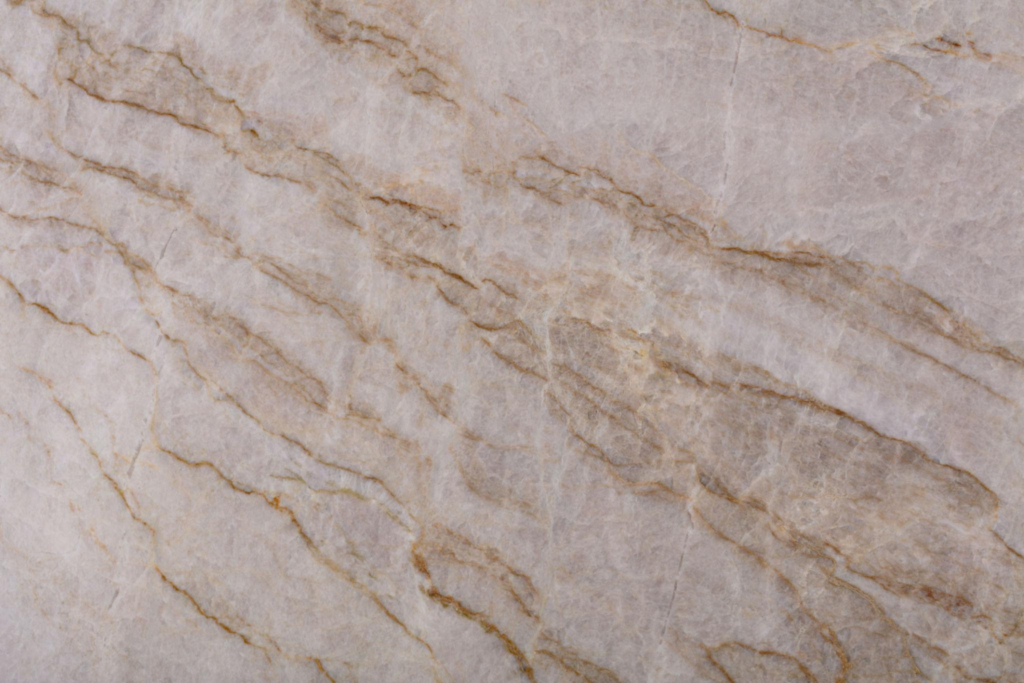
Taj Mahal quartzite usually has a creamy white, ivory, or warm beige background, with soft veining in gold, taupe, gray, or caramel. It does not have the sharp contrast of some white marbles. The overall look is quieter and warmer.
That is why it pairs well with many cabinet colors. White oak, cream, greige, walnut, navy, and deep green can all work, depending on the slab. It is especially useful when you want a light countertop but do not want the kitchen to feel too cold.
Slab variation is the part worth paying attention to. Some Taj Mahal slabs are very subtle, while others show stronger gold movement or wider waves. A small sample can help with the base color, but it will not show how the pattern moves across a full island or long countertop. Seeing the actual slab is still the safest choice.
Does Taj Mahal Quartzite Look Like Marble?
Many homeowners assume Taj Mahal quartzite is marble when they first see it.
That is understandable. The soft veining and light background create a very similar impression, especially from a distance.
Many Taj Mahal slabs resemble high-end marble because of their soft, flowing veining and light background colors. From a distance, many people struggle to tell the difference.
However, the similarities are mostly visual.
Marble is significantly softer than quartzite and is more susceptible to scratching, etching, and staining. Acidic foods such as lemon juice, vinegar, and wine can leave permanent marks on marble surfaces if not cleaned promptly.
Taj Mahal quartzite performs much better in these situations.
For homeowners who love the look of marble but feel concerned about maintenance, Taj Mahal quartzite often becomes one of the strongest alternatives available.
Choosing the Right Finish
The finish you select can significantly influence both the appearance and day-to-day maintenance of your countertop.
Polished Finish
A polished finish remains the most popular option.
The glossy surface reflects light and enhances the stone’s natural depth, making the veining more visible and creating a brighter overall appearance.
This finish works well in traditional kitchens, transitional spaces, and luxury designs where homeowners want the stone to stand out.
Honed Finish
A honed finish provides a softer, matte appearance.
Many homeowners choose this option for modern or minimalist spaces where they want a more understated look.
While honed surfaces can hide minor scratches well, fingerprints and oils may be slightly more noticeable compared to polished surfaces.
Leathered Finish
Leathered quartzite has become increasingly popular in recent years.
This finish adds a subtle texture that can be felt by hand while maintaining a soft sheen.
Many homeowners appreciate how well it disguises fingerprints, smudges, and water spots. It also creates a more natural, tactile appearance that works especially well in organic and contemporary designs.
Whenever possible, it’s worth viewing all three finishes in person before making a final decision. The same slab can look surprisingly different depending on the finish applied.
How Durable Is Taj Mahal Quartzite?
A countertop can look perfect in the showroom and still be stressful to live with. The real question is what happens after a few months of cooking, coffee, hot pans, and people using the island every day.
This is where Taj Mahal quartzite earns much of its appeal. It gives you the soft look of marble, but it is far more forgiving in a working kitchen.
Scratch Resistance
Taj Mahal quartzite ranks around 7 on the Mohs hardness scale, while marble is usually around 3 to 5.
That difference matters when the countertop is used every day. You should still use a cutting board, but plates, utensils, small appliances, and normal kitchen contact are less likely to leave visible marks than they would on marble.
Heat Resistance
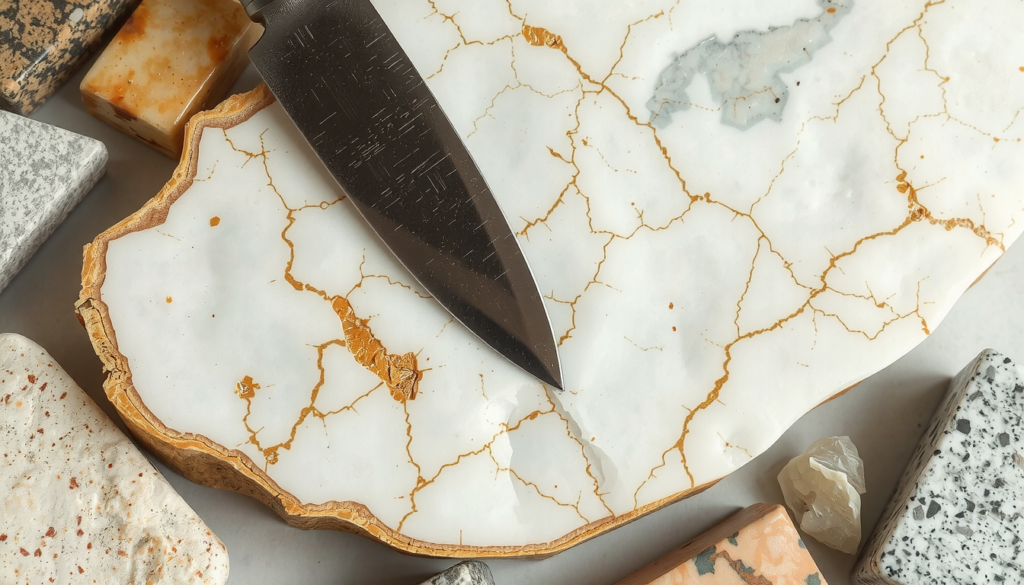
Quartzite handles heat better than many countertop materials, especially engineered surfaces that contain resin.
That does not mean you should treat it carelessly. A trivet is still the safer habit for hot pans and baking trays. But for a busy kitchen, Taj Mahal quartzite gives you more confidence than materials that are more sensitive to heat.
Stain Resistance
Taj Mahal quartzite is dense, but it is still natural stone.
Coffee, red wine, cooking oil, tomato sauce, and fruit juice are the spills to watch. If the stone is sealed properly and wiped promptly, daily maintenance is usually simple.
To check whether the sealer is still working, place a few drops of water on the countertop. If the water beads up, you are probably fine. If it spreads out or leaves a darker spot after a few minutes, the stone may need resealing.
Taj Mahal Quartzite vs Marble, Granite, and Quartz
Many homeowners narrow their countertop search to four materials: quartzite, marble, granite, and engineered quartz.
From there, the real question is simple: do you care more about appearance, maintenance, or durability?
Choose Taj Mahal Quartzite If:
- You want a natural stone appearance.
- You like marble but want better durability.
- Heat resistance is important.
- You prefer subtle, elegant veining.
Choose Marble If:
- Appearance is your highest priority.
- You don’t mind additional maintenance.
- Natural patina and aging appeal to you.
Choose Granite If:
- Durability is the primary concern.
- You prefer more pronounced natural patterns.
- Budget is a major factor.
Choose Quartz If:
- Low maintenance matters most.
- You want consistent color and pattern.
- You prefer a non-porous surface.
For many homeowners, Taj Mahal quartzite ends up offering one of the best balances between beauty, durability, and long-term practicality.
Where Does Taj Mahal Quartzite Work Best?
Although kitchen countertops remain the most common application, Taj Mahal quartzite works well throughout the home.
Kitchen Islands
Large kitchen islands are perhaps the most popular use.
The stone’s subtle movement and warm color palette create a focal point without overwhelming the room.
It also works beautifully for waterfall-edge designs, where the slab continues down the sides of the island.
Full-Height Backsplashes
Many homeowners now extend Taj Mahal quartzite from the countertop all the way to the upper cabinets.
Besides creating a cleaner appearance, this approach reduces grout lines and simplifies maintenance.
Bathroom Vanities
Properly sealed Taj Mahal quartzite performs well in bathrooms where moisture resistance is important.
Its soft colors also help create a calm and relaxing atmosphere.
Fireplace Surrounds
Because of its excellent heat resistance, Taj Mahal quartzite is often used around fireplaces.
The natural veining adds visual interest without competing with the rest of the room’s design.
What Cabinet Colors Work Best with Taj Mahal Quartzite?
Taj Mahal quartzite is easier to pair than many bright white stones because it usually has warm beige, ivory, or soft gold undertones. That warmth gives you more room to work with cabinet colors, though the exact slab still matters.
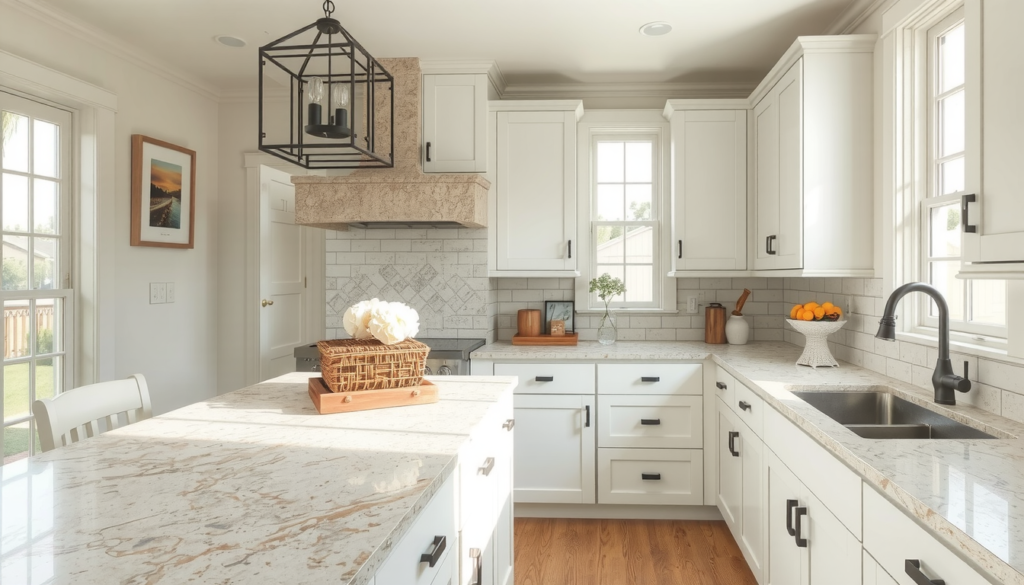
White Cabinets
White cabinets are a safe choice if you want the kitchen to stay bright without feeling cold. Taj Mahal adds enough warmth to keep an all-white kitchen from looking flat.
White Oak Cabinets
This is probably one of the most natural pairings.
White oak and Taj Mahal both carry warm undertones, so the countertop and cabinets tend to feel connected rather than separate. It works especially well in modern, organic, and transitional kitchens.
Walnut Cabinets
With walnut, the look becomes richer and more contrasted.
The darker wood makes Taj Mahal’s lighter background stand out, while the stone’s beige and gold tones keep the contrast from feeling too sharp.
Greige Cabinets
Greige is a good option when the slab has more taupe or beige in it. It gives you a softer palette than pure white without pushing the kitchen too yellow or overly warm.
Deep Green or Navy Cabinets
Deep green and navy can look excellent with Taj Mahal, but they need a little more care.
These darker colors create strong contrast, so the pairing usually works best when the slab has enough warmth and the kitchen gets good natural light.
How to Choose the Right Taj Mahal Slab
Selecting the right slab is just as important as selecting the material itself.
Always View the Full Slab
Small samples rarely show the complete pattern.
A slab may contain dramatic veining or color variation that isn’t visible on a sample piece.
Always inspect the actual slab before committing to a purchase.
Compare Multiple Slabs Side by Side
If your project requires more than one slab, ask to view them together.
This helps ensure consistency in both color and veining.
Bring Cabinet and Flooring Samples
A slab that looks neutral at the stone yard can appear much warmer or cooler once installed.
Comparing materials together reduces the risk of unpleasant surprises later.
Not sure how Taj Mahal quartzite will work with your cabinet layout? Livranger can review your colors, layout, and storage needs through a quick video consultation.
Check Different Lighting Conditions
Natural light and artificial light can dramatically change how a slab appears.
If possible, view the material under multiple lighting conditions before making a final decision.
Understand Fissures vs Cracks
Natural quartzite often contains small fissures that formed during the stone’s creation.
These are typically cosmetic and do not affect performance.
A reputable supplier can help distinguish between natural fissures and structural cracks that may require concern.
Is Taj Mahal Quartzite Worth It?
Taj Mahal quartzite is worth considering if you want the softness of marble, but not the same level of daily care.
It is not the cheapest countertop option, and it still needs proper sealing. But for kitchens where people cook often, gather around the island, or want a natural stone that feels warm without looking busy, it makes a lot of sense.
The most important step is choosing the right slab. Color, veining, and finish can vary more than most homeowners expect.
At Livranger, we help homeowners look beyond the slab itself. Our team can help you match Taj Mahal quartzite with cabinet finishes, layout details, and the overall kitchen style, so the countertop feels connected to the whole space—not added at the end.