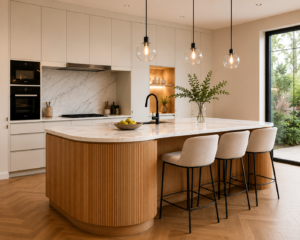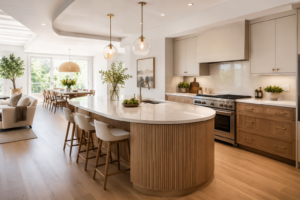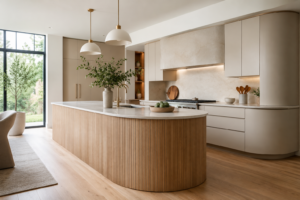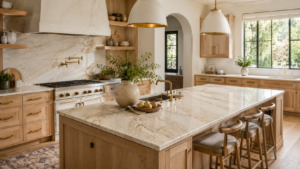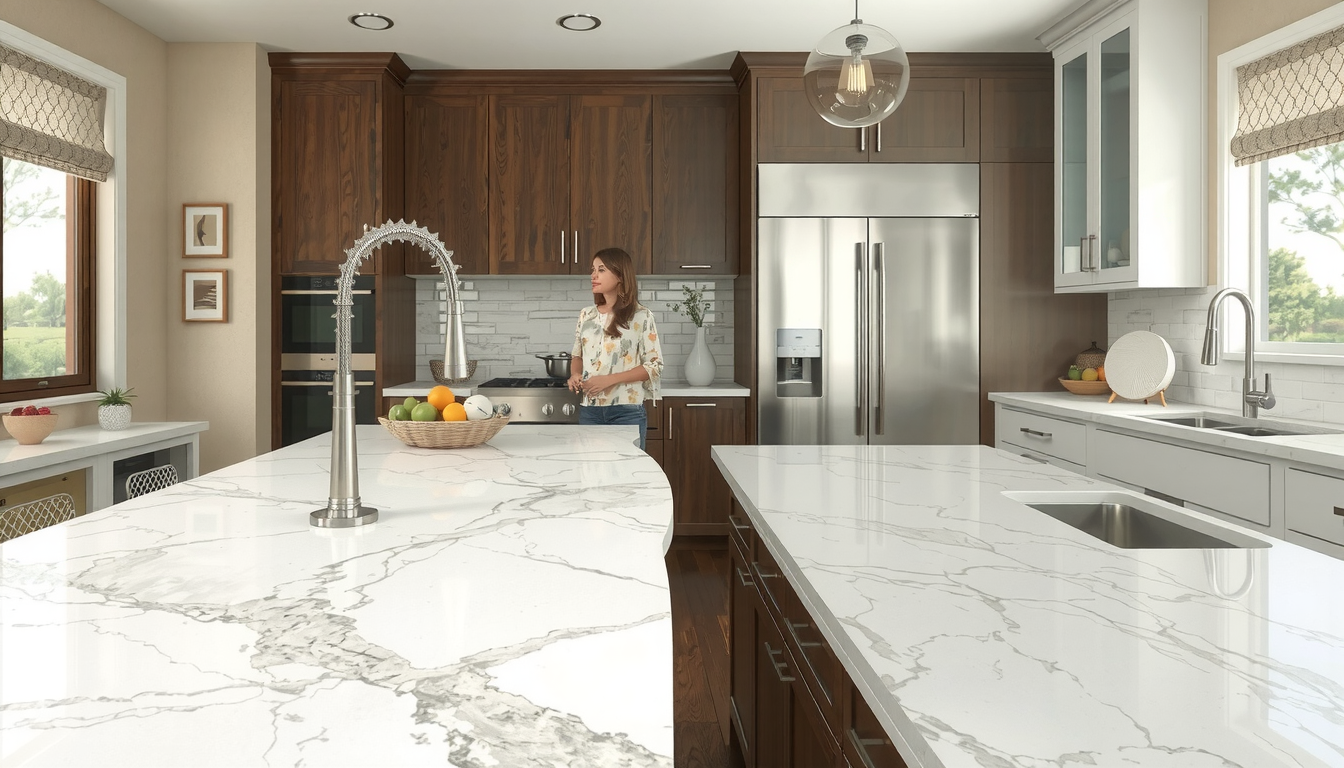
Taj Mahal quartzite is popular because it gives homeowners a marble-like look without feeling as delicate in daily kitchen use.
In actual kitchens, the questions usually go beyond appearance. Will it stain if someone leaves coffee on the counter? Does it hold up to daily cooking? How much maintenance does it really need five or ten years from now?
Those are the questions worth answering before deciding whether the premium price makes sense for your project.
Quick Answer
Taj Mahal quartzite is a strong choice if you want the elegant look of marble without many of marble’s maintenance concerns.
Its biggest advantages include:
- Natural luxury appearance
- Strong heat resistance
- Long-lasting durability
Its biggest drawbacks include:
- Higher upfront cost
- Periodic sealing requirements
- Natural variation between slabs
- Professional installation costs
For many homeowners planning a long-term kitchen renovation, the advantages often outweigh the disadvantages.
Taj Mahal Quartzite Pros and Cons at a Glance
Pros | Cons |
Marble-like appearance | Premium price |
Excellent scratch resistance | Requires professional installation |
Strong heat resistance | Needs periodic sealing |
Unique natural patterns | Slab variation |
Durable for busy kitchens | Repairs can be costly |
Why Is Taj Mahal Quartzite So Popular?
When people walk through a slab yard, Taj Mahal is often one of the first stones that makes them stop and take a second look.
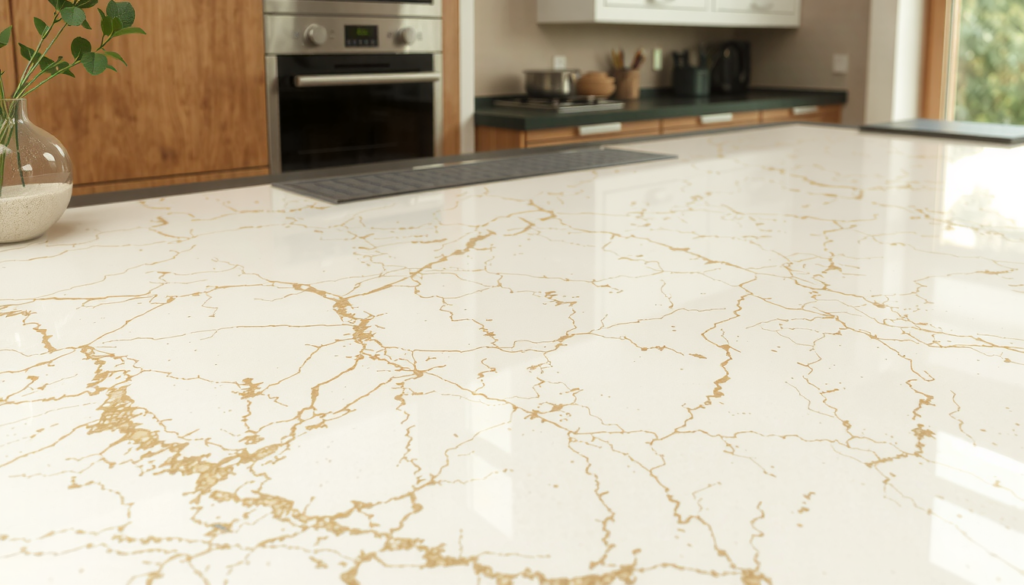
Its creamy white background and subtle gold, beige, and gray veining create a similar visual effect to high-end marble. Unlike marble, however, it is generally more resistant to scratching and daily wear.
Another reason homeowners keep coming back to Taj Mahal quartzite is that it rarely feels out of place.
We’ve seen it used in bright modern kitchens with flat-panel cabinets, but it works just as well in warmer farmhouse-style spaces with natural wood tones. Designers like it because the stone doesn’t lock you into a single design direction.
Real Questions Homeowners Ask Before Choosing Taj Mahal Quartzite
Does Taj Mahal Quartzite Stain Easily?
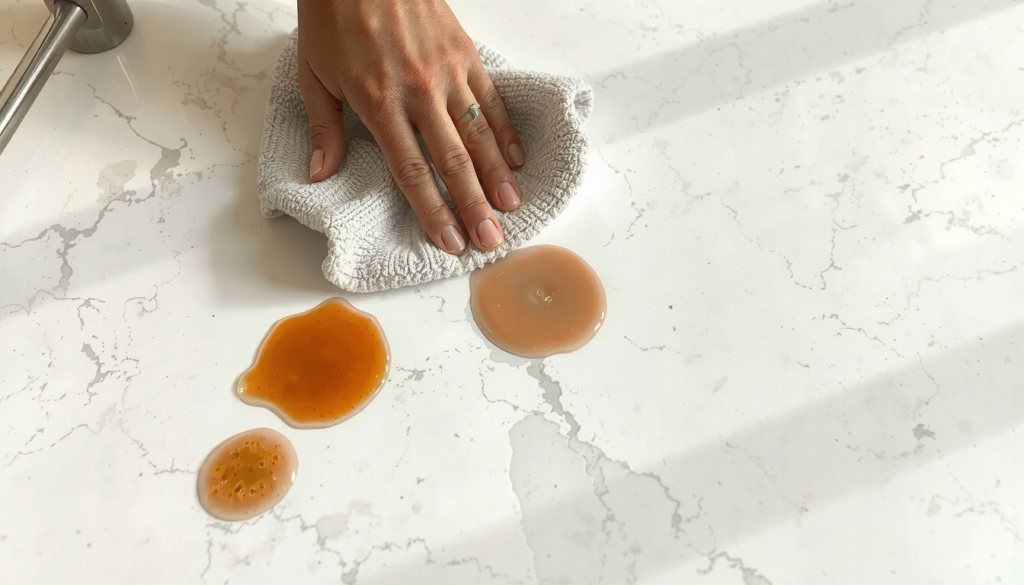
Not usually, provided the surface is sealed and maintained properly.
That said, “stain resistant” doesn’t mean “stain proof.” If a glass of red wine sits overnight or cooking oil is left on the surface for hours, you may run into problems. Fabricators often point out that most staining complaints come from neglected spills rather than the stone itself.
Compared with marble, Taj Mahal quartzite generally gives homeowners a little more forgiveness in everyday use.
Will Taj Mahal Quartzite Turn Yellow Over Time?
Under normal conditions, no.
Natural aging does not typically cause yellowing.
When discoloration occurs, it is often related to moisture intrusion, poor sealing, residue buildup, or issues with resin repairs rather than the stone itself.
Choosing a reputable supplier and maintaining the surface properly greatly reduces this risk.
Does Taj Mahal Quartzite Crack?
Cracks can happen, but they are not usually caused by the quartzite itself.
The bigger risks often come from the project details: weak cabinet support, oversized sink cutouts, unsupported overhangs, poor packing, or damage during transport. This matters even more when cabinets and countertops are sourced from overseas, where a small mistake in packing or loading can turn into cracks, delays, or replacement costs after arrival.
Buying Taj Mahal Quartzite From Overseas
For buyers sourcing cabinets or Taj Mahal quartzite countertops from China, Livranger helps manage these steps before shipment, including production follow-up, packing checks, container loading, and sea shipping coordination.
Is Taj Mahal Quartzite Easier to Maintain Than Quartz?
If maintenance is your top priority, engineered quartz is usually the easier answer.
There’s no sealing schedule to think about, and daily cleanup tends to be simpler. Many people considering Taj Mahal quartzite aren’t choosing between quartzite and marble. They’re actually choosing between quartzite and marble-look quartz.
Most people who choose Taj Mahal quartzite care more about appearance than saving 15 minutes a year on maintenance.
How Different Is It From Marble?
At first glance, Taj Mahal quartzite and marble can look surprisingly similar. In daily use, however, the difference becomes much more noticeable.
Marble is softer and more vulnerable to scratching, staining, and acid etching.
Taj Mahal quartzite provides a similar elegant appearance while offering substantially better durability for active kitchens.
This combination is one of the main reasons homeowners choose it over marble.
What Homeowners Say Online
One interesting pattern shows up repeatedly in homeowner discussions online.
The discussion usually comes down to a trade-off: natural variation and heat resistance versus lower maintenance and consistency.
What Will It Look Like After 10 Years?
One reason natural stone has remained popular for decades is that it doesn’t depend heavily on design trends.
Most Taj Mahal countertops installed ten years ago still look remarkably similar today. What usually dates the kitchen is the cabinet style or backsplash choice, not the stone itself.
Do You Really Need to Seal It Every Year?
Not necessarily.
The ideal sealing schedule depends on:
- Slab density
- Usage frequency
- Type of sealant
- Fabricator recommendations
Resealing depends on the slab and daily use. If water starts soaking in instead of beading on the surface, it is probably time to reseal.
A simple water-drop test is often the easiest way to determine whether the surface still has adequate protection.
What Kitchens Are Not Ideal for Taj Mahal Quartzite?
Taj Mahal quartzite may not be the best fit if:
- You want completely maintenance-free countertops
- You dislike natural variation
- You prefer perfectly uniform patterns
- You’re working with a tight remodeling budget
- You want the lowest-maintenance option available
In these situations, engineered quartz may be the more practical choice.
Taj Mahal Quartzite vs Marble vs Granite vs Quartz
Feature | Taj Mahal Quartzite | Marble | Granite | Engineered Quartz |
Appearance | Warm natural veining | Dramatic luxury veining | Speckled patterns | Consistent patterns |
Scratch Resistance | Very High | Low | High | High |
Heat Resistance | Excellent | Excellent | Excellent | Moderate |
Stain Resistance | Good (when sealed) | Moderate | Good (when sealed) | Excellent |
Maintenance | Low | High | Low | Very Low |
Sealing Required | Yes | Yes | Usually | No |
Price | Premium | Premium | Mid to High | Mid to High |
If low maintenance is your top priority, engineered quartz is usually the easiest option.
If you want a natural luxury appearance without many of marble’s drawbacks, Taj Mahal quartzite is often the stronger long-term choice.
Who Is Taj Mahal Quartzite Best For?
Choose Taj Mahal Quartzite If:
- You want a marble-like look with better durability.
- Your kitchen sees frequent cooking and daily use.
- You prefer natural stone over manufactured surfaces.
- You’re comfortable with occasional sealing.
- You’re planning to stay in the home for years.
Final Verdict: Is Taj Mahal Quartzite Worth It?
For most homeowners, the decision comes down to a simple question:
Do you want the look of natural stone badly enough to accept a little maintenance?
If the answer is yes, Taj Mahal quartzite remains one of the strongest options available. It delivers much of the visual appeal people love about marble while avoiding many of marble’s most common frustrations.
Most homeowners who regret choosing Taj Mahal quartzite do so because they expected a maintenance-free surface. If you understand that occasional sealing is part of owning natural stone, the material is usually easy to live with over the long term.