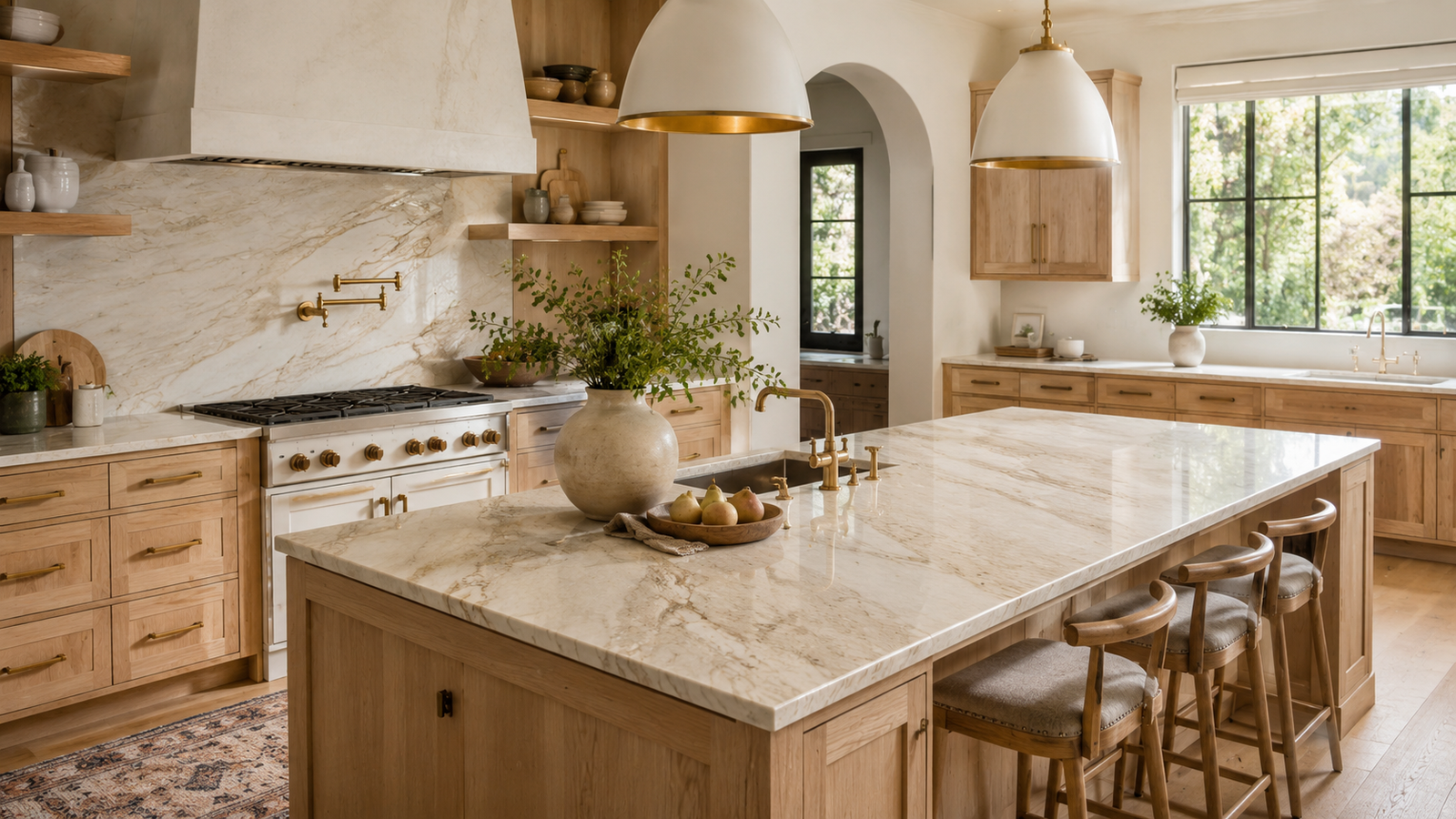
Many homeowners want the soft, veined look of marble, but not the worry that comes with using marble in a busy kitchen. Lemon juice, wine, tomato sauce, and daily cleanup can make the surface feel too delicate.
Taj Mahal quartzite has become popular because it gives a similar light, refined look while feeling easier to live with.
That balance is the main reason designers and homeowners keep choosing it for high-end kitchens.
Key Takeaways
- Best for warm, refined kitchens: Taj Mahal quartzite usually has a creamy white, beige, or light greige base with soft gold, taupe, caramel, or pale brown movement.
- Less delicate than marble, but not maintenance-free: True quartzite is generally harder and more resistant to scratching and etching than marble, but sealing and basic care still matter.
- Works especially well with white oak: Its warm undertone pairs naturally with white oak cabinets, warm white paint, brass or champagne bronze hardware, and soft neutral palettes.
- Check the actual slab before choosing: Taj Mahal quartzite can vary a lot from slab to slab. Some pieces look creamy and quiet; others show stronger beige, gold, taupe, or directional veining.
- Not for every kitchen: It may not be the best choice if you want a pure white countertop, bold gray marble veining, or the lowest-cost surface option.
A Warm Look That Feels Natural
Taj Mahal quartzite is popular because it sits between a few countertop looks that can be hard to get right.
Cool white marbles such as Carrara or Calacatta can look beautiful, but in some kitchens they feel a little sharp or formal. Beige stones feel warmer, but they can sometimes look heavy or dated. Taj Mahal quartzite lands in the middle: light enough to keep the kitchen open, but warm enough to avoid a cold, sterile look.
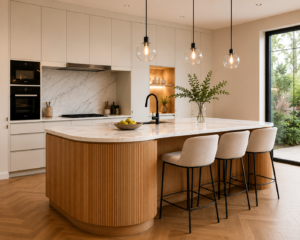
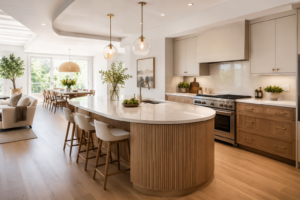
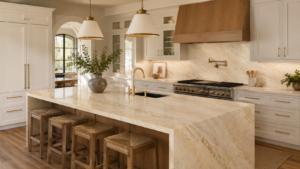
Most slabs have a creamy white, soft beige, or light greige base, with gentle movement in gold, taupe, caramel, or pale brown tones. The pattern is usually quieter than a bold marble-look slab, so it works well on large islands and full-height backsplashes without taking over the whole room.
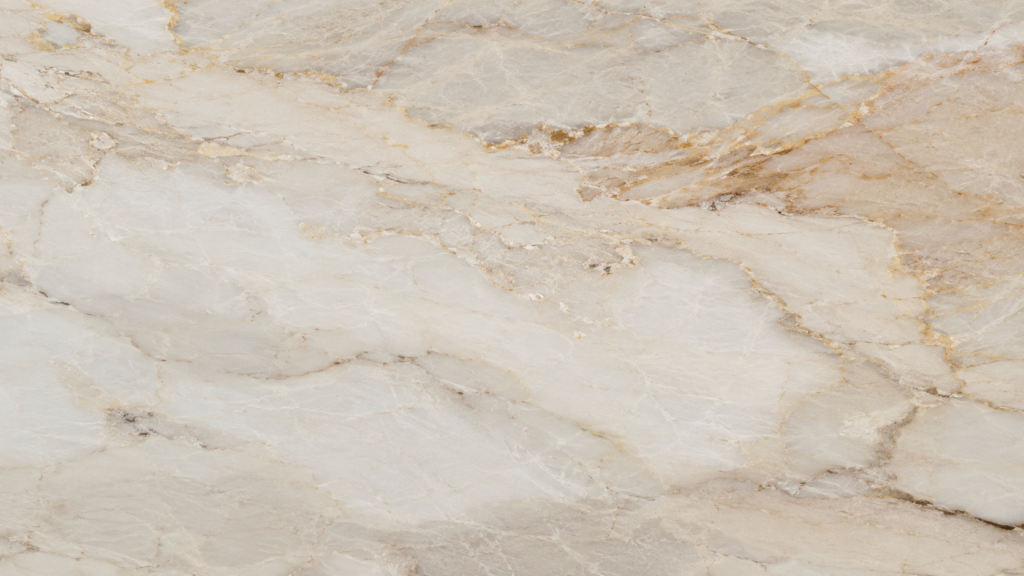
That is the main visual appeal. It gives the kitchen softness and movement, but still leaves room for white oak, warm white cabinets, brass hardware, or other neutral finishes to do their part.
Why It Handles Kitchen Use Better Than Marble
Marble’s main weakness shows up in everyday use, not in photos. Lemon juice, vinegar, wine, tomato sauce, and some household cleaners can leave dull etch marks on the surface. Fine scratches can also appear more easily, especially around prep areas, sinks, and high-use corners.
Taj Mahal quartzite is usually chosen because it handles that kind of kitchen use with less stress. True quartzite is generally harder than marble and more resistant to acidic spills, which makes it a better fit for homeowners who cook often or do not want marble’s patina to appear too quickly. Better Homes & Gardens also notes that quartzite offers marble-like veining with better durability, while still needing quick spill cleanup, proper cleaning, and sealing to keep the surface in good condition.
A simple comparison:
Feature | Taj Mahal Quartzite | Classic Marble |
Hardness | Usually higher | Lower |
Scratch resistance | Better for daily kitchen use | More prone to scratches |
Acid resistance | Usually better than marble | Prone to etching |
Maintenance | Moderate; sealing still recommended | Higher; more careful use needed |
Best for | Kitchens used for daily cooking | Lower-traffic spaces or homeowners who accept patina |
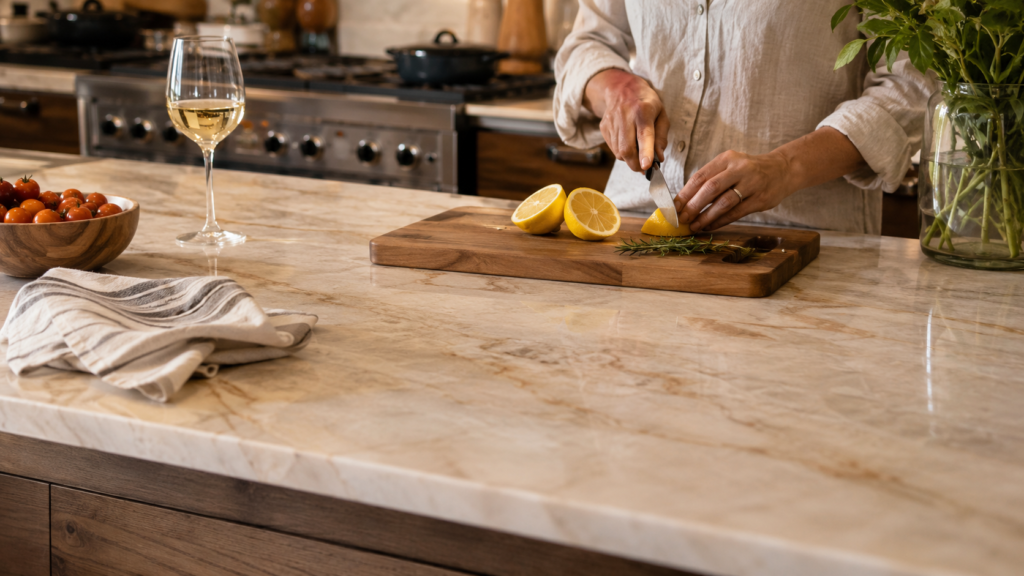
Still, Taj Mahal quartzite should not be treated as maintenance-free. Proper sealing matters, and it is still smart to wipe spills quickly and use cutting boards in prep areas.
Why It Works So Well With White Oak
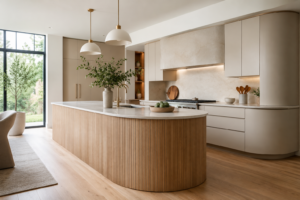
Taj Mahal quartzite and white oak work well together because neither material feels too cold or too polished on its own. White oak brings a natural beige-gold tone and visible grain, while Taj Mahal quartzite adds a lighter, more refined surface with soft cream, taupe, or gold movement.
That contrast is what makes the pairing feel balanced. The stone keeps the kitchen looking finished, while the wood prevents it from becoming too formal or showroom-like. It is especially effective in kitchens where the goal is warm, clean, and high-end without using a stark white countertop.
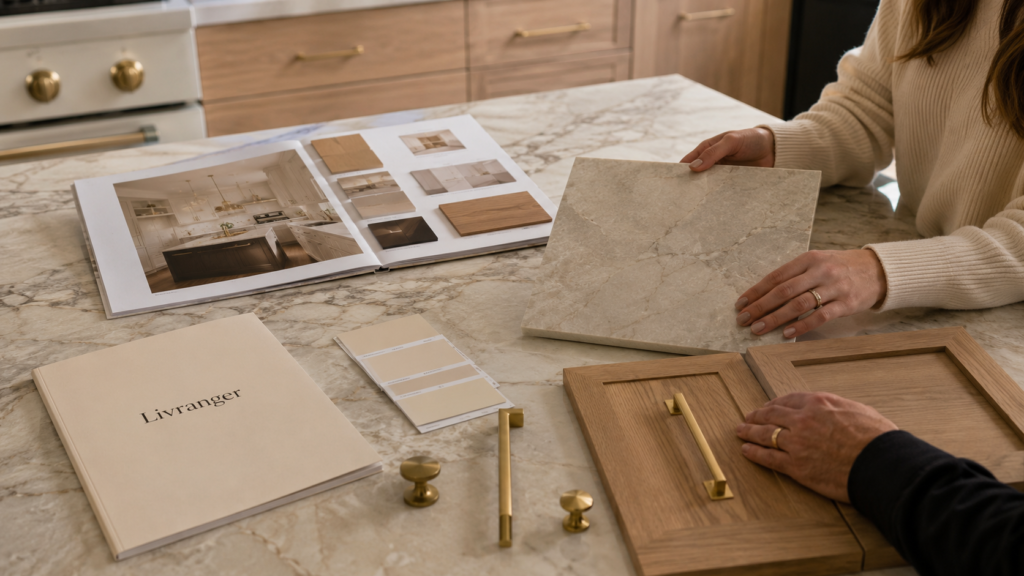
This pairing also gives the rest of the kitchen more flexibility. Brass, champagne bronze, and other warm metal finishes usually bring out the gold tones in the slab; Architectural Digest has made a similar point about brass hardware helping pull warmer tones from wood cabinetry. For a custom kitchen project, this is also where Livranger’s design process can help: cabinet finish, countertop color, hardware tone, and overall style should be reviewed together, not chosen one by one in isolation.
How to Use Taj Mahal Quartzite in a Kitchen
Taj Mahal quartzite usually looks best when the rest of the kitchen does not fight it. Warm whites, white oak, soft neutral tile, brass, champagne bronze — these materials tend to sit comfortably with its cream, beige, and taupe tones.
For countertops, it is a fairly safe choice visually. The pattern is usually calm enough for a large surface, but not so plain that the kitchen feels flat. That is why it often works well on islands. You get enough movement to make the island feel intentional, without making the whole room about the stone.
A full-height backsplash is the more polished option. It can look especially good behind a range or along the main countertop wall, where the slab has room to show its veining.
But layout matters here. A lot.
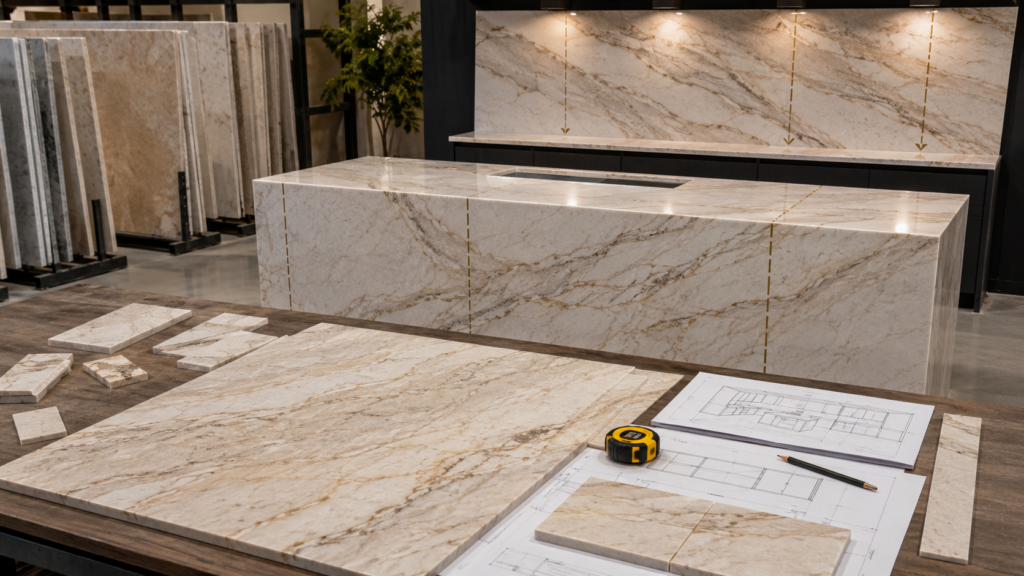
If the veining is cut awkwardly, or if the seam falls in the wrong place, the backsplash can start to look broken instead of continuous. This is one of those details that may not seem important when you are looking at a slab in the yard, but it becomes very obvious once it is installed.
For a softer look, or when the budget does not allow for a full slab backsplash, simple tile works fine. Creamy subway tile, handmade zellige, or warm neutral ceramic tile can all pair well. The main thing is to avoid tile that tries to compete with the countertop.
Waterfall edges can also work, especially on a large island. Just do not choose that detail from a Pinterest photo alone. Check the slab layout, vein direction, side panel cut, and seam placement with the fabricator first. A good waterfall edge looks calm and intentional. A rushed one looks expensive, but not necessarily better.
What to Check Before Choosing a Slab
Not every Taj Mahal quartzite slab looks the same, and the name alone does not tell you enough.
Many kitchen studios or stone suppliers use different names to describe slabs with different colors or veining, such as creamier, warmer, more golden, or more dramatic versions. These names can be helpful in a showroom, but they are not always industry-wide standards. One supplier’s “Taj Mahal” may look softer and quieter, while another may carry stronger beige, taupe, or caramel movement.
That is why the actual slab matters more than the label. Check it with your cabinet, flooring, paint, and hardware samples, and look at it under lighting close to your kitchen conditions.
If the kitchen is being planned as a full custom project, Livranger can also help homeowners compare cabinet colors, finishes, dimensions, and material choices before production starts. It is easier to adjust a warm white cabinet or brass finish during the design stage than after the stone and cabinetry are already installed.
Also ask the stone supplier or fabricator about the exact slab’s porosity, sealing needs, and care recommendations before you commit.
A few things worth checking before you commit:
- Undertone: Does it look creamy, beige, gold, gray, or taupe in your lighting?
- Movement: Is the veining soft and cloudy, or more directional and dramatic?
- Finish: Do you want the shine of polished stone, or the softer look of honed?
- Sealing: How often does this slab need to be sealed?
- Layout: Will the veining work across the island, backsplash, or waterfall panels without looking awkward?
The slab name gets you close, but the actual piece is what matters. If the undertone works with your cabinets, and the movement feels right at full size, Taj Mahal quartzite starts to make a lot more sense.
Is Taj Mahal Quartzite Worth Choosing?
Yes, if you want a light natural stone that feels warm and refined, but not as delicate as marble in daily kitchen use.
It is a strong choice for white oak kitchens, warm white cabinets, soft neutral palettes, and homeowners who prefer quiet movement over bold gray veining. It may not be the right fit if you want a pure white countertop, a very dramatic stone pattern, or the lowest-cost option.
Check the actual color, movement, finish, and maintenance needs before you commit.