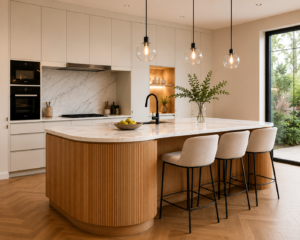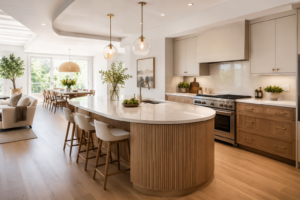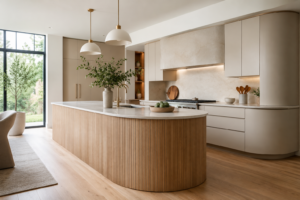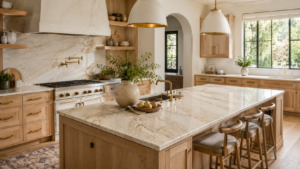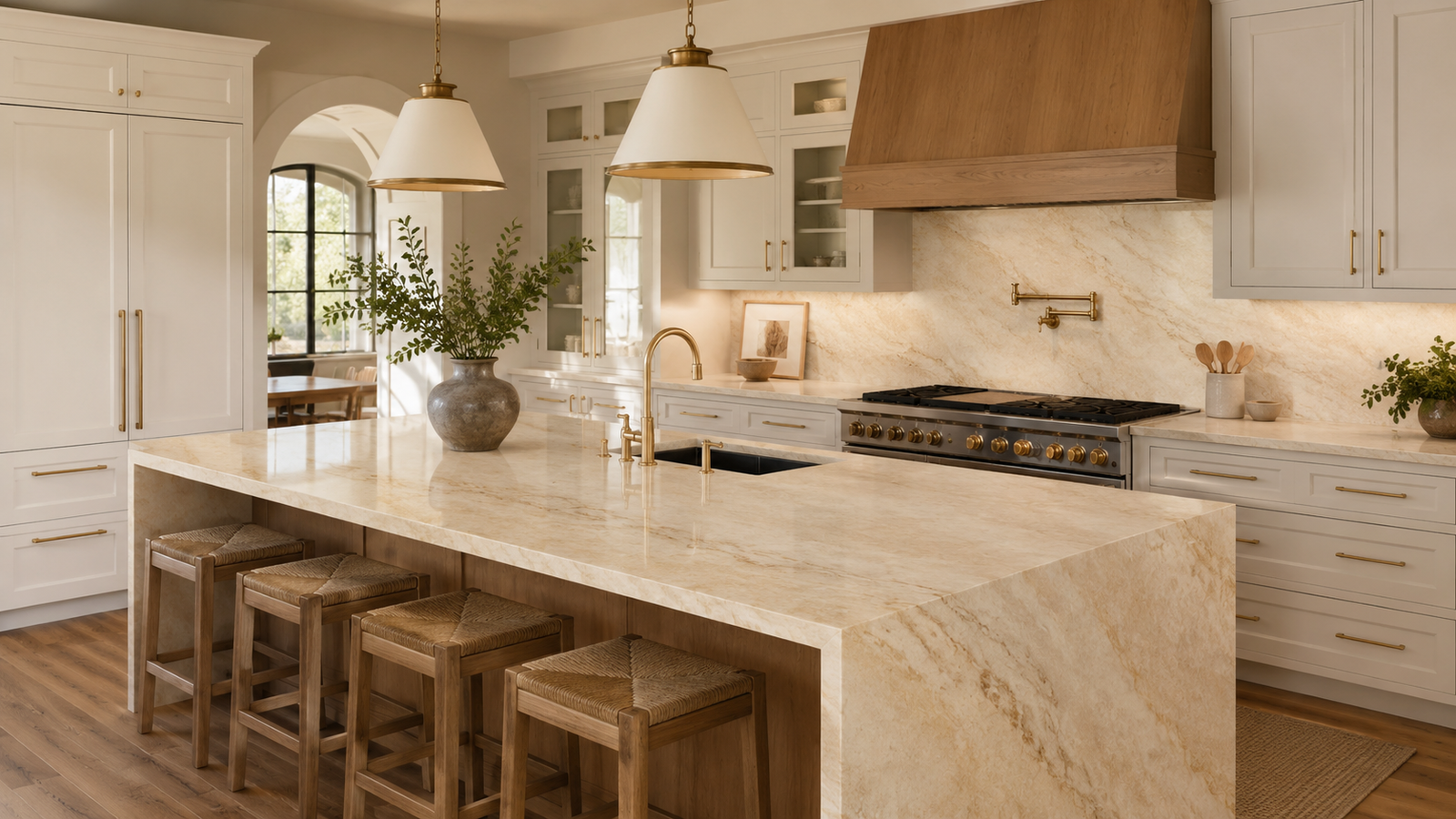
Homeowners usually look at Taj Mahal quartzite when they want the softness of marble without choosing a countertop that feels too delicate for daily cooking.
Its warm cream, ivory, beige, and gold tones can soften a kitchen without making the surface look busy. But it is still a premium natural stone: the slab is expensive, sealing matters, and the final result depends a lot on the fabricator.
Quick Answer
Choose Taj Mahal quartzite if you want a warm, marble-like natural stone that feels more forgiving than marble in a working kitchen. It is a good fit when you want a light countertop, but bright white stone feels too cold, flat, or stark.
Think twice if your priority is the lowest price, zero maintenance, or a surface that most installers can fabricate without much experience. With Taj Mahal quartzite, the slab, layout, sealing, and fabricator all affect the final result before the countertop is ever installed.
Taj Mahal Quartzite Makes Sense If… | Look at Another Surface If… |
You like marble but worry about scratches and etching | You want the lowest countertop cost |
You prefer warm cream, beige, and gold tones | You want a pure white or very uniform surface |
You want natural stone with visible movement | You do not want to reseal stone |
You have a skilled quartzite fabricator available | Your installer has little quartzite experience |
The countertop is a major part of the kitchen design | The project is mainly budget-driven |
What Makes Taj Mahal Quartzite Appealing?
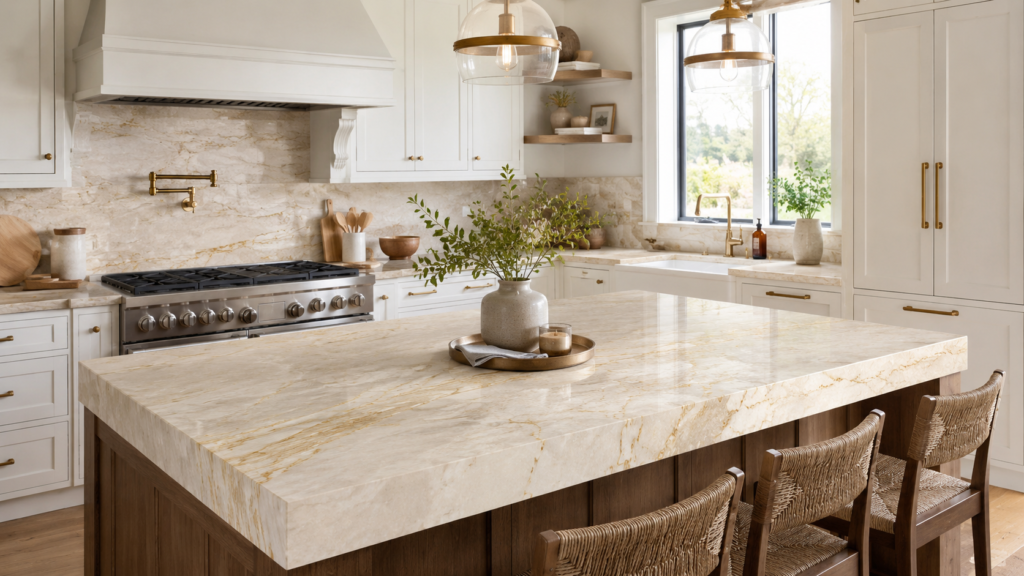
Most people are drawn to Taj Mahal quartzite because it gives a kitchen a softer, warmer look without making the countertop feel busy.
Its color usually falls in a warm range — cream, ivory, beige, light gold, and sometimes taupe or gray. That makes it easy to pair with white cabinets, natural wood, muted green, dark cabinetry, and warmer metal finishes like brass or bronze.
The exact look depends on the slab. Some Taj Mahal slabs are quiet and creamy, while others have stronger gold veining or cooler gray movement. Do not choose it from a small online photo. A sample can show the color family, but it cannot show how the veining will run across a large island or a long countertop.
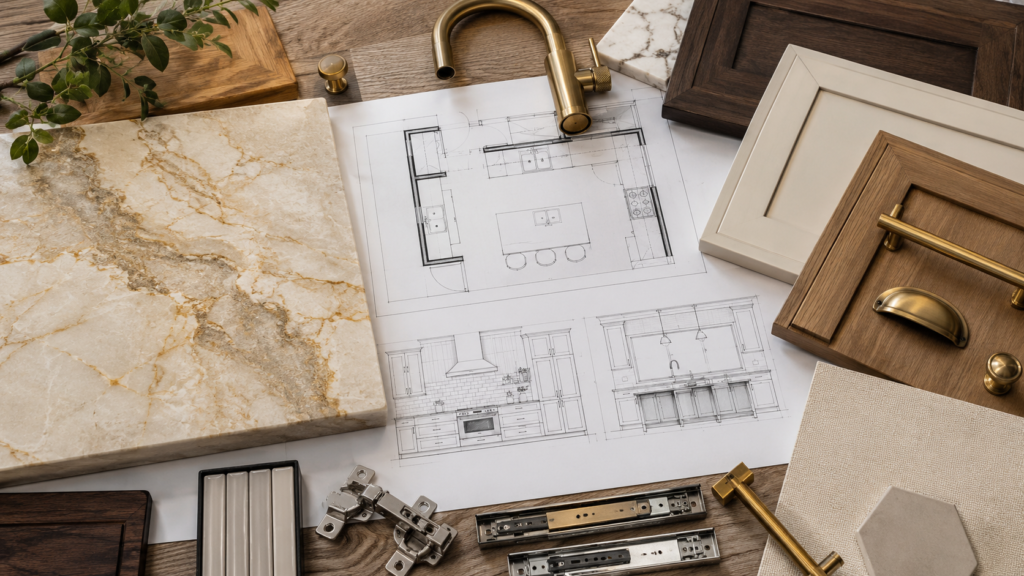
View the full slab in person if you can, and bring your cabinet, flooring, backsplash, and hardware samples with you. If you are planning the cabinetry at the same time, a custom cabinet and design team like Livranger can help you check whether the slab’s warmth works with the cabinet finish, hardware, and overall kitchen layout before you commit.
Why Homeowners Choose It Instead of Marble
Many homeowners start with marble because they like its soft veining and natural depth. The problem usually shows up after installation, when the kitchen starts getting used every day.
Marble scratches more easily than true quartzite and can etch when it comes into contact with lemon juice, vinegar, wine, tomato sauce, or certain cleaners. Some homeowners like that lived-in patina. Others find the first dull mark hard to accept.
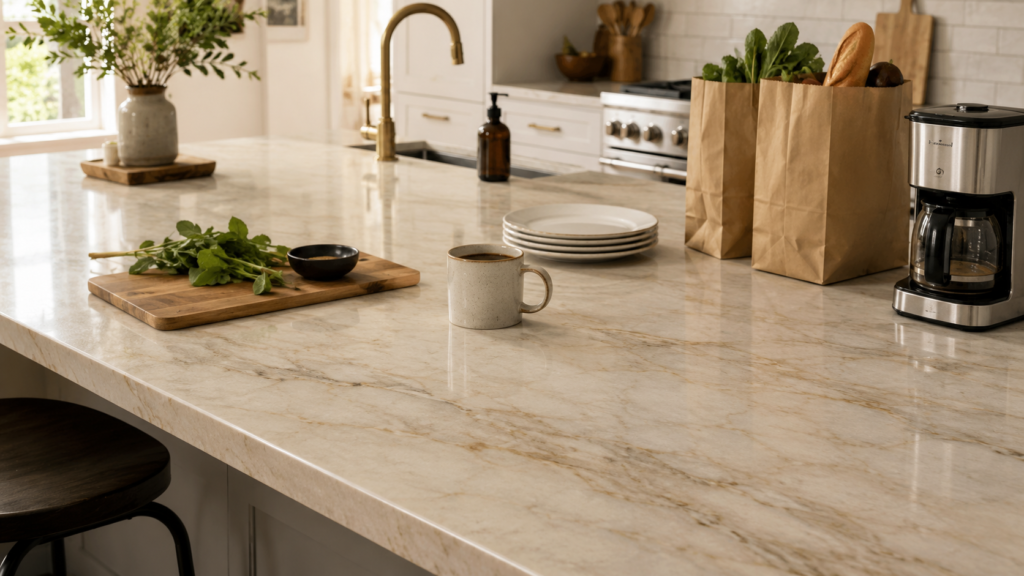
Taj Mahal quartzite gives you a similar light, natural look, but it is usually more forgiving around sliding plates, small appliances, spills, and everyday prep. You still need cutting boards, trivets, and basic care, but you do not have to treat it as carefully as marble.
That difference is where its main advantages start to show.
Where Taj Mahal Quartzite Works Well
When a White Countertop Feels Too Cold
Taj Mahal quartzite works well when you want a light countertop, but pure white stone feels too sharp or cold. Its warm base can soften white cabinets, add depth to natural wood, and give darker cabinetry some contrast without making the kitchen look busy.
This is one reason it often works well on islands and open kitchens, where the countertop is visible from more than one angle.
It Holds Up Better Than Marble in Daily Use
True quartzite is dense and hard, so Taj Mahal quartzite is less likely to scratch than softer stones such as marble.
In a real kitchen, the island is rarely treated gently. Grocery bags land there, plates get pushed across it, small appliances sit in the same spot for weeks, and someone will eventually put keys or a coffee mug down without thinking.
Scratch-resistant does not mean scratch-proof. Do not cut directly on the surface; a cutting board protects the stone and keeps your knives from dulling.
It Can Handle Heat and Sunlight, With Limits
Quartzite forms under heat and pressure, so it generally handles kitchen heat well. That does not make hot pans a good daily habit. The stone itself may tolerate heat, but sealers, resin-filled areas, and sudden temperature changes can still create problems.
Use trivets, especially around cooktops, coffee stations, and areas where hot cookware often lands.
Taj Mahal quartzite can also make sense in sunny kitchens. Natural quartzite is generally stable under UV exposure, so it is less likely to fade or yellow than some other surfaces. This is worth considering if your kitchen has large windows or strong afternoon light.
Where You Need to Be Careful
It Is Expensive
Taj Mahal quartzite sits in the premium countertop range. Cleaner backgrounds and balanced veining usually cost more, especially when the slab has the soft cream-and-gold look many buyers want.
The total price is not just the slab. Quartzite is hard to cut and polish, so fabrication often takes more time, stronger tools, and a crew that knows the material. Large islands, waterfall edges, full-height backsplashes, detailed edge profiles, and careful seam planning can push the quote up quickly.
If the project is mainly budget-driven, granite, engineered quartz, porcelain, or another natural stone may offer better value.
It Needs Sealing and Quick Cleanup
Taj Mahal quartzite is hard, but it is still natural stone. If the surface is porous and not sealed properly, coffee, oil, wine, or dark sauces can soak in and leave marks.
A good fabricator should seal the stone during installation. After that, resealing depends on the slab’s porosity, the sealer used, and how often the kitchen is used.
A simple water test can help: place a few drops of water on the surface and wait 10 to 15 minutes. If the stone darkens, ask your fabricator whether it needs resealing.
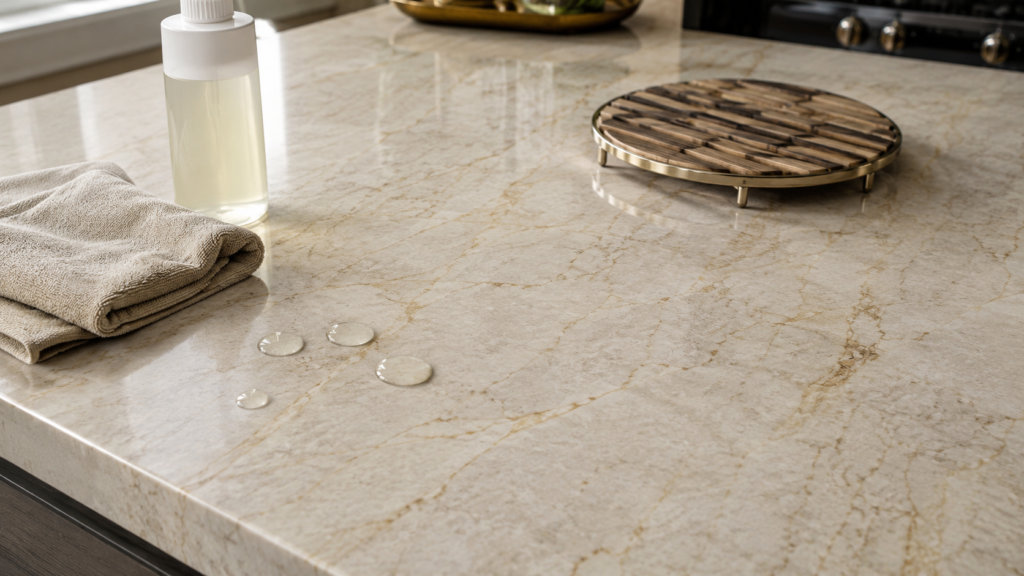
For daily cleaning, use mild soap and water or a pH-neutral stone cleaner. Avoid acidic cleaners, abrasive pads, bleach-heavy products, and harsh chemicals unless your fabricator has confirmed they are safe for the sealer on your slab.
If you want a surface you never have to think about after installation, Taj Mahal quartzite may not be the easiest option.
Is Taj Mahal Quartzite Worth It?
Taj Mahal quartzite is worth considering if you want a warm natural stone countertop with a softer look than many granites and a more forgiving surface than marble.
It is not the best choice for the lowest budget, the easiest upkeep, or a surface that looks almost identical from one slab to another. It works better when you are willing to pay for the right slab, a skilled fabricator, proper sealing, and careful layout planning.
If that trade-off feels too much, compare it with a few nearby options. Engineered quartz is usually easier to live with if you want a consistent look and less sealing. Granite can give you natural stone at a lower price point, depending on the color and source. Porcelain may be a better fit if stain resistance, lighter weight, and a clean modern look matter more than natural veining.
For a full kitchen project, it also helps to look at the countertop and cabinetry together rather than choosing them as separate decisions. Livranger focuses on custom cabinet design and project-based kitchen solutions, which makes the brand a natural fit for homeowners who are comparing countertop materials alongside cabinet style, layout, and finish choices.
Before you approve the quote, see the full slab, confirm the seam locations, ask how sink and cooktop cutouts will be reinforced, and decide whether resealing is something you are willing to keep up with.