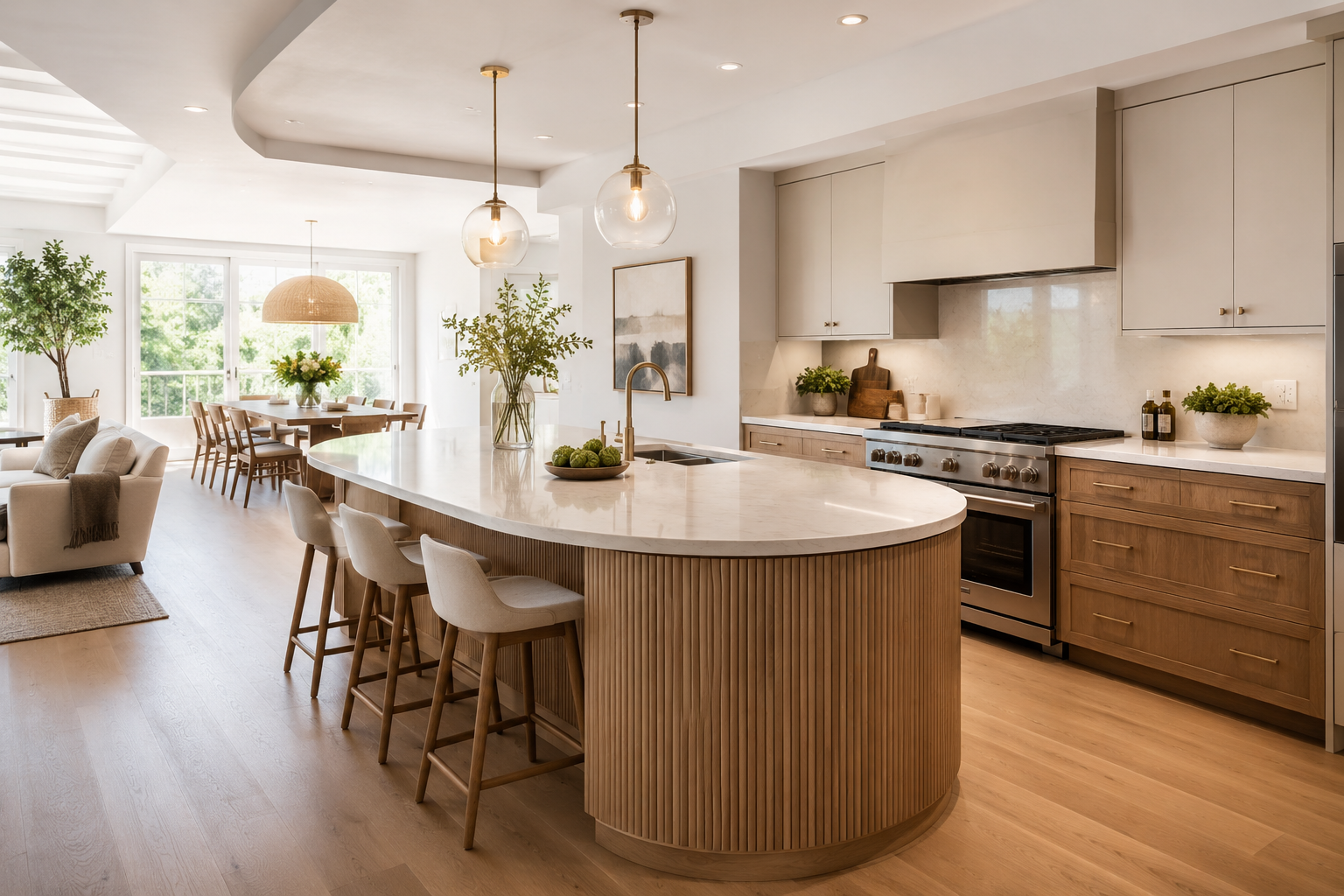
Curved kitchen cabinets do not belong in every kitchen. They work best when a straight edge is causing a real issue: a sharp island corner people walk past every day, an exposed cabinet side facing the living room, or a peninsula that feels too bulky in a narrow walkway.
If the curve improves movement, fixes an awkward exposed edge, or makes an open-plan kitchen feel less abrupt, it can be worth the extra cost. If it is only there because curved cabinets are trending, the budget is usually better spent elsewhere.
In most homes, the curve does not need to become a theme. One rounded island end or one curved exposed panel usually gives enough visual change without making the kitchen harder to build.
Quick Answer
The best spots are usually the parts people keep moving around: the end of an island, the outside corner of a peninsula, or the exposed side of a cabinet run. If the curve is only visible in a rendering but barely matters in daily use, it is probably not doing enough.
They help most in busy spots: around island seating, narrow walkways, and corners where people often turn while carrying plates, opening drawers, or passing behind someone else.
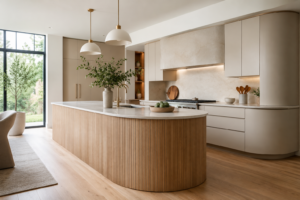
Open-plan kitchens are where curved end panels often make the most sense. When the side of the island is visible from the sofa or dining table, a square end can feel abrupt. A rounded panel makes that edge easier to live with visually.
In a small kitchen, the curve should solve one awkward edge. It should not take away storage, reduce usable cabinet space, or make the layout harder to build.
They cost more. Curved cabinetry usually requires skilled fabrication, custom panels, and more accurate installation, so it makes the most sense in places that are visible, touched often, or difficult to pass.
Where Curved Cabinets Make the Biggest Difference
You usually notice a curved cabinet most at the edges of the kitchen, not in the middle of a long cabinet run. That is why island ends, exposed sides, walkway corners, and peninsula edges tend to be better places to use it.
The most useful curved cabinet details usually appear in a few places: island ends, exposed cabinet sides, corners near walkways, and peninsula edges.
Island Ends
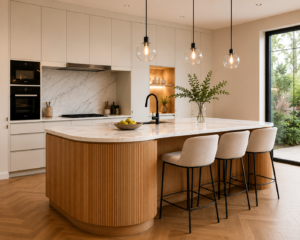
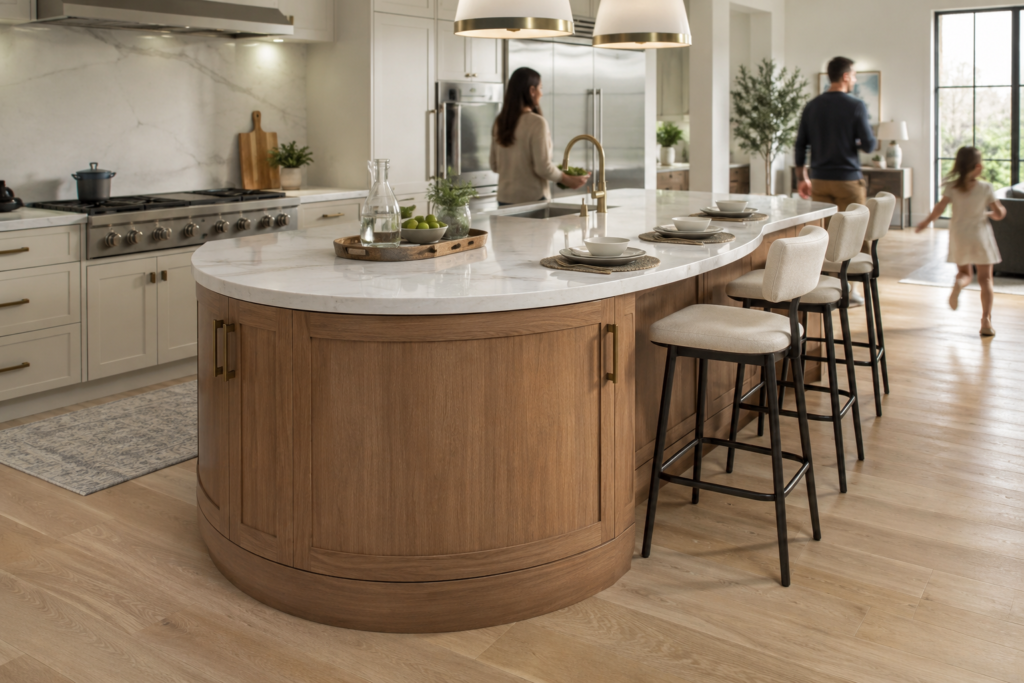
Island ends are one of the safest places to use a curve well. This is where people walk past, pull out stools, carry plates, or turn around while someone else is cooking. A rounded island end does not change the whole kitchen, but it can make the island feel less like a heavy block in the middle of the room.
Exposed Cabinet Ends
A long cabinet run can look abrupt when it stops beside a doorway, hallway, or open walkway. A curved end panel gives that edge a softer finish without changing the main storage layout.
In an open kitchen, that side panel may be one of the first cabinet details people see from the living or dining area, so a harsh square ending can stand out more than expected.
Corner Cabinets
Be careful with curved corner cabinets. They can look good when the corner is exposed, close to a walkway, or easy to bump into, but they do not automatically make storage better.
If the corner is mainly used for pots, dry goods, or pull-out hardware, a standard corner system may still be the more practical choice. A curved corner is easier to justify when that corner sits in the open or gets bumped often. If the only benefit is that the plan drawing looks smoother, it is probably not the most practical choice.
Peninsula and Breakfast Bar Layouts
A peninsula can be useful in a smaller kitchen, but the open end can feel heavy if it sits too close to the walking path.
A rounded end makes that edge easier to pass, especially when the peninsula is also used for casual seating. This works especially well when the peninsula is the first thing people see from the dining area, because the rounded end makes it feel less like a barrier.
Curved Cabinets in Open Kitchens and Busy Walkways
Curved cabinets are most useful when the kitchen connects to another part of the home, such as a dining area, hallway, entryway, or living room. In these layouts, the side of an island or the end of a cabinet run is often visible before people even enter the kitchen.
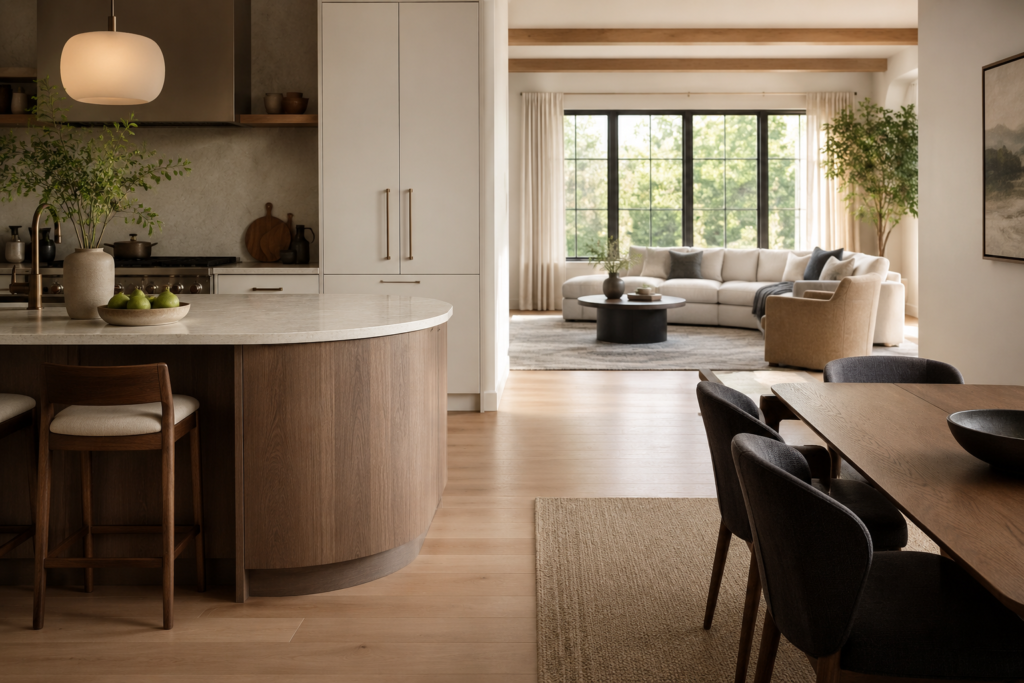
That edge is not only seen from the cooking area. It is also seen from the sofa, dining table, hallway, or entry, so it needs to look finished from more than one angle. This is also why the rounded forms seen in recent Veranda kitchen design trends feel relevant here: a squared-off cabinet end can make the kitchen look like it stops suddenly, while a rounded end makes the transition feel less abrupt.
The same idea applies to busy walkways. A rounded edge will not add space, but it can change how that space feels when people move through it. This matters around island stools, narrow gaps beside a peninsula, or any corner that people keep clipping with their hip or elbow.
Looks are not enough here. The curve still needs to sit on a route people actually use, such as the path from the sink to the island, from the fridge to the prep area, or around the end of a peninsula.
The Work Triangle Still Matters
Do not add a curve before checking the basic route between the sink, stove, refrigerator, and island. The NKBA Kitchen & Bath Planning Guidelines focus on clearance, equipment placement, passageways, seating areas, and cabinetry for a reason: a rounded cabinet edge can make turning easier, but it will not fix a poor layout.
If the fridge door blocks the walkway, the island is too close to the cabinets, or people have to cross the cooking zone to reach the sink, the curve is only a cosmetic fix.
Real kitchens are messier than a triangle diagram. Someone may be opening the fridge while another person is rinsing dishes, and a third person may be sitting at the island. That is when a sharp island end or tight cabinet corner starts to matter.
This is where a curved island or rounded cabinet edge can help. It does not replace a good layout, but it can make the route feel easier when someone moves from the sink to the prep area, turns toward the stove, or passes around the island. In tighter kitchens, it also means fewer sharp corners to brush against when the space gets busy.
Are Curved Cabinets Good for Small Kitchens?
Curved cabinets can work in small kitchens, but only when the curve removes a real pinch point or softens an exposed end.
A fully curved cabinet is not always the best answer.
The key is placement. A rounded cabinet end can help when the kitchen opens into a narrow hallway, when a peninsula sits close to the walking path, or when the end of a cabinet run faces the living area. In those spots, a sharp corner can make the room feel tighter than it really is.
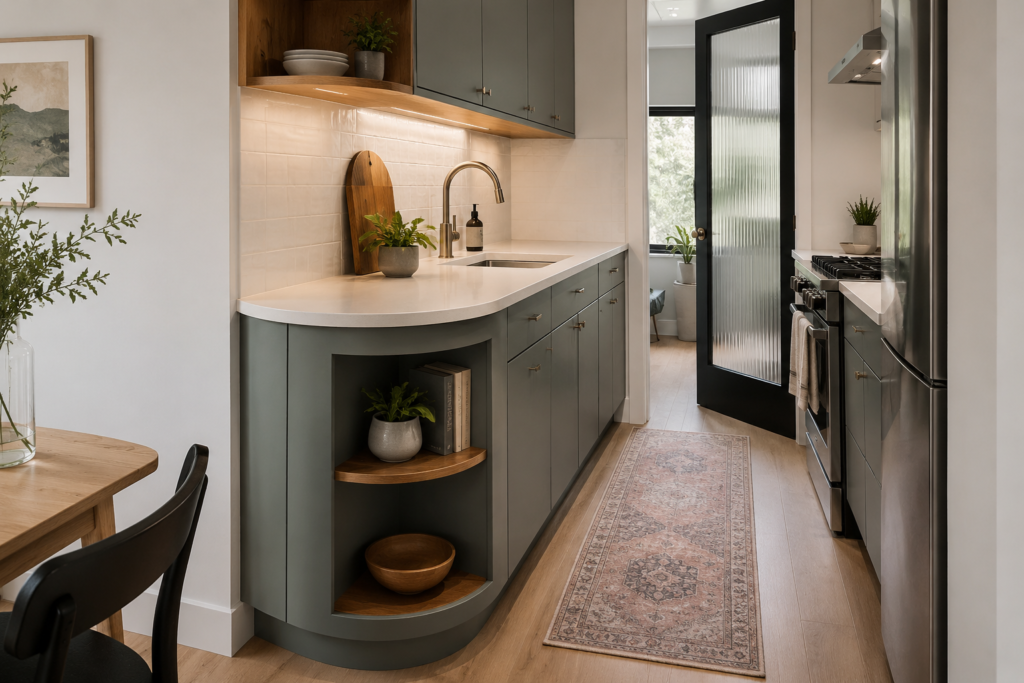
But curves need to be used carefully in compact layouts. A fully curved cabinet may reduce usable storage or add cost without fixing the main problem. Sometimes a rounded worktop corner, a curved open shelf, or a softened end panel is enough.
In a small kitchen, start with the problem edge. If there is one corner people keep walking around carefully, one peninsula end that feels too close, or one cabinet side that looks heavy from the living area, a curve may help. Without that kind of problem, it is probably an expensive detail.
Materials and Finishes for Curved Kitchen Cabinets
The finish matters more on a curved cabinet than on a flat one because side light moves across the surface. Glossy lacquer will show the curve clearly, but it will also show uneven sanding, panel joints, and fingerprints faster. Matte paint is quieter, though the curve still needs clean edges and careful finishing.
Style / Material | What It Adds | Works Well For |
Fluted Wood Curves | Adds texture, shadow, and a stronger sense of shape. | Feature islands, exposed ends, warm modern kitchens. |
Smooth Veneer | Keeps the curve clean while adding natural warmth. | Kitchens that need wood tone without too much detail. |
High-Gloss Lacquer | Reflects light and makes the curve more noticeable. | Sleek kitchens, darker rooms, statement cabinet details. |
Matte Painted Finish | Makes the curve feel softer and less decorative. | Calm contemporary kitchens or subtle rounded edges. |
Integrated Handles | Keeps the cabinet line clean without visible pulls. | Minimal kitchens where handles would interrupt the curve. |
Stone or Solid Surface Cladding | Gives the island or end panel a heavier, more built-in look. | Feature islands or kitchens where the curved section is the focal point. |
Fluted wood is a good choice when the curve is meant to be seen. It adds shadow, texture, and a stronger sense of shape. Just remember that grooves can collect dust and fingerprints, especially near seating or cooking zones.
Choose matte paint when you want the rounded edge to feel quiet rather than decorative.
Near stools, walkways, and cooking zones, the curved surface will be touched often. Fingerprints, chair bumps, splashes, and cleaning marks matter more there than they do on a quiet display panel.
Cost and Installation Notes
Curved cabinets usually cost more because the cabinet box, door face, panel radius, finish, and countertop edge all have to line up properly. A small gap, rough edge, or uneven panel joint is much easier to notice on a curve than on a straight cabinet run.
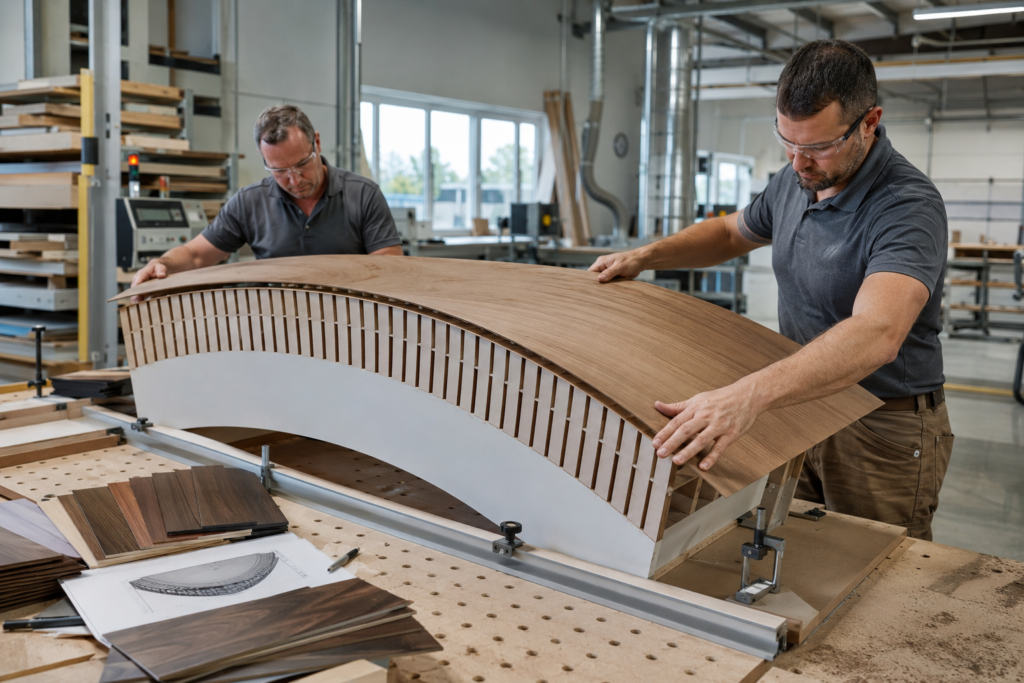
For a custom project with Livranger, this is the point to confirm the radius, finish sample, cabinet drawings, and installation details before the design is approved. Curved cabinetry leaves less room for vague specifications than a standard straight cabinet run.
Before choosing this option, ask the cabinet maker or kitchen designer to show examples of previous curved cabinet work, not only standard kitchen projects.
When Curved Cabinets Are Worth It
Curved cabinets are worth considering when they improve a spot people see or use every day, such as an island end, an exposed cabinet side, or the open end of a peninsula.
If the kitchen is already short on storage, fix that first. A curve only makes sense when it removes a pinch point, softens a heavy edge, or helps the kitchen connect better with the next room.
For custom curved cabinets or curved cabinet updates in an existing kitchen, Livranger has the fabrication experience to match the design, finish, and installation needs. Share your layout or renovation idea with Livranger to see where a curved detail would work best.