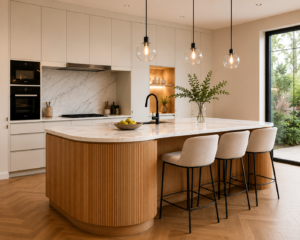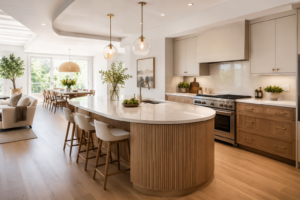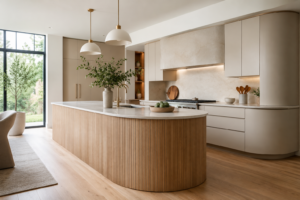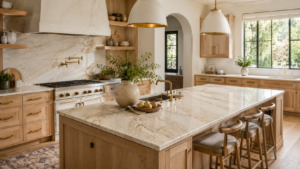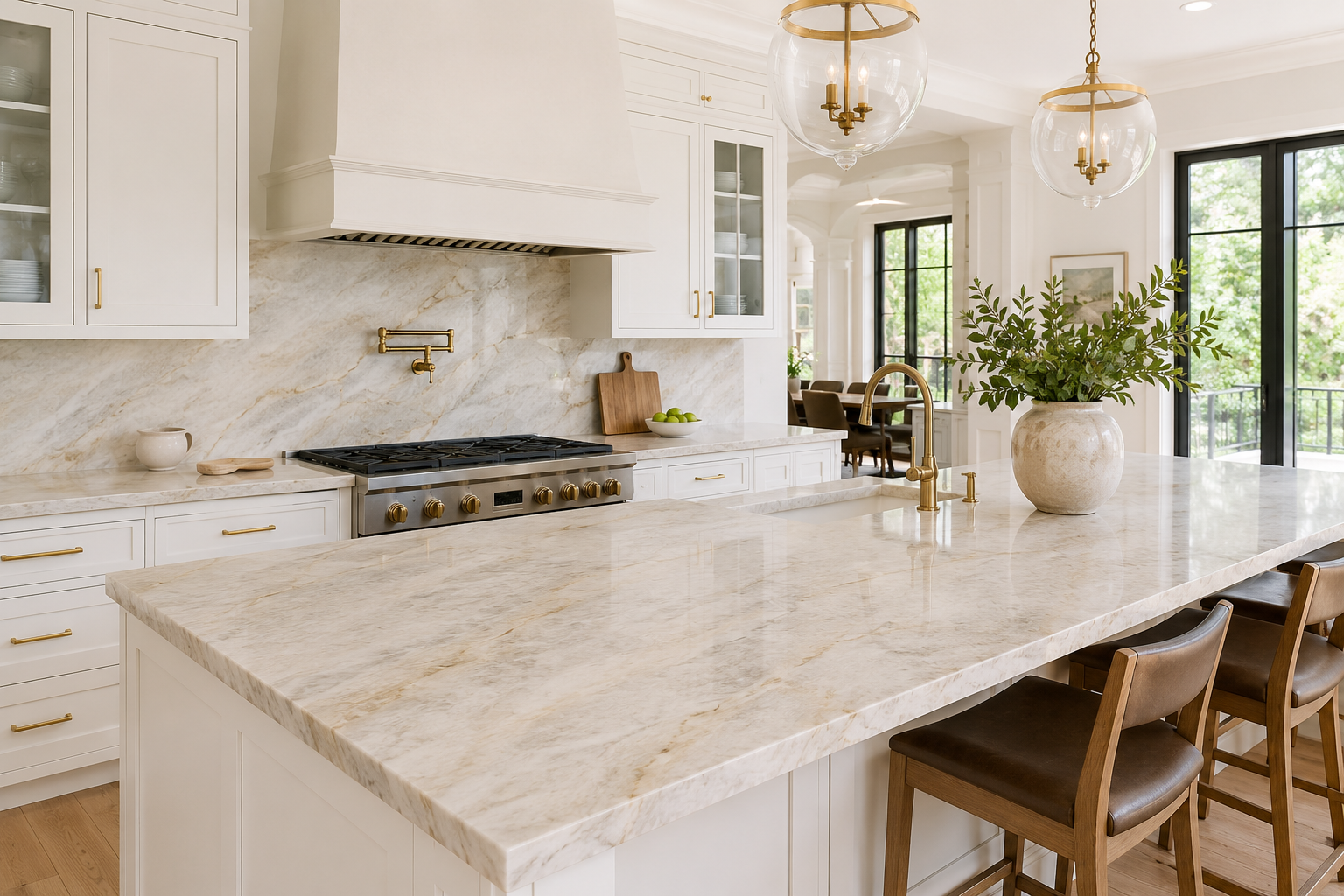
Taj Mahal quartzite has become one of those materials designers keep coming back to — and for good reason. It has the soft, warm look people usually associate with marble, but it’s far more practical for everyday kitchens.
The stone is durable, scratch-resistant, and versatile enough to work with everything from classic white cabinetry to darker, more modern palettes. Whether you’re planning a small kitchen refresh or a full custom renovation, Taj Mahal tends to fit in surprisingly well without feeling trendy or overdone.
Key Takeaways
- Taj Mahal quartzite gives you the softer look of marble without the same level of maintenance anxiety, which is why it works so well in active kitchens.
- It pairs naturally with a wide range of cabinet colors, including white, oak, walnut, grey, deep blue, and muted green.
- Features like waterfall islands and full slab backsplashes can make the stone feel much more architectural and custom.
- The right kitchen size planning will lead to proper functionality and stylishness in both small and big kitchens.
- Rather than making a decision based on the description, it is a must to see the actual slab before you buy. Color and veining will be different for every slab.
A Visual Gallery: Pairing with Kitchen Cabinets
Looking through real kitchens is usually the easiest way to understand how Taj Mahal changes under different cabinet colors, lighting conditions, and layouts. You will find this stone beautifully adjusts to various cabinet styles and colors. The examples below show how Taj Mahal can look completely different depending on cabinet color, lighting, and layout.
While you go through these kitchen ideas, consider the mood you want to create. Do you want it to be bright and airy, or warm and cozy? In this video, you will learn good strategies for creating a color palette with your Taj Mahal countertops.
The Classic Choice: White Cabinets
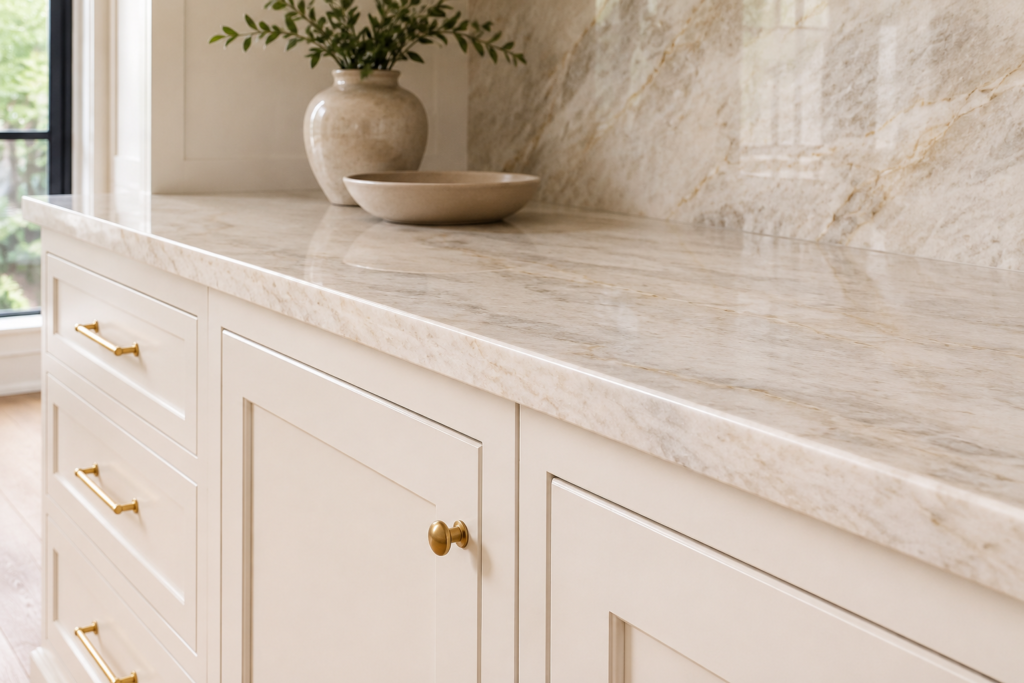
Pairing Taj Mahal quartzite with white cabinets is probably the safest choice — but that doesn’t mean it feels boring. The warmth in the stone keeps the kitchen from looking too stark or clinical. The overall look tends to feel bright, open, and easy to live with, especially in kitchens that don’t get a huge amount of natural light.
There are a few different ways to approach white cabinetry with Taj Mahal. A bright white that looks absolutely pure will make the stone’s veining more visible. A warm undertone off-white or cream cabinet can depict the warmer beige tones of quartzite more. This usually creates a softer overall look. A white cabinets kitchen gallery is a platform that will give you a lot of ideas.
Why does this pairing work so consistently?
- These kitchens have a light and airy vibe. This is suitable for every kitchen, no matter how big or small.
- White cabinetry also lets the movement in the quartzite stand out without competing for attention.
- They leave you with a complete choice of hardware, backsplash, and paint color options.
Warm & Natural: Pairing with Wood Cabinets
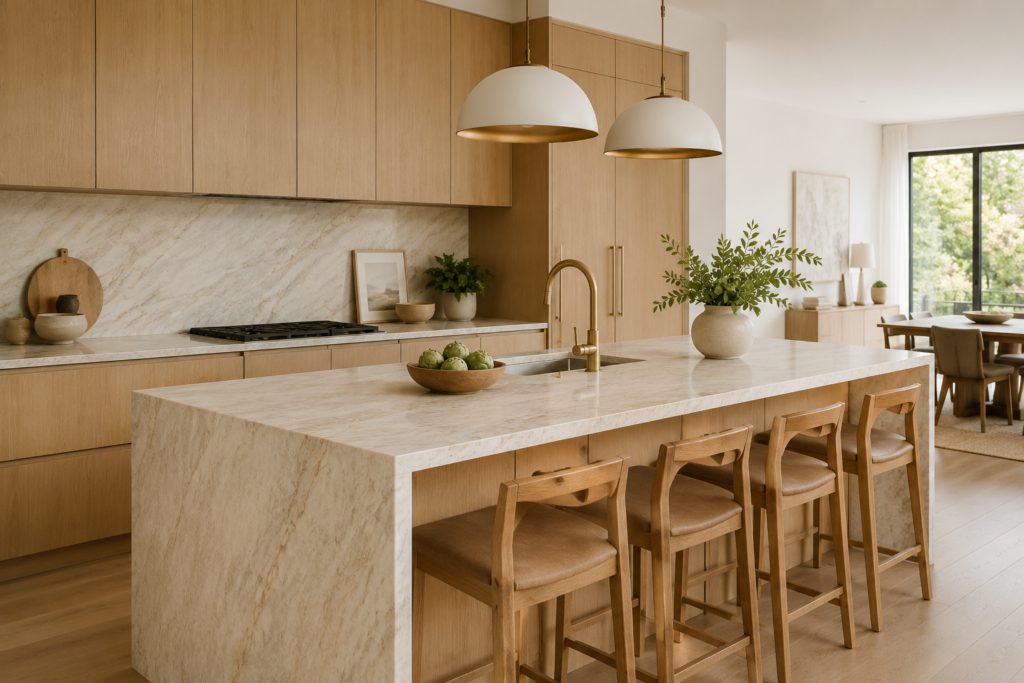
If you want the kitchen to feel warmer and less polished in a showroom kind of way, natural wood cabinetry works really well with Taj Mahal. The mix of warm wood and soft quartzite usually feels more relaxed and lived-in than an all-white kitchen.
White oak is especially popular right now because it keeps the kitchen light while still adding texture and warmth. It works well in Scandinavian, coastal, and softer modern interiors.
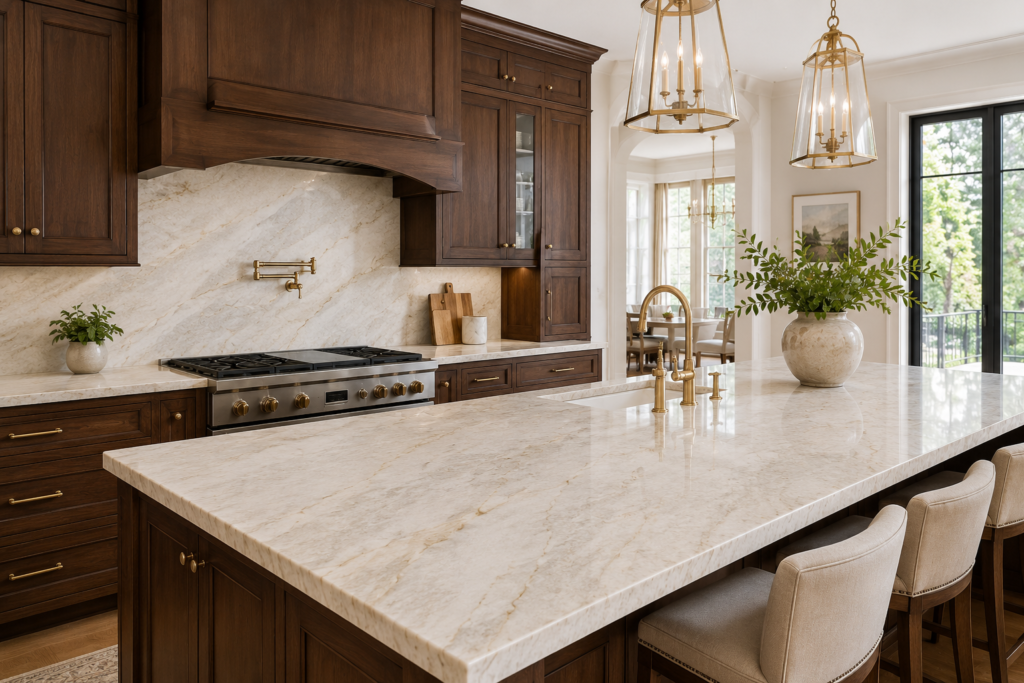
Walnut adds more depth and contrast, though it usually works best in kitchens with enough natural light to keep the space from feeling too heavy. They are not only rich in color, but also very effective in terms of contrast. In fact, it is a superb luxury kitchen cabinetry idea.
Modern & Moody: Grey, Blue, and Green Cabinets
Taj Mahal is neutral enough that you can comfortably introduce color through the cabinetry without overwhelming the space. Because Taj Mahal stays fairly soft visually, it can handle darker or more colorful cabinetry without feeling overwhelming.
Grey cabinets tend to balance the warmth of Taj Mahal without making the kitchen feel too busy. Lighter greys tend to create a softer contrast that still keeps the kitchen feeling bright. Charcoal grey cabinets can look especially good in larger kitchens, though they usually need decent lighting to avoid feeling heavy.
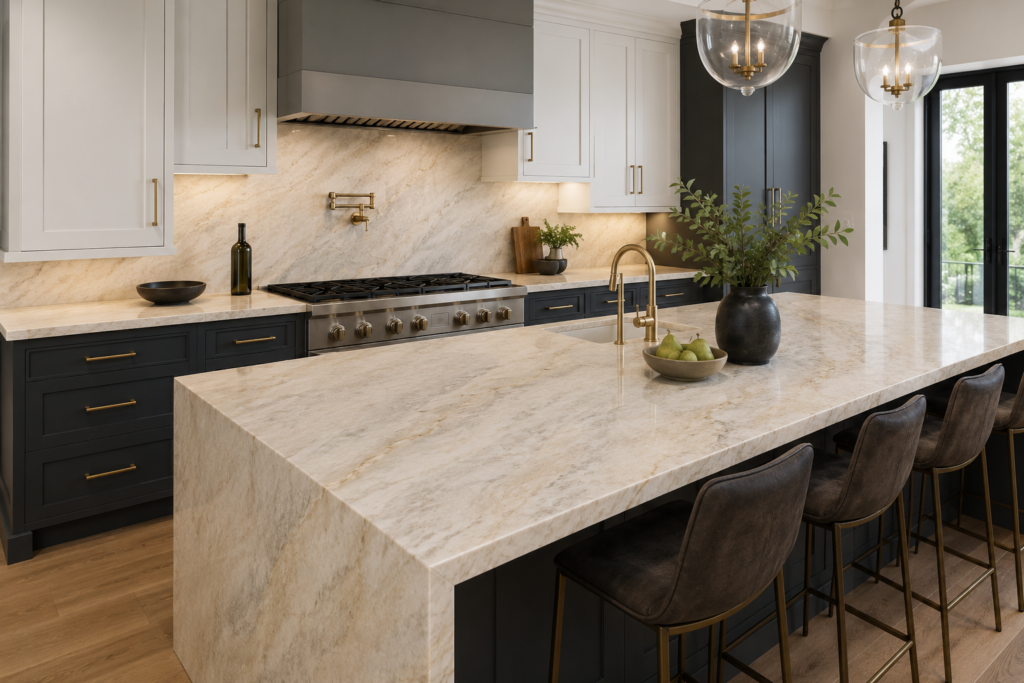
Besides, the blue and green colors can bring out the colder tones. Blue and green cabinets can also pull out some of the cooler movement in the quartzite, especially in spaces with natural daylight. Done well, the combination feels custom rather than overly trend-driven.
Sleek & Sophisticated: Modern Kitchen Cabinets Inspiration
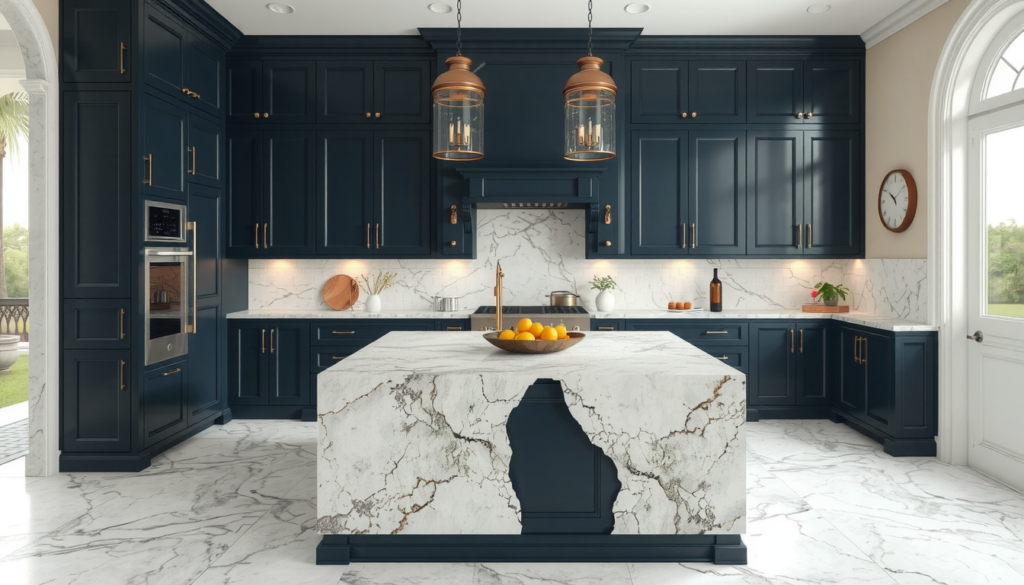
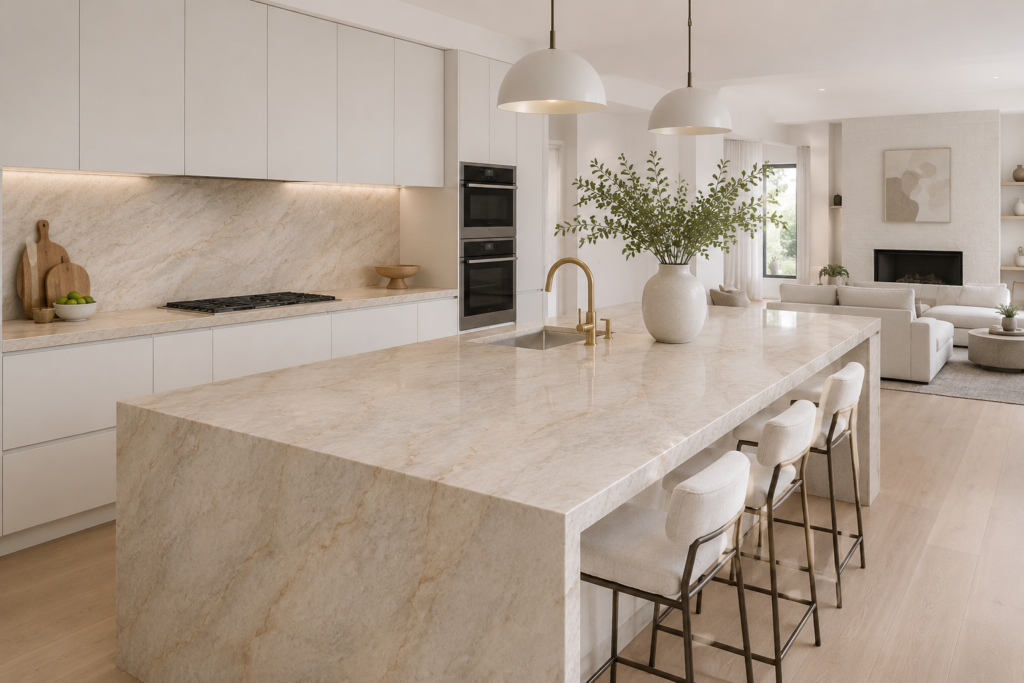
Even though Taj Mahal is often used in classic kitchens, it also works surprisingly well in cleaner, more minimal spaces. It can be a showstopper in modern designs as well. Simpler cabinet profiles usually work better here because they allow the movement in the stone to stand out naturally.
Flat-panel or handleless cabinets keep the visual lines clean, which allows the texture and veining in the stone to become the focal point naturally. High-gloss lacquer cabinets can make the kitchen feel sharper and more contemporary, while matte finishes soften the overall look.
Beyond the Cabinets: Complete Kitchen Design Ideas
A fantastic kitchen layout is not only about cabinets. The backsplash, island, and flooring are among the many items that work together to create the overall look. Here are some kitchen ideas that can help you complete your space.
Backsplash Ideas: To Match or To Contrast?
Most homeowners end up choosing between two backsplash directions: continuing the quartzite up the wall, or using a simpler contrasting tile.
A directly matching slab backsplash will use the same Taj Mahal quartzite as the countertops running up the wall. Using the same slab across both the countertop and backsplash usually creates a more custom, built-in look. A full slab backsplash creates a seamless look that feels much more custom and architectural.
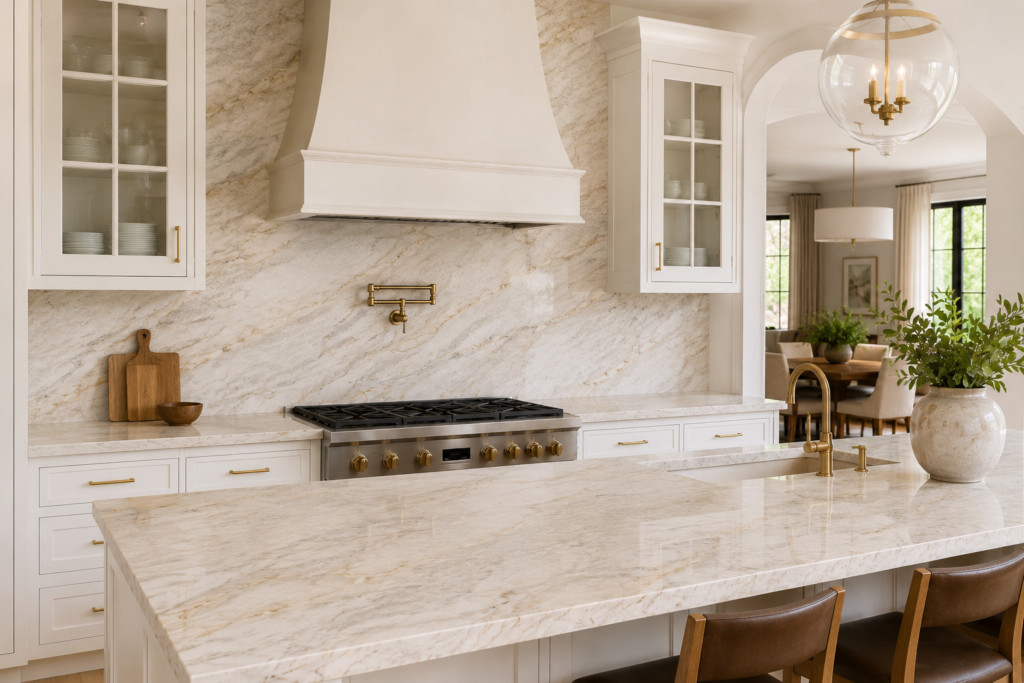
Applying tiles is the more familiar and practical option. For instance, an all-white subway tile is a timeless choice. It stays modest and, thus, allows the countertop to take center stage. Textured Zellige tiles are another good option if you want a little texture without pulling attention away from the countertops. The slab format would entirely change the atmosphere of the space, giving it a luxurious and personalized feel.
The Kitchen Island as a Centerpiece
In most kitchens, the island naturally becomes the visual center of the room.
A waterfall edge has become a highly recommended luxurious kitchen cabinetry design. Instead of just laying the stone atop the island, this type of tabletop is designed with the countertop stone that “flows” down the sides of the island to the floor. A waterfall edge works particularly well with Taj Mahal because the veining continues down the sides of the island instead of stopping abruptly at the countertop line.
Another option is to paint the island in a different hue. When your main cabinets are white, a blue, green, or wood island is instantly a focal point.
Choosing the Right Flooring
The right flooring will be the cohesive element in your kitchen. Because Taj Mahal has fairly warm undertones, it works best with flooring that feels equally soft and natural.
A traditional pick includes light to medium hardwood floors. Hardwood flooring remains one of the easiest pairings because it adds warmth without competing visually with the stone. In a neutral color, large-format porcelain tiles will look simply stunning. Opting for a soft grey or beige is a great choice. These colors build a clean appearance without overshadowing the countertop.
Designing for Your Kitchen: From Small to Grand
Regardless of the size of your kitchen, Taj Mahal quartzite can be an option. The layout matters more than the kitchen size itself.
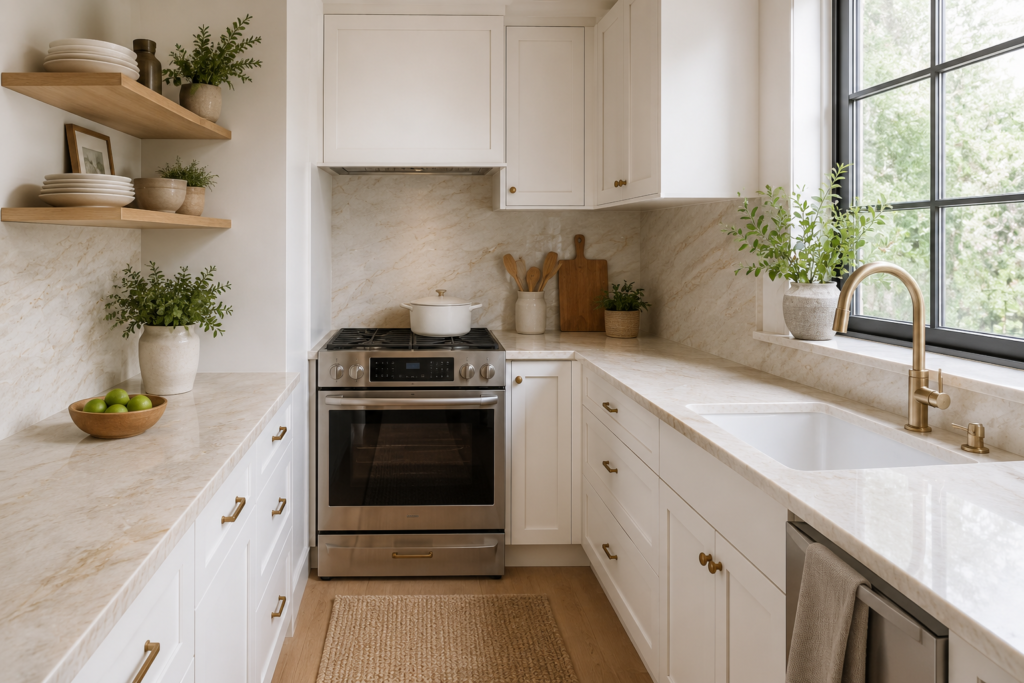
Smart & Stylish: Small Kitchen Cabinet Ideas
In smaller kitchens, Taj Mahal usually feels less harsh than brighter white surfaces, especially under warm lighting at night.
Utilize the light-tone cabinets, such as white or light grey, that reflect light and make the space appear airy. You might think about open shelving in addition to some upper cabinets. Open shelving can also help break up heavy cabinet walls if the kitchen feels visually tight. Also, proper lighting is a key component. Under-cabinet lights, for instance, will give your stylish countertops more brightness.
The Functional Sweet Spot: Designs for Medium Kitchens
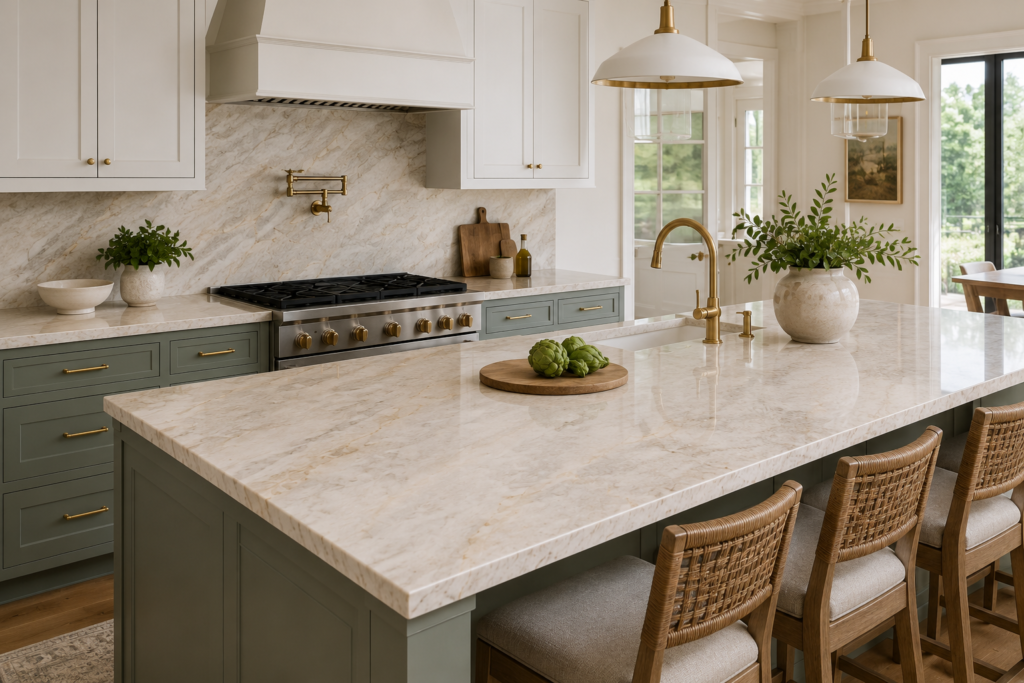
Mid-sized kitchens are usually the easiest to design because there’s enough room to add personality without the layout becoming complicated. You can combine eye-catching furniture pieces with a lot of storage.
In this case, you can have a functional island with seating along with it. You may also try the two-color cabinet idea. One possible way is to paint the island a different color from the rest of the cabinets. You are free to select either the eye-catching slab backsplash or the lovely tile.
Grand & Luxurious: Ideas for Large Kitchens
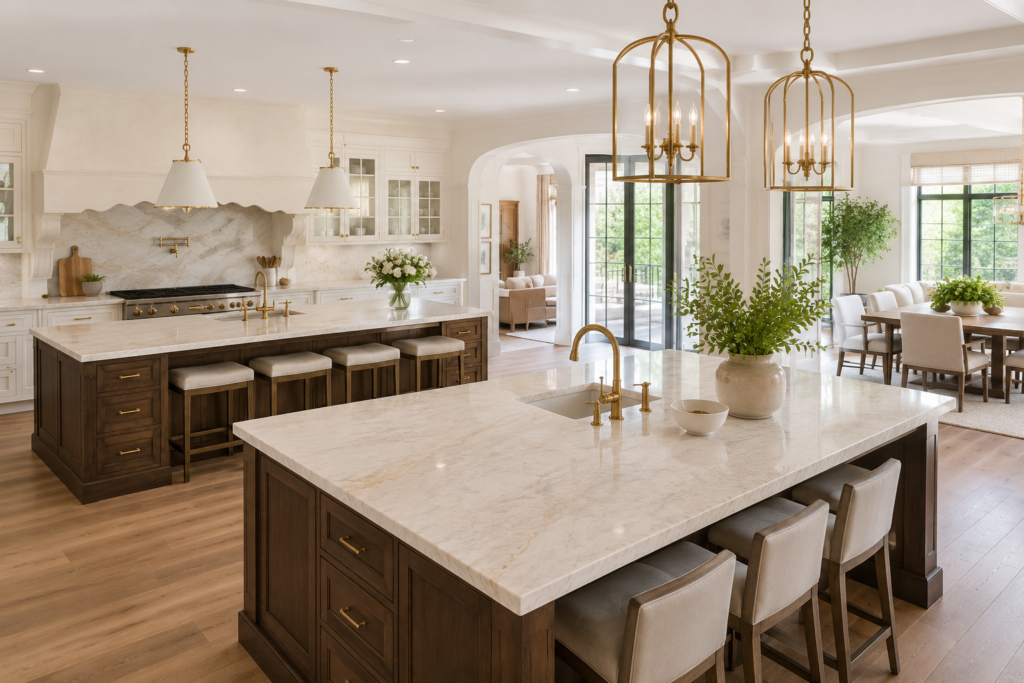
Large kitchens give you more freedom with layout, but they also need stronger visual balance so the space doesn’t feel empty or disconnected. However, you will need the right layout if you want it to feel welcoming. The main aim is to have distinct areas for cooking, dishwashing, and socializing.
Picture this: two islands. One for food prep and the other for seating. In larger kitchens, adding a separate coffee or beverage area can make the space feel more functional without crowding the main prep zone. The stone can also be utilized for a full height backsplash behind the range in the roomy space thus forming an excellent focal point. Find your own grand design inspiration in these breathtakingly large kitchens with Taj Mahal.
The Practical Guide: Before You Buy
Knowing a few practical details beforehand can save you a lot of frustration later.
Polished vs. Honed: Which is Right for You?
Quartzite Taj Mahal is available in two principal finishes. These are polished and honed. Polished finish is the one that is shiny and light reflecting. A honed finish is matte and has a soft, low-sheen look.
Feature | Polished Finish | Honed (Matte) Finish |
Look | Shiny, glossy, reflects light | Matte, soft, low-sheen |
Feel | Smooth and slick | Velvety and smooth |
Maintenance | Shows fingerprints more easily | Hides smudges and prints better |
Color | Makes colors and veins look deeper | Can lighten the stone’s color slightly |
The Art of Selecting Your Slab
One thing worth knowing before you buy: no two Taj Mahal slabs look exactly the same. Slabs of Taj Mahal are each unique. The amount of veining can be very different. The warmth of the coloration and the way the pattern appears all differ.
When you head to the stone yard, make sure to carry samples of the cabinet color and paint that you want to use. If you can, check the slab under good daylight. Request to see a few slabs from the same batch. This way you can get to know the natural alterations. Some slabs lean creamier and warmer, while others have more grey movement, so it’s worth seeing them in person instead of choosing from a small sample. Watch out for the natural lines called fissures. Be certain that you are ok with them. Seeing the slabs in person usually makes the decision much easier.
Budgeting for Taj Mahal Quartzite
Taj Mahal quartzite is an exceptional premium material. It is sold at a rate based on square footage. Cutting and installation costs are usually included in the price.
The final expense would be affected by the material’s thickness. It would depend on the design of your kitchen. If there is a waterfall edge or a slab backsplash, it would add to the total cost.
Taj Mahal quartzite sits in the premium category, especially once fabrication and installation are included. Still, many homeowners choose it because it holds up well over time and doesn’t date quickly visually.
Frequently Asked Questions (FAQ)
1. Is Taj Mahal quartzite a durable choice for a busy kitchen?
Yes. Taj Mahal is a natural quartzite, which makes it significantly more durable than marble in everyday kitchen use. This is one of the hardest natural stones available for countertops. It is highly resistant to scratches, heat, and etching from acids like lemon juice. This makes it far more durable than marble and even many granites.
2. What color are the veins in Taj Mahal quartzite?
Most Taj Mahal slabs feature soft beige, cream, gold, or light grey veining on a warm off-white background. The movement is usually subtle rather than dramatic, which is part of why the stone feels easy to design around.
3. Does Taj Mahal quartzite need to be sealed?
Yes. Like all natural stones, Taj Mahal quartzite is porous. It should be sealed by your installer upon installation. It typically needs to be resealed every 1-2 years. This depends on usage. Sealing protects it from stains and keeps it looking its best.
4. Can I use Taj Mahal quartzite with dark or black cabinets?
Yes, it creates a stunning, high-contrast look. The warm, light tones of Taj Mahal quartzite pop beautifully against dark cabinets. These include black, charcoal grey, or dark navy. This combination is perfect for creating a dramatic and luxury kitchen design.
5. Is Taj Mahal quartzite the same as Taj Mahal quartz?
No, and this is a critical distinction. Taj Mahal quartzite is a 100% natural stone quarried from the earth. “Taj Mahal Quartz” would refer to an engineered, man-made material. This is designed to mimic the look of the natural stone. Always confirm you are purchasing natural quartzite if that is the material you desire.