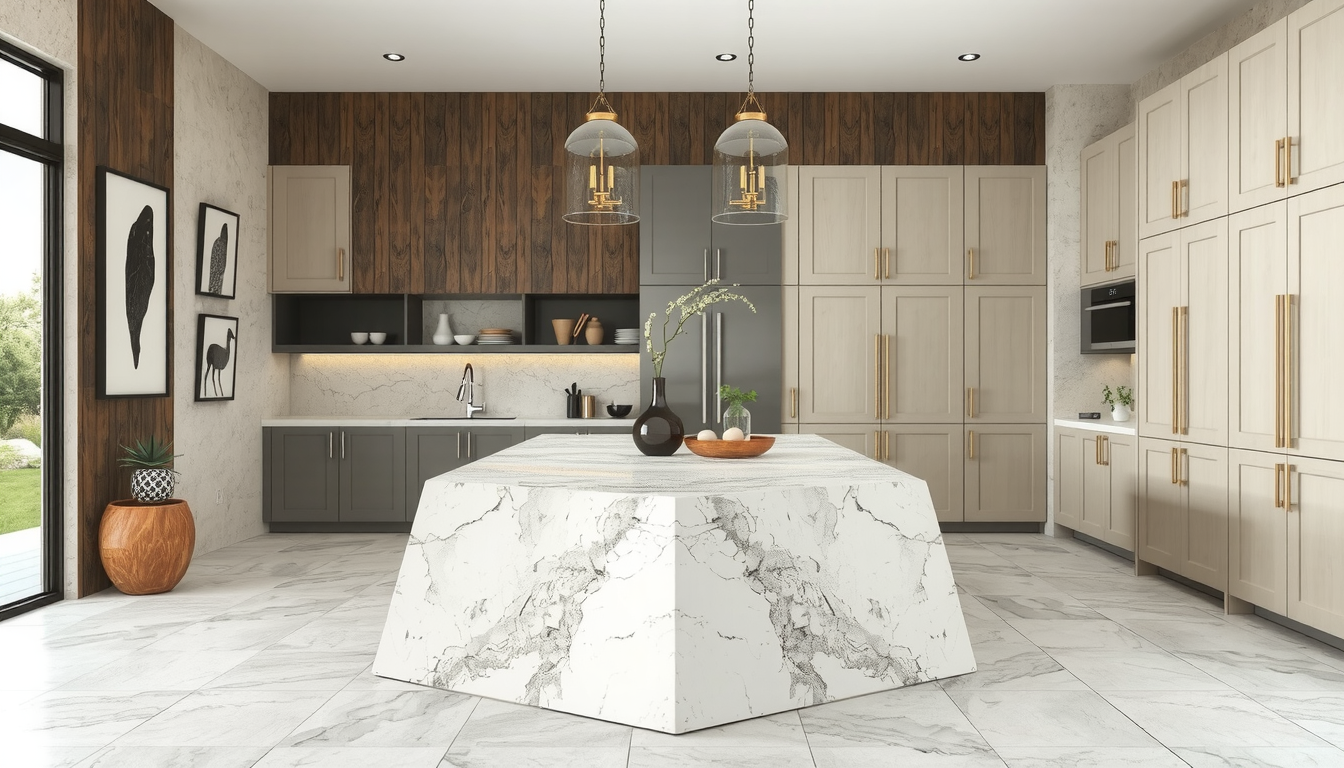
The kitchen island isn’t just a prep spot anymore. In a lot of homes, it quietly becomes the place where everything happens — cooking, quick meals, kids doing homework, even the occasional work call.
Taj Mahal quartzite keeps coming up in this context. Not because it’s trendy, but because it solves a very practical problem: it looks soft like marble, but it doesn’t behave like marble once people start using it.
What follows isn’t a list of “inspiration ideas” — it’s what tends to hold up in real kitchens, especially when paired with modern cabinetry.
A few things that tend to matter more than expected
- Taj Mahal quartzite gives you the look people want from marble, without the same level of maintenance
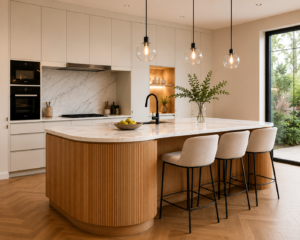
- Waterfall edges and wood bases aren’t just aesthetic choices — they change how the island reads in the space
- Two-tone cabinetry is often what makes the island feel intentional, not just added in
- Most layout issues come down to spacing and appliance placement, not style
- Storage only works if it matches how the island is actually used day to day
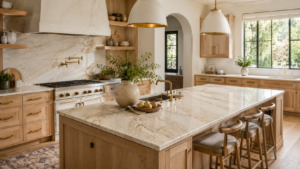
Why Taj Mahal Quartzite is the Gold Standard for Kitchen Islands
You’ll see Taj Mahal quartzite come up again and again in higher-end kitchen projects. It’s not just about how it looks — it’s more about how it holds up once people actually start using the space.
Here’s why it keeps getting specified:
- It doesn’t lock you into a style: The base color sits in that warm neutral range, so it works with painted cabinets, wood, or a mix of both. That flexibility becomes useful over time, especially if the space evolves.
- It holds up without much fuss: Compared to marble, it’s far less sensitive to scratches and everyday mess. You’re not constantly thinking about what touches the surface — which is usually what people want, even if they don’t say it upfront.
- Heat isn’t a big issue (within reason): It can take heat pretty well, though most designers still recommend using trivets — not because it can’t handle it, but because long-term wear adds up.
- No two slabs really look the same: The veining is natural and fairly subtle, which means you don’t get that repeated, artificial pattern. It reads more like a material than a surface finish — and that difference is noticeable in person.
Island Trends: Modern Cabinet & Island Designs
In 2026, a kitchen island is more than a countertop. It’s a statement piece. The cabinet island design sets the tone for the whole room. Here are the top trends for pairing with your Taj Mahal quartzite island.
Idea 1: The Statement Waterfall Edge
A waterfall edge is one of those details that seems minor on paper but changes the whole read of the island.
Instead of stopping at the countertop, the stone runs down the sides. With Taj Mahal quartzite, that usually means the veining carries through, so the island feels more like a single volume rather than separate pieces.
It’s often used in open layouts where the island is visible from multiple angles — which is where the detail actually pays off.
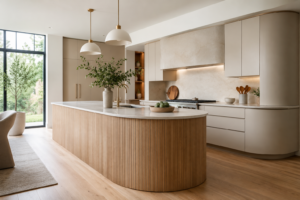
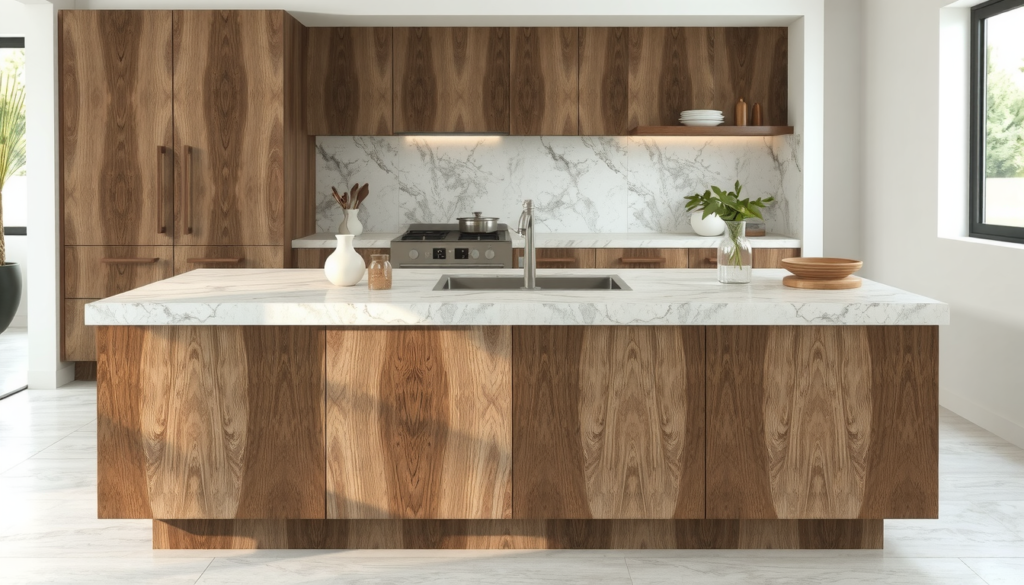
Idea 2: The Warm Wood Island Base
Pairing Taj Mahal quartzite with a wood base is less about contrast and more about balance.
Without some warmth underneath, the stone can feel a bit too clean, especially in modern kitchens with flat-panel cabinetry. Wood — particularly oak or walnut — brings that back without making the space feel heavy.
This is why the combination shows up so often in “organic modern” projects, even if people don’t always label it that way.
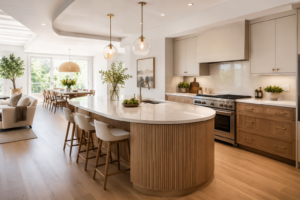
Idea 3: The Large Double Island
Double islands tend to show up in larger kitchens, but when they’re done right, they’re not about scale — they’re about separation.
One island handles the actual work: prep, sink, cooking. The other becomes a buffer zone where people can sit or gather without interrupting that flow.
In real use, that separation matters more than the extra counter space.
Idea 4: The Built-In Dining Table
This is a smart and social design for modern homes. The island extends to include a dining table. It’s often at a lower height than the main counter. This saves space and creates a casual spot for meals.
From our experience, a good design depends on getting the heights right. A standard counter is 36 inches tall. A comfortable dining table is 30 inches tall. This six-inch difference works perfectly. Also, make sure the table part has plenty of legroom underneath. This way people can sit comfortably.
Mastering the Colors: Two-Tone Cabinets with a Taj Mahal Island
Two-tone cabinets are a powerful design tool. This means using a different color for your island cabinets than for your other cabinets. This makes the Taj Mahal kitchen island a clear focal point. It adds depth to your design. The neutral tones of Taj Mahal quartzite make it a perfect partner for this trend.
Here are some proven color combinations that work beautifully:
Island Cabinet Color | Other Cabinet Color | Style/Feel |
Warm White or Greige | Crisp White | Timeless, airy, and open. |
Deep Navy or Forest Green | Soft White or Light Grey | High-contrast, dramatic, and luxurious. |
Natural Wood (Oak/Walnut) | Cream or Greige | Warm, welcoming, and textured. |
Darker Greige | Off-White | Layered, sophisticated, and unified. |
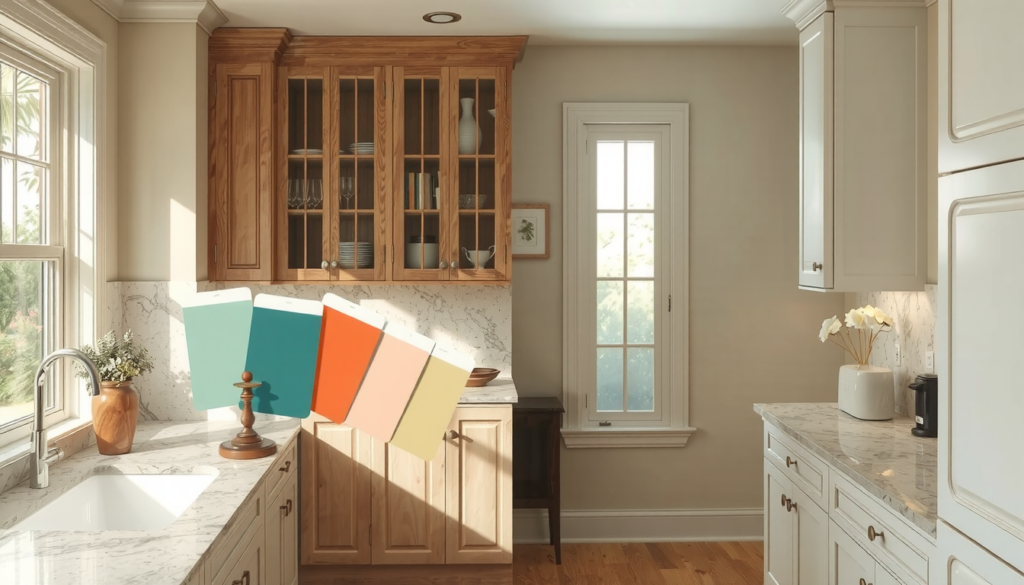
Pro Tip: Always test paint samples in your kitchen. Look at them next to a sample of your Taj Mahal slab in both daylight and artificial light. Lighting can completely change how a color looks.
Beyond Beauty: Smart Design & Storage Tips for Your Cabinet Island
A beautiful island is great. But a beautiful and useful island is life-changing. A well-planned Taj Mahal quartzite kitchen island should make your daily routine easier. Here is how we design islands that work hard.
Putting Function First
Most island issues aren’t design problems — they’re planning problems.
The classic work triangle still applies, but the island often becomes part of it now. Adding a prep sink, for example, can cut down a lot of unnecessary movement, especially in larger kitchens.
Seating is another area where small miscalculations show up quickly. Once the overhang drops below about 12 inches, people start adjusting how they sit — which is usually a sign something’s off.
An island is the perfect place to hide appliances. Think about a microwave drawer, a wine fridge, or even a dishwasher. This frees up space along your main walls. It keeps the kitchen looking clean and neat.
Must-Have Storage Tips
- Deep Drawers: In most cases, drawers end up being more useful than cabinets with doors — especially for heavier items like pots or stacked dishes. You can see everything at once, which sounds simple but makes a big difference over time.
- Special Pull-Outs: Pull-outs are another small upgrade that people don’t regret. Oils, spices, even trash bins — keeping those easy to access changes how the kitchen feels day to day.
- The “Working” Side vs. The “Seating” Side: Organize your storage with purpose. Place your most-used items in drawers on the “working” side of the island. This faces the kitchen. The side with seating is perfect for shallow cabinets. Store items you use less often, like seasonal platters or special occasion glassware.
Finishing Your Vision: Finishes, Care, and Budget
Once you’ve planned the layout and colors, a few final details will bring your Taj Mahal kitchen island to life.
Picking a Finish: Polished, Honed, or Leathered?
Taj Mahal quartzite comes in several finishes. Each offers a different look and feel:
- Polished: This is a high-gloss, shiny finish. It reflects light and makes the stone’s colors and veins appear more vibrant. It’s a classic look but may show fingerprints more easily.
- Honed: This is a matte finish. It feels soft and smooth to the touch. It doesn’t reflect light. This gives it a more subtle, modern look. It’s great at hiding smudges.
- Leathered: This finish has a soft shine and a slight texture, similar to leather. It is excellent at hiding fingerprints and water spots. It adds a unique, touchable feel to the stone.
Sealing and Long-Term Care
As a natural stone, quartzite can absorb liquids. It is important that your installer seals the stone when they put it in. This protective barrier helps prevent stains.
Your Taj Mahal quartzite island may need to be resealed every few years. This depends on how much you use it. For daily cleaning, simply use a pH-neutral cleaner or a bit of mild soap and water. Avoid harsh chemicals or acidic cleaners. They can damage the sealer. To see how these different finishes look in real kitchens, you can browse thousands of real-world examples from homeowners and designers.
Frequently Asked Questions (FAQ)
Does it stain easily?
Not really, as long as it’s sealed properly. Like most natural stone, it’s still a good idea to wipe up things like wine or oil fairly quickly — but compared to marble, it’s much more forgiving.
What is the best cabinet color for a Taj Mahal quartzite kitchen island?
Its neutral, warm tones make it work with many colors. Warm whites, greiges, natural woods (like white oak), and dramatic darks (like navy or forest green) are all popular and stunning choices. The best color depends on the overall style you want.
Is it more expensive than granite or quartz?
Usually, yes — especially once you factor in fabrication. But most clients choosing it aren’t comparing purely on price at that point.
Can you put hot pots directly on a Taj Mahal quartzite island?
Taj Mahal quartzite has excellent heat resistance. Placing a hot pot on it for a short time is unlikely to cause damage. However, we always suggest using trivets or hot pads as a best practice. This protects your investment from extreme heat shock over the long term.
What’s the difference between Taj Mahal quartzite and quartz?
Taj Mahal is a quartzite, a 100% natural stone quarried from the earth. Quartz countertops are engineered products. They’re made from crushed quartz crystals (about 90-95%) mixed with resins and pigments. Quartzite is prized for its unique natural veining. Quartz offers more uniform patterns.