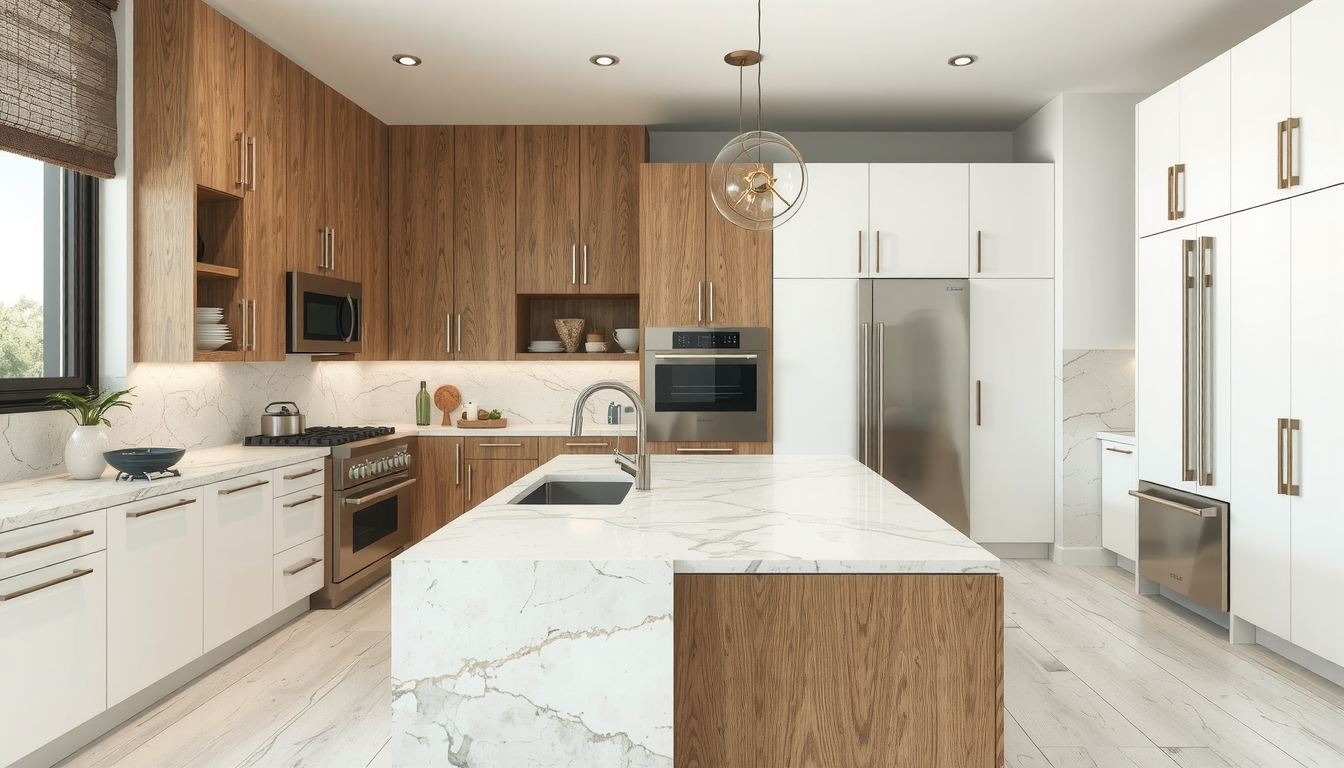
Taj Mahal quartzite has become a go-to material in high-end kitchens — not just because of how it looks, but because it holds up well over time.
It has that soft, marble-like look many people are drawn to, but it’s far less demanding in everyday use — which tends to matter more once you actually start living with the space.
Instead of just looking at inspiration photos, it helps to understand how layout and cabinetry actually shape the final result.
Key Takeaways
- Taj Mahal quartzite gives you a marble-like look, but with far better durability for daily cooking.
- Layout and cabinet choices matter more than the stone itself — they shape how the whole kitchen feels.
- It pairs especially well with warm woods, soft neutrals, and darker contrast cabinets.
- Smaller decisions — like finish, slab selection, or backsplash — often end up making a bigger difference than expected.
Why Taj Mahal Quartzite is the Heart of Modern Kitchens
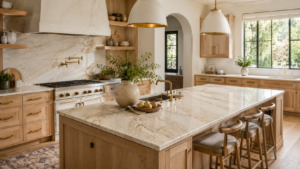
Taj Mahal quartzite sits in that sweet spot visually — warm, creamy, and easy to live with. The veining is usually soft, with hints of beige, gold, and grey, so it doesn’t fight with the rest of your palette.
But what really matters is performance. Unlike marble, this is a natural quartzite, so it’s significantly harder and less prone to scratching. In practical terms, it’s just less stressful to use day to day.
You’ll also see it in different finishes — polished if you want more depth and reflection, or honed if you prefer something quieter and more understated.
The Modern Taj Mahal Kitchen Blueprint: A Gallery of Layouts & Cabinet Styles
Layout and cabinet choices usually have more impact than the stone itself — they determine how everything comes together in the space. The same Taj Mahal quartzite can feel very different depending on how the space is planned. Here is a guide to help you design the perfect space. We will show you how to pair Taj Mahal quartzite with different layouts and cabinet styles.
The Open-Concept & Island-Focused Layout
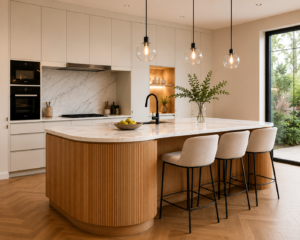
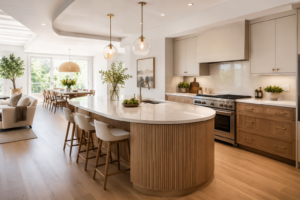
In open-concept kitchens, the island usually carries most of the visual weight, so whatever you place here naturally becomes the focal point.
- Flat-panel wood cabinets (think white oak or walnut) work well if you want something warm but still modern. The cleaner lines keep the focus on the stone instead of competing with it.
- Dark Painted Shaker Cabinets: If you prefer more contrast, darker shaker cabinets — navy, charcoal, even deep green — can ground the space and make the lighter tones in the quartzite stand out more.
Using Taj Mahal quartzite on the island works well because it draws attention without feeling overly bold, and it helps connect the kitchen with the surrounding living space.
The Efficient L-Shape & U-Shape Layout
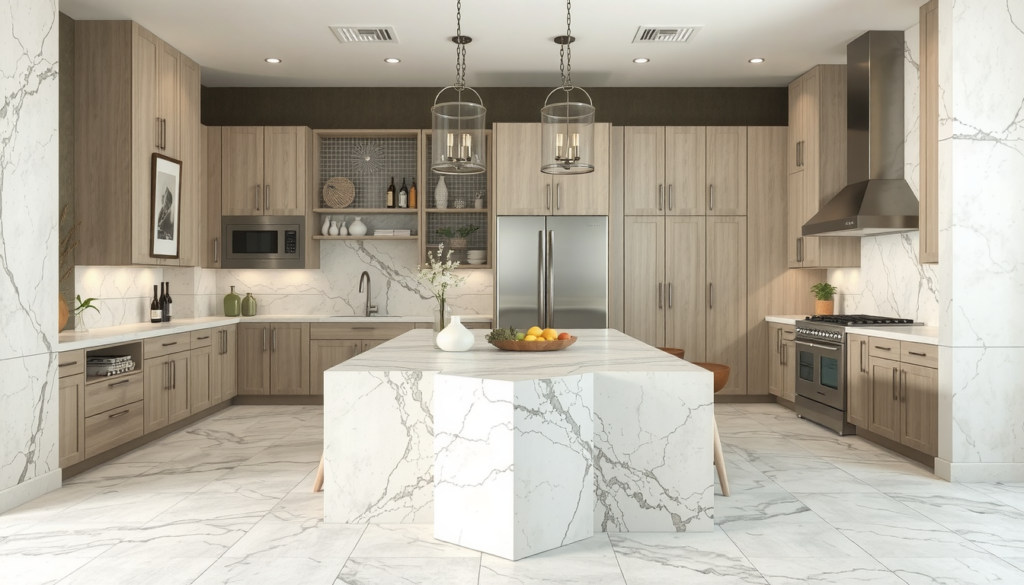
L-shape and U-shape kitchens are very common and work well. In these spaces, Taj Mahal quartzite can make the room feel bigger and more luxurious. It wraps the room in a soft, warm glow.
- Cream or Greige Shaker Cabinets: This is a classic and timeless choice. Pairing the stone with cabinets in a similar light color creates a soft, airy feeling. The whole room feels bright and put-together.
- Two-Tone Cabinets: This is a stylish trend for 2026. Use a darker color for the bottom cabinets and a lighter color for the top ones. The Taj Mahal countertop is the perfect link between the two colors.
The Galley Kitchen Layout
A galley kitchen is long and narrow. Using Taj Mahal quartzite in this layout can create a high-end look without making the space feel small. With galley kitchens, things can feel tight fairly quickly, so keeping the palette light and the detailing minimal usually works better.
- Handleless, High-Gloss White Cabinets: These cabinets have no handles and a shiny finish. They reflect light, which makes the kitchen feel bigger and cleaner. The warm Taj Mahal stone adds texture and stops the space from feeling too cold.
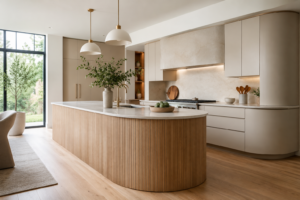
- Light Wood, Vertical Grain Cabinets: Cabinets with wood grain that runs up and down can make the ceiling feel higher. This visual trick helps a narrow galley kitchen feel more open.
Layout Style | Best Cabinet Styles for Taj Mahal | Resulting Look |
Island-Focused | Flat-Panel Wood, Dark Shaker | Organic Modern, High-Contrast |
L-Shape / U-Shape | Cream/Greige Shaker, Two-Tone | Timeless & Airy, Layered |
Galley | Handleless High-Gloss, Vertical Grain | Sleek & Spacious, Tall |
Designer’s Toolkit: Pro Tips for Your Taj Mahal Kitchen
Getting the details right is what makes a good kitchen great. Here are some expert tips for designing kitchens with taj mahal quartzite. These secrets will help you get a professional result.
Selecting the Perfect Slab
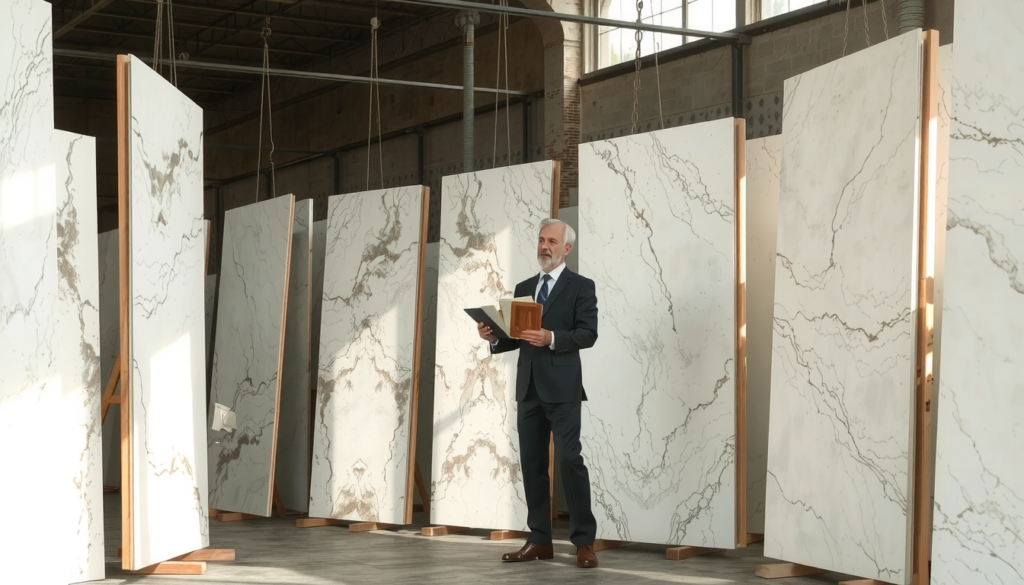
If there’s one thing worth doing in person, it’s choosing the slab. Photos don’t tell you much here.
Taj Mahal can vary quite a bit — some slabs lean warmer, others more grey — so it’s worth seeing a few options side by side, ideally with your cabinet samples in hand.
If possible, it’s worth visiting the stone yard rather than relying only on photos. Taj Mahal quartzite can vary quite a bit — some slabs lean warmer, others more grey — and those differences become much more noticeable once installed. Taking a moment to look at the veining and overall movement can help you avoid surprises later.
Choosing Your Finish
The finish tends to change the overall feel more than most people expect.
A polished surface brings out depth and contrast, while a honed or leathered finish softens everything and feels more relaxed — it’s less about shine, more about texture.
- Polished: A polished finish brings out depth and contrast, while honed or leathered surfaces feel softer and more understated, with less visible shine.
- Honed or Leathered: This is a matte finish. It feels soft and does not show fingerprints as easily. A honed finish gives a more natural, subtle look. It is perfect for a relaxed, modern taj mahal kitchen.
The Art of the Backsplash
The backsplash is where you decide how subtle or bold the whole kitchen feels.
- Full-Height Backsplash: Running the same slab up the wall (full-height backsplash) creates a very seamless look. It’s more of a commitment visually, but when it works, it really elevates the space. You can even “bookmatch” two slabs so their patterns create a mirror image.
- Coordinating Tile: If a full slab is not in the budget, choose a tile that matches the stone. Simple ceramic tiles with a handmade look or glass subway tiles work well. They should pick up on a soft color from the quartzite.
Hardware and Fixture Pairings
The right metal finishes can complete your kitchen’s look.
- Warm Metals: Champagne bronze, aged brass, and copper pull out the beautiful golden tones in the stone.
- Cool Metals: Matte black hardware creates a modern, graphic look. Polished nickel is a classic choice that never goes out of style.
Final Touches: Completing Your Modern Taj Mahal Kitchen
A few more details will bring your whole design together. Think about lighting and flooring to complete your space.
Good lighting is very important. Hang beautiful pendant lights over your island to match your hardware. Also, install under-cabinet lighting. Instead of focusing only on inspiration images, it helps to look at how layout and cabinet choices shape the overall feel of the kitchen.
For flooring, natural white oak wood adds warmth and works well with the stone. If you prefer tile, choose large-format porcelain tiles in a neutral color. This creates a clean, modern foundation for your beautiful kitchen. Exploring a gallery of Taj Mahal quartzite photos can give you great ideas for these final details.
Frequently Asked Questions about Kitchens with Taj Mahal Quartzite
Here are answers to some common questions about this beautiful stone.
Is Taj Mahal quartzite going out of style?
Not really. If anything, it’s one of those materials that sits comfortably across styles — modern, transitional, even more classic spaces. The color palette is neutral enough that it doesn’t date quickly.
What is the main difference between Taj Mahal quartzite and quartz?
Taj Mahal is a natural quartzite, which means each slab is unique. Quartz countertops, on the other hand, are engineered using crushed quartz and resins, so their patterns tend to be more consistent.
What color cabinets go best with Taj Mahal quartzite?
This stone is very versatile. For a warm and bright kitchen, use creamy white, greige, or light wood cabinets. For a bold and modern look, dark cabinets in navy, charcoal gray, or even black are a stunning choice. This contrast makes kitchens with taj mahal quartzite feel very sophisticated.
Do you need to seal Taj Mahal quartzite?
Yes. Like all natural stones, Taj Mahal quartzite has tiny pores. It should be sealed when it is installed. Sealing should be done again every 1-2 years. A proper seal protects the stone from stains and makes it very easy to clean.
Is Taj Mahal quartzite more expensive than granite or quartz?
In most cases, yes. Taj Mahal is a premium natural stone. Its price is usually at the higher end of the market. It often costs more than common types of granite and most mid-range quartz brands. The price reflects its great strength, beauty, and high demand.