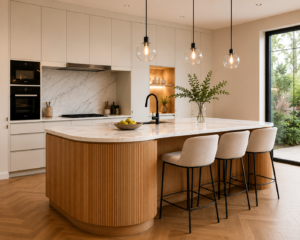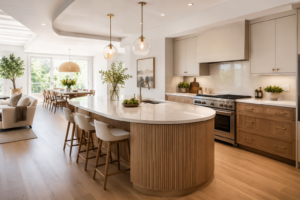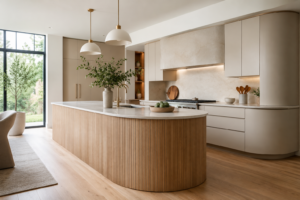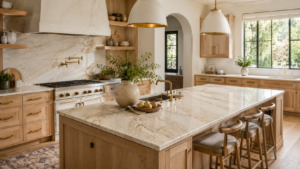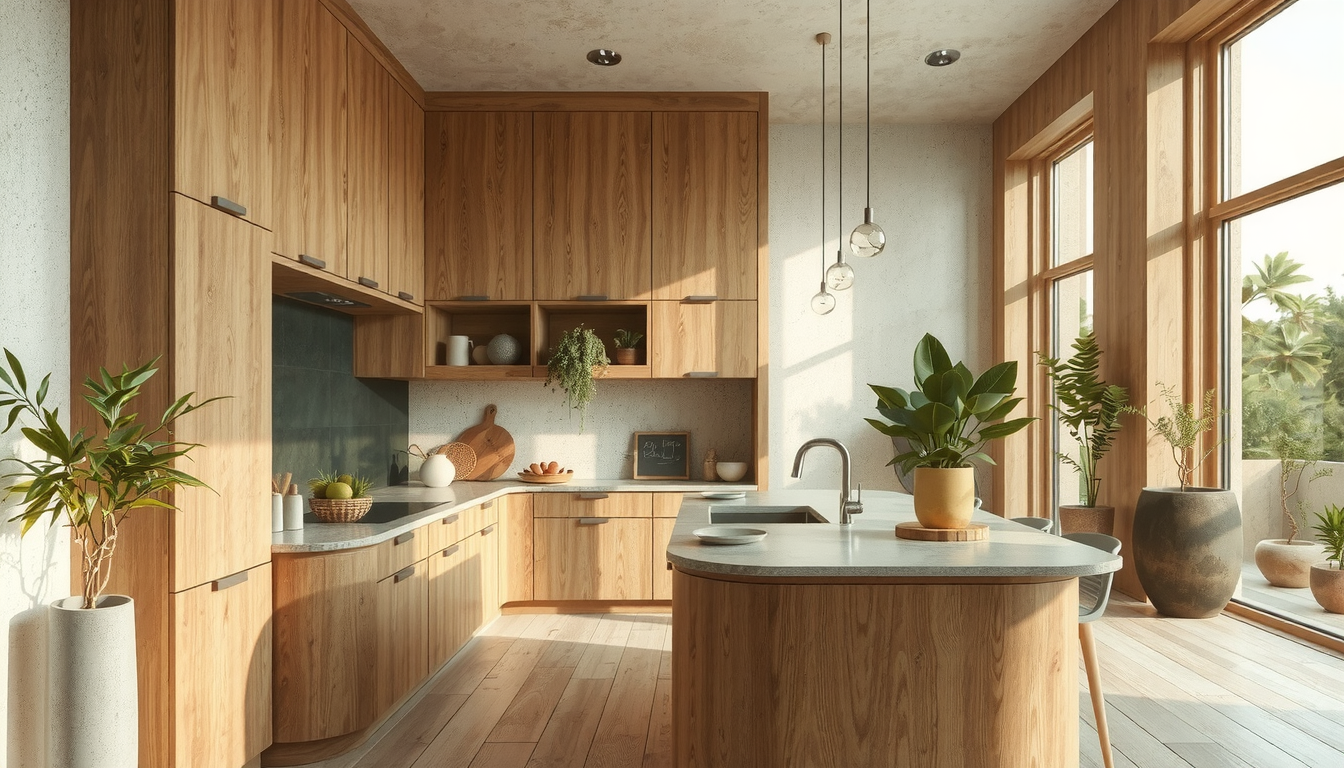
For a while, modern kitchens started feeling almost too polished — glossy cabinets, sharp lighting, barely any texture anywhere.
Organic modern design pulls things back a bit. The lines are still clean, but the room feels calmer, softer, more lived-in.
You can see that shift happening across newer kitchen brands as well. Livranger Kitchen, for example, leans heavily into natural textures, restrained palettes, and layouts that feel more relaxed than the ultra-gloss kitchens that dominated a few years ago. There’s still a modern sensibility underneath it all — just less coldness.
This style isn’t really about extreme minimalism. The best organic modern kitchens still feel warm enough to spend time in.
This 2026 handbook will be your guide in setting up an amazing organic modern kitchen. What makes the style work is the balance between sleek cabinetry and tactile materials like oak, stone, linen, and handmade tile.
Main Takeaways
- Organic modern kitchens combine clean contemporary lines with warmer materials like oak, stone, linen, and handmade finishes.
- It is a palette of colors that is based on the earth. One can think of shades of white with a hint of warmth, beige, grey-green, and various shades of brown.
- White oak, textured stone, matte surfaces, and imperfect handmade tile tend to show up again and again in this style.
- Concentrate on minimalism, sunlight, the open flow of the space, and the texture layers.
- Part of the appeal is that these materials don’t really date the way trend-driven finishes do.
Major Philosophy: The Reason for Modern Minimalism’s Craving for the Naturalness of Warmth
Minimalism isn’t the problem by itself.
A lot of it comes down to restraint, honestly. Push the minimalism too far and the room starts feeling sterile. Add too much texture and it drifts into rustic pretty quickly.
Natural light, wood grain, and greenery change the atmosphere more than people expect. Even a fairly minimal kitchen feels less rigid once those elements come in.
The result is a kitchen that feels calmer and more relaxed, especially compared to ultra-glossy modern spaces from the last decade.More than anything, the style reflects how people want their homes to feel now: cleaner, quieter, and less artificial.
The advantages are definitely obvious:
- Ever-Present Charm: No dependency on the volatile fashion trends. Wood and stone are always on the list.
- Enhanced Health: Boundary to the climate connections is stress build-up. Nature is our biggest source of calmness.
- Flexibility: This design suits all types of homes. Even modern ones can look good alongside it.
- Diversity of Textures: It provides a wide range of textures that are both visual and tactile.
The Base: Arrangement and Flooring for a Linking Flow
The most organic modern kitchens should feel open and airy. They should be easy to navigate. This begins with two choices. The arrangement and the flooring. They are the basis of your design.
Optimizing Your Kitchen Layout
The organic modern kitchen is best located in open spaces. Break down the walls that divide between the kitchen and living area. This will create an instant flow and connection. Thus, the kitchen becomes a social hub, not just a cooking area.
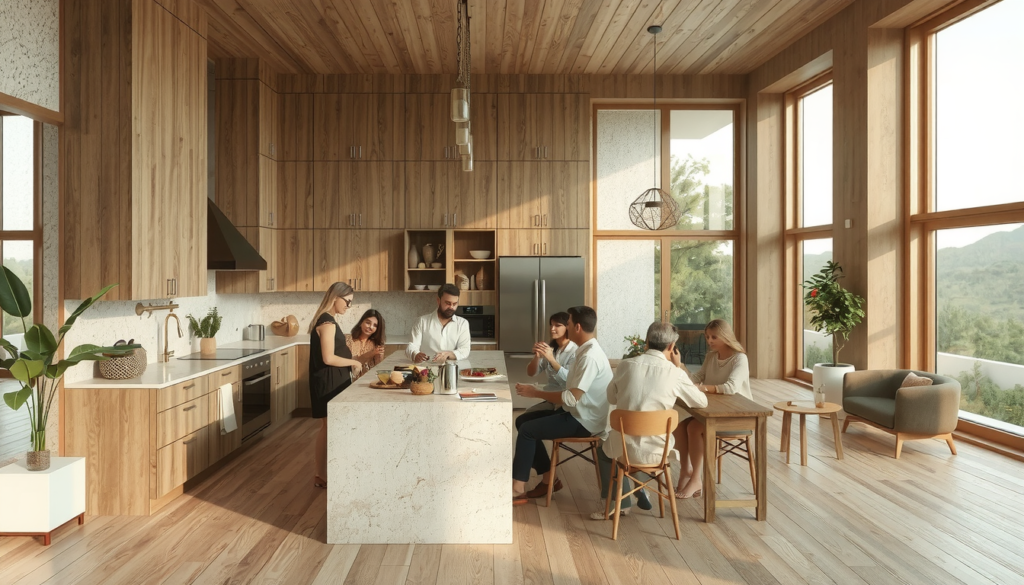
The classic “work triangle” still matters, but most newer kitchens are designed around zones instead — prep, cooking, cleanup, storage, and gathering areas. This is a more functional layout according to our current lifestyle.
Natural light is the crucial part. Add the possibility of having more windows or glass doors. At least one skylight could be of help. Light creates a sense of space. It is a way of bringing nature inside. One small change that makes a big difference: position the island toward a window whenever possible. It instantly makes the space feel more open and connected to the rest of the home.
Selecting the Correct Flooring
Flooring usually works better when it stays understated. Let the stone, lighting, and wood texture carry more of the visual weight.
Modern organic kitchen’s top flooring:
- White-Wash Hardwood: White oak still dominates a lot of organic modern kitchens, partly because it works with almost everything. It doesn’t feel overly rustic or overly polished. Wider planks and lower-sheen finishes usually look better here.
- Huge Marble Tiles: Opt for big slabs if you want a minimalist look. Slate or travertine are great choices. Their raw texture brings a feeling of earth. Large-format stone tiles usually feel cleaner and less visually busy, which works especially well in organic modern interiors.
- Elite LVP: High-end LVP has improved a lot too, especially for busy family kitchens where durability matters more than authenticity.
The Necessary Ingredients: A Detailed Exploration of Materials and Color Schemes
The beauty of the material combinations is the primary source of the actual charm. This is where you merge the shiny and sleek forms with the natural textures. You make a space that is rich and interesting.
Cabinet Styles: Sleek, Simple, and Textured
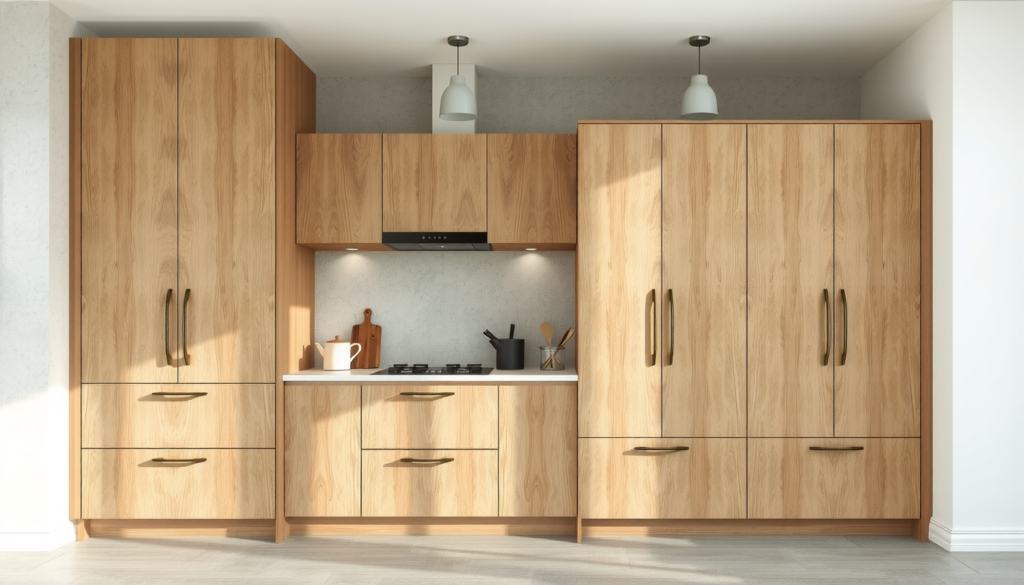
Cabinetry usually sets the tone for the entire kitchen, so this is where the style becomes most visible. Organic modern kitchen cabinets are the mix and match of clean lines and natural materials thus creating a look that is both simple and grounded.
The best cabinet styles are:
- Slab Doors: Flat-panel cabinetry still feels like the most natural fit for this style. It keeps the room visually quieter and lets the materials stand out more.
- Slim Shaker: Slim shaker profiles show up too, especially in homes that lean slightly transitional.
- Handleless Design: Handleless kitchens exist, though in real homes they can sometimes feel a little too severe if everything else is also minimal.
The Organic Modern Material Matrix: Wood and Stone
When you are going for the organic look in your modern kitchen, you should consider the right wood and stone. Adding these materials not only creates a warm atmosphere but also brings in textures. Natural materials also tend to age better emotionally. Oak softens a little over time. Stone picks up wear. Brass darkens. The kitchen feels more settled in, less frozen in a showroom state. You will find below a simple guide to your choices.
Material Type | Example | Look & Feel | Durability/Maintenance | Best For… |
Wood (Cabinets/Accents) | White Oak | Light, airy, prominent grain. The classic organic modern choice. | High / Needs sealing. | Cabinets, islands, shelving. |
Walnut | Rich, dark, sophisticated. Adds depth and luxury. | High / Can be expensive. | Accent islands, feature cabinets. | |
Stone (Countertops) | Quartzite | Natural stone with marble-like veins but much harder. | Very High / Low maintenance. | Busy kitchens needing durability and beauty. |
Honed Marble | Soft, classic, develops patina over time. | Medium / Porous, needs sealing and care. | Homeowners who love natural aging. | |
Concrete | Industrial, minimalist, can be custom-formed. | Medium / Porous, needs sealing, can chip. | A unique, textural statement. Many brands offer durable NativeStone concrete options. |
Nature’s Hues: The Art of Establishing a Relaxing Background
The palette usually leans earthy and muted rather than bold or high-contrast. Introduce soft and muted shades. These two present the feeling of calm and relaxation.
- Base Color: You should start with warm whites or creamy off-whites. Soft beiges are also a great option. Warm whites, soft beige tones, and muted greens help the room feel brighter without making it feel stark.
- Contrast Colors: Choose colors from nature. Muted greens like sage and olive. Terracotta color is an earthy shade. Dark deep blues. Warm charcoal color is also a good option.
- Tip: Stay on the 60-30-10 rule. Neutral foundation colors will occupy 60% of the room. This is wall paint and main cabinets. Use natural materials like wood for 30%. These are the floors and islands. Use 10% earthy accent colors. Place them on backsplashes, bar stools, or any decor you wish.
Touching Textures: Wall Coverings and Basins
Texture is what keeps the kitchen from feeling flat or showroom-like. The backsplash is a good place to add texture. As an alternative to the usual subway tiles, you can use Zellige tiles. These are Moroccan tiles made by hand. Handmade zellige tiles work especially well because the slight imperfections catch light differently throughout the day. Alternatively, you might use stacked subway tiles in matte finishes. Or you can run your stone countertop up the wall for a continuous look.
Sinks have the potential to be a part of the organic modern design as well. A traditional fireclay farmhouse sink brings a touch of rustic elegance. A countertop sink made of the same stone that is on your counter top looks so stylish. For a warm metal feature, the copper sink can be both splendid and distinct.
Showcasing the Look: Layered Lighting
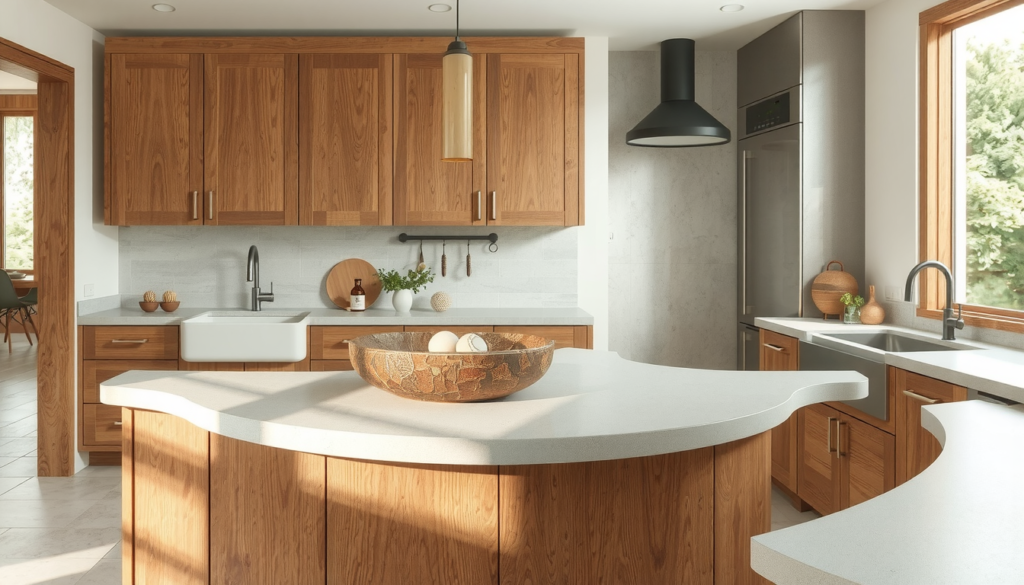
Lighting does a lot of the atmosphere work in these kitchens. Good lighting brings texture forward and keeps the room from feeling flat at night. Most organic modern kitchens rely on layered lighting almost by default. One overhead source usually makes the room feel flatter than it should.
- Ambient Lighting: This is the top light source or the general light of the room. Recessed ceiling lights or simple flush-mount fixtures are the best options. For the warmest light, use warm color temperatures. Between 2700K and 3000K is the best range. Warm lighting also helps natural wood tones feel richer and more inviting at night.
- Task Lighting: This is focused light that is directed to specific areas. The best addition to your kitchen would be under-cabinet LED strips. They will add lighting to the counter during the prep work. They will also keep the surface clean and bright.
- Accent Lighting: This is usually where the personality of the space starts to show. Include artistic and organic shapes. Hang a striking pendant light above your island. Use clusters if you want. Find the items made of the natural materials. Rattan, woven fabric, ceramic, or smoked glass are great options.
The Final Touches: Hardware and Fixtures
Hardware usually looks better understated in these kitchens. Matte black still works, though unlacquered brass tends to age more naturally with the rest of the materials.
The most common finishes are matte black. It is a modern contrasting color. Champagne bronze or unlacquered brass are also nice options. Unlacquered brass is a “living finish.” Over time, it darkens and develops patina. This also adds to the organic feel. Shiny, polished chrome should be avoided. Polished chrome can sometimes feel a little too sharp for this style.
In terms of style, choose sleek bar pulls or round knobs that are not overly designed. Pulls that are on the edge and nearly not visible can work too. A faucet in the gooseneck shape with the most simple lines looks the best. Use the same matte finishes that match.
Elevating the Everyday: Luxury Trends in the Organic Modern Kitchen
In 2026, for those who strive for an authentic organic modern kitchen in a high luxury level, some trends are riding the style. These are the minor details that highlight the art of craftsmanship and features of the materials used.
Fully integrated appliances are showing up in almost every higher-end kitchen project right now. They photograph well, but more importantly, they make open spaces feel visually quieter.
That said, they’re not always practical for every household — especially if the kitchen gets heavy daily use.
Apart from the joiner works, the unique and handmade elements of luxury modern organic kitchens are also attributed to the latter. A fine example is the hand-thrown ceramic pendant lights. Custom-made hardware would do as well. Another possibility is a custom range hood that can be made from plaster or wood. Handmade lighting and imperfect finishes help a lot too. Otherwise these kitchens can start feeling overly polished surprisingly fast.
The cool design ideas mostly incorporate unusual textures. Tadelakt or limewash finishes are soft and chalky but on the walls, they look soft. Glass cabinets or wood islands detailed with flutes give visual interest. The statement of the true luxury pieces is in the application of one big sheet. Using high-figured marble or quartzite for the island and backsplash creates a sculptor’s work from a natural material.
‘Living finishes’ are more frequent in luxury projects. Brass that is not lacquered for faucets and other hardware grows a patina with time. Living finishes like unlacquered brass also age naturally over time, which fits the overall philosophy of the style.
Frequently Asked Questions (FAQ)
What are the main differences between the organic modern and the farmhouse style?
The organic modern style is stricter and more refined. It invests in the beauty of the line, simple shapes, and natural materials. The farmhouse implies a more rustic and traditional style. It is typical for it to apply shiplap, decorative details, and use some vintage elements. Both are able to be warm and cozy. Farmhouse kitchens usually lean more decorative and nostalgic. Organic modern spaces feel more restrained.
Funny enough, though, the two styles overlap more than people think — especially once natural wood and softer lighting enter the picture.
Can I have an organic modern kitchen on a budget?
Yes. Most people don’t need expensive stone everywhere to make this style work. Good lighting, quieter materials, and a few natural textures usually matter more. Getting nature decor is another way to go. For instance, a branch in a vase or a bowl of fruit is quite ideal.
Is the organic modern kitchen style just a passing trend?
While its popularity is very high in 2026, the core ideas are timeless. The reason the style has staying power is that it isn’t tied to one specific color trend or decorative detail. Trends will change. But people rarely get tired of kitchens that feel calm and easy to live in.
What kind of decor and accessories work best?
Most organic modern kitchens look better with fewer objects left out. Choose a few carefully selected items. They should be both beautiful and useful. Think ceramic vases and wooden cutting boards leaning against the backsplash. A simple bowl of fruit works. Add a couple of healthy green plants and soft linen tea towels.
Can I mix wood tones in an organic modern kitchen?
Yes — just don’t overdo it. Two wood tones usually feel intentional. Four starts feeling accidental.